MLB · milestone
Braves' Depth Engine Keeps Humming: First to 30 Wins, and Oddsmakers Haven't Caught Up
Atlanta's combination of star power and anonymous fill-ins is running a nine-game gap in the division—and the betting market is still pricing them like a regular contender.
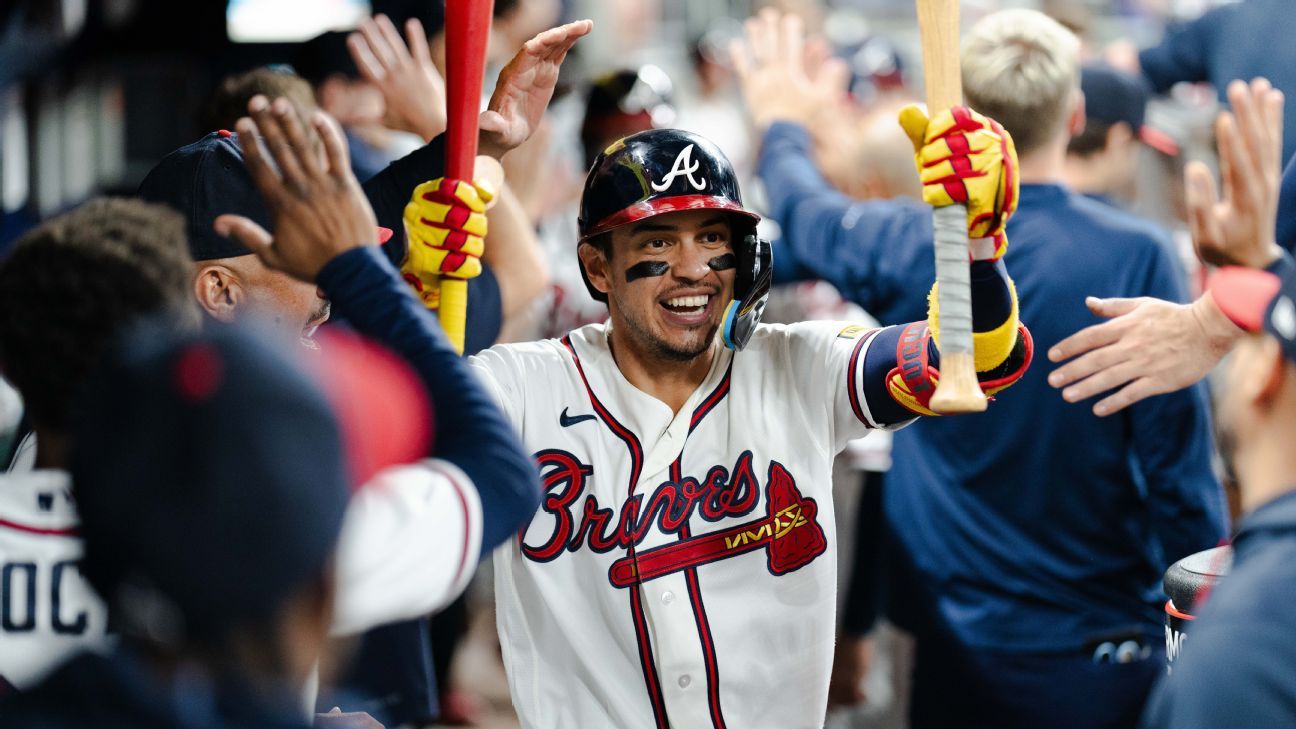
The Braves reached 30 wins Wednesday night with a surgical eighth-inning rally against Chicago, improving to 30-13 and opening a nine-game lead over Washington in the NL East. Mike Yastrzemski's pinch-hit double and Mauricio Dubón's two-run homer finished the Cubs 4-1, capping another bullpen performance that yielded four scoreless innings from four different relievers. It's the first time since 2003 that any MLB team has hit the 30-win mark this early—in their 43rd game then, in their 44th now. The velocity of this start is not a fluke of schedule or early-season noise.
What makes the Braves' record even more durable is the structural redundancy in their lineup. Matt Olson, Drake Baldwin, Chris Sale, and Ozzie Albies are carrying the load where expected, but the real edge sits in the depth layer: Yastrzemski (acquired for pennies), Dubón (picked up from Houston for a mid-tier journeyman), and the willingness to rotate utility players into high-leverage moments. Manager Walt Weiss is deploying them not as afterthoughts but as situational weapons with clear roles. When Ronald Acuña Jr. went down, Dubón moved to leadoff. When pinch-hits mattered, Yastrzemski was ready. This is operational discipline, not luck. The Braves have one of baseball's oldest rosters—Yastrzemski is 35, Sale's mileage is deep—but they're using youth and versatility (Dubón, Kim) to extend their window rather than rely on any single season from any single player.
The bullpen, too, is operating at a level the market may not have fully priced. Four relievers delivering one scoreless inning each against a Cubs team still capable of manufacturing runs suggests Atlanta's depth extends to the pen. If Sale stays healthy (a big if given his history), and if Acuña's absence doesn't crater their offensive profile, the Braves' path to 100+ wins exists. But the real prop angle lives in the month-to-month variance. A team this well-constructed should hold a nine-game lead, but sportsbooks are still offering totals and series odds as if Atlanta is merely very good, not historically early-dominant.
For bettors, the edge is in team totals and win lines on the Braves in matchups against teams they've already proven they can dismantle. A 30-13 record means they've beaten good teams multiple times and bad teams by larger margins. When Atlanta faces sub-.500 opponents (or teams with depleted bullpens), their team total lines are staying too close to their season average rather than pricing in the depth advantage. The Braves won't win every game, but the market is still treating them as a 0.65+ win-probability team when their actual construction—especially against weaker competition—might justify 0.70+. Lean overs on their team totals when facing division cellar-dwellers or teams missing key relievers; fade them when facing contenders with fresh pens, where Atlanta's depth advantage doesn't translate to as clear an edge.
MLB Intelligence — Baseball intelligence beyond the box score. Open MLB Intelligence →