Elder's Post-Break Surge Reshapes Atlanta's Rotation Calculus Before the Deadline
By Ty Whitney ·
A dominant three-start stretch has Bryce Elder looking like the innings-eater the Braves hoped for, potentially lowering the urgency to acquire a frontline starter before Monday's trade deadline.
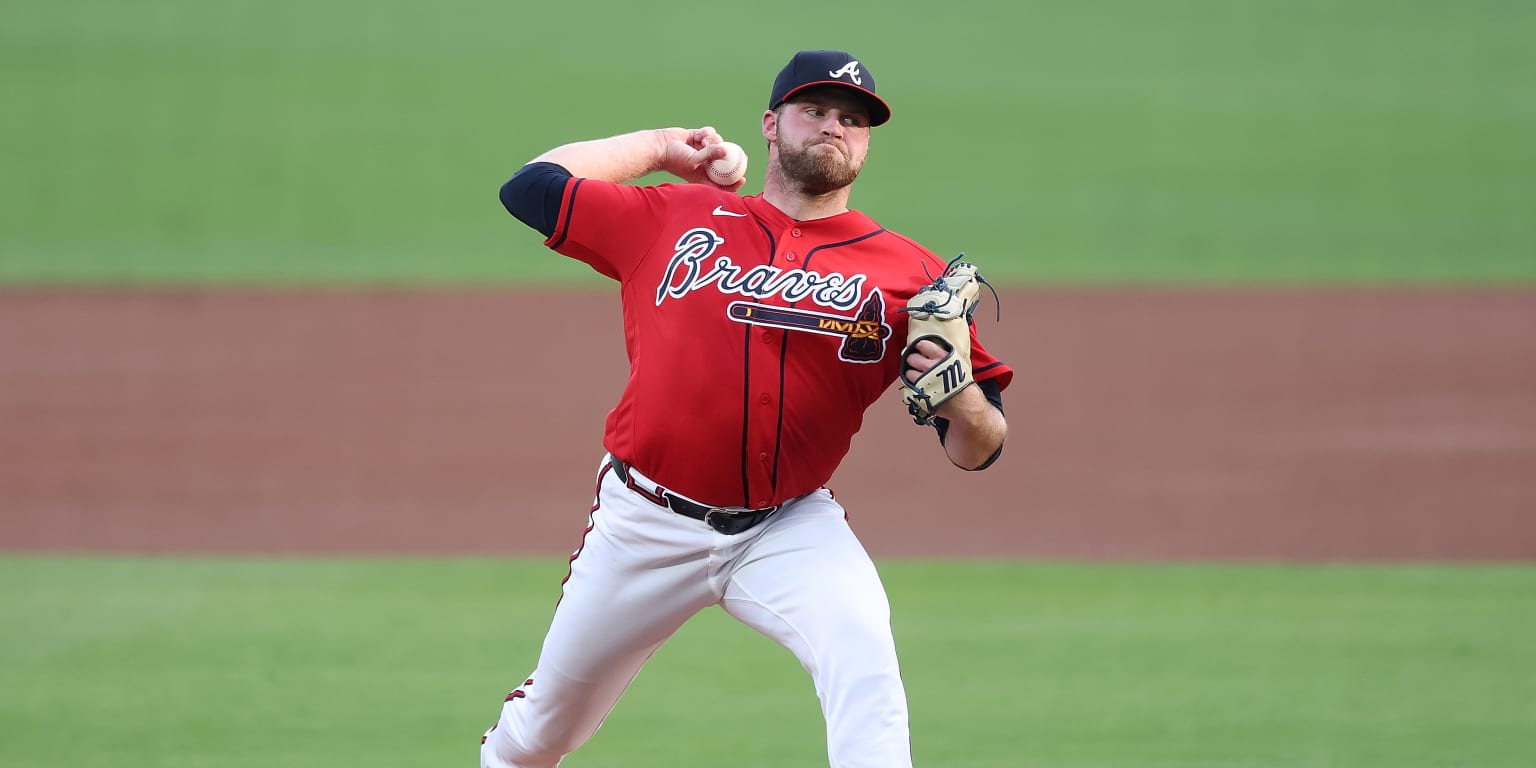
The Braves entered Friday's game against Washington having lost 24 of their past 44 contests—a stretch bleak enough to trigger serious trade conversations about acquiring another ace before Monday's 6 p.m. ET deadline. Yet Atlanta holds an eight-game division lead, their largest since June 20, and a pair of MVP-caliber hitters in Matt Olson and Michael Harris II. In Friday's 6-2 win over the Nationals, both sluggers homered—Olson extending his 2026 total to 29, matching his homer production for each of the past two full seasons—while Bryce Elder delivered the kind of performance that may have just complicated Braves general manager Alex Anthopoulos' deadline arithmetic.
Elder allowed one run on four hits across six innings, marking the third consecutive outing in which he's delivered starter's value without disaster. Since the All-Star break, he's permitted just four earned runs over 17 innings, a stark departure from his pre-break collapse: an 11.00 ERA over his final four starts before July. That earlier slump disguised a more durable track record. From August 24, 2025, through June 7 of this year—a 21-start window—Elder posted a 2.71 ERA, positioning himself squarely in the reliable-innings category that typically anchors playoff rotation depth.
Context matters here. Elder and Chris Sale are the only Braves starters to log six or more innings 13 times in 2026. Everyone else combined has reached that mark 11 times. Grant Holmes, Martín Pérez, Spencer Strider, Reynaldo López, and JR Ritchie have collectively failed to provide the consistency that contending rotations need. The workload imbalance is stark. But the Braves have also sustained a division edge despite losing Ronald Acuña Jr. to injury and watching Drake Baldwin's return from an oblique strain drag through the first weeks back. Their offense—specifically Olson (2.9 fWAR, 15th in the NL) and Harris (2.9 fWAR, 15th in the NL)—has scaled to cover pitching shortfalls that would sink teams with weaker lineups.
For bettors, Elder's recent form introduces a pivot point. The market has been pricing Braves games around the assumption that their rotation is fragile—a logical read given the injury carousel and the early-summer collapse. But if Elder stabilizes as a genuine six-inning performer, the team's implied win probability shifts. The odds on Atlanta's moneyline have been compressed by uncertainty about their starting pitching; a demonstrable pattern of Elder eating innings without bleeding runs should modestly compress that uncertainty. More immediately: look for Braves team totals to reflect the possibility that they might not need to mortgage future assets for a mid-rotation addition. Olson and Harris haven't suddenly become worse hitters. If the market has been assigning disaster risk to starts after Elder because of the rotation noise, that premium begins to erode.
The deadline is 72 hours away. The Braves won 10 of 15 since the All-Star break, and they've trimmed their losses to just two games since June 9 despite the ugliness of the past month and a half. If Elder can maintain this trajectory—not dominate, just repeat—Anthopoulos may have more flexibility in his calculus. That's not a guarantee. But it's a material shift in the team's self-sufficiency narrative, and markets will price that accordingly.