MLB
Blue Jays Find Offensive Life in Bateman; Cease's Workload Dip Signals Depth Bet
Toronto's win-now urgency just got a credible lineup floor: Brett Bateman's hitting audition is reshaping the offensive architecture heading into a brutal September schedule.
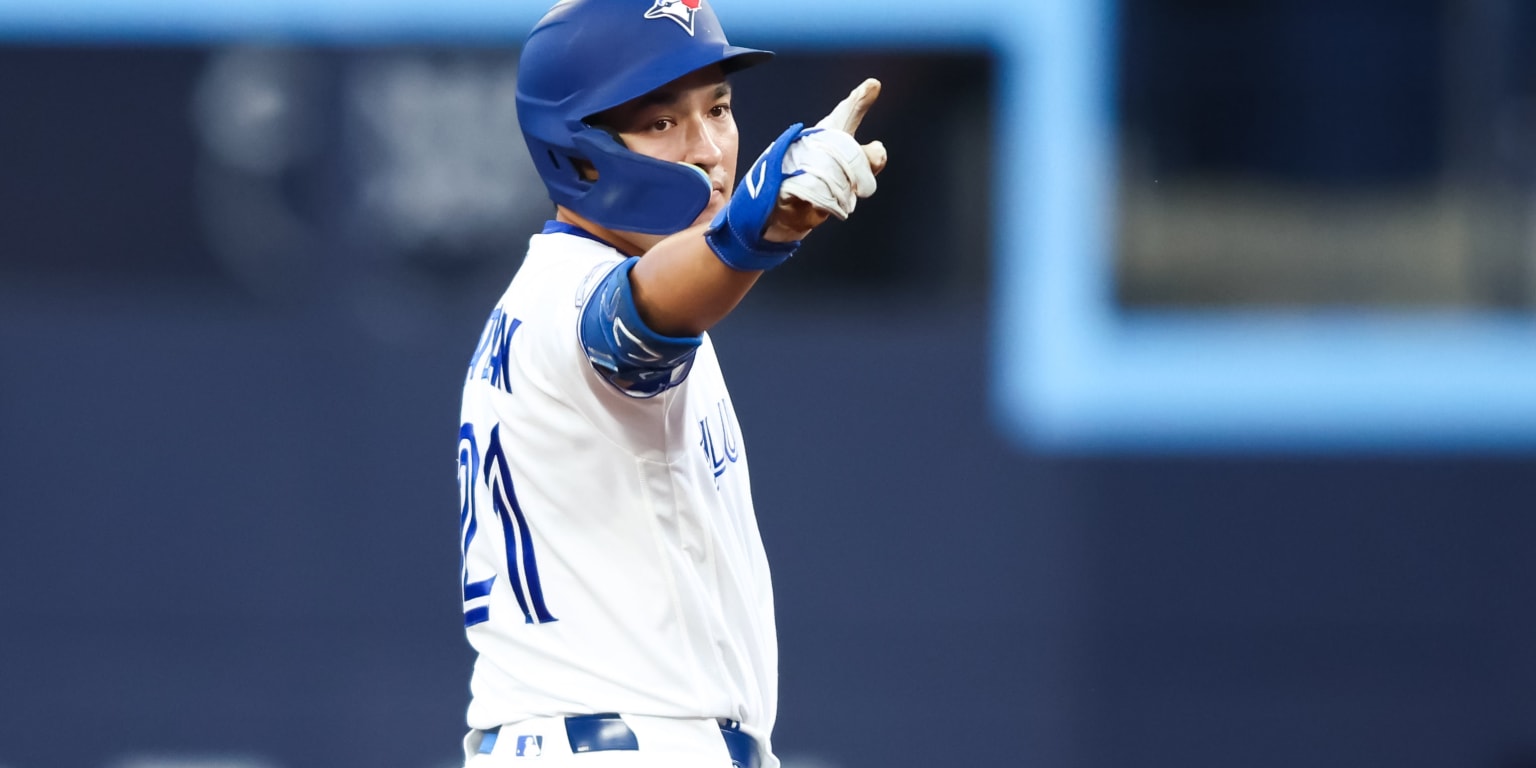
The Blue Jays took down Boston 5-3 on Tuesday at Rogers Centre, extending a four-win-in-five stretch that quietly repositions their postseason math. The win itself wasn't decisive—Toronto's still climbing out of a deep hole—but the mechanics underneath matter more than the final score. Brett Bateman, acquired from Chicago in the Kevin Gausman deal, delivered a single, double, and two RBIs, and manager John Schneider's confidence in him is structural, not circumstantial. "If you hit, you're going to play. If you hit in big spots, get ready to be in that lineup 41 more times," Schneider said. That's not flowery—that's deployment leverage. Bateman isn't a marginal depth piece. He's the audition for Toronto's 2027 center field, and he's forcing himself into regular at-bats by doing the thing ballclubs value most: producing in high-leverage situations.
Dylan Cease took the mound but operated below his established baseline. His velocity dipped roughly 2 mph across all pitches Tuesday, forcing longer innings and a brutal fourth frame that demanded 31 pitches alone. The first pitch of the fifth inning left the yard via Ceddanne Rafaela's bat—the kind of inning-bleed consequence that Cease has largely avoided since late June. His last sub-six-inning outing came on June 27; in his six starts since, he'd averaged just over seven innings per appearance, a rare pairing of elite strikeout rate (he leads MLB in Ks) with the workload efficiency that wins Cy Young races. Tuesday's dip isn't a health flag—the team sees it as variance—but it's the kind of variance that matters in a tight divisional picture.
The broader calculus: Toronto's playoff odds hinge on the next month. After finishing this four-game set with Boston, the Jays host the Yankees, then head to Tampa Bay and New York again. This is where teams either stay alive or fall away. Schneider publicly committed to the possibility ("It's still realistic"), but the narrow margin for error is now visible. The team needs Bateman's bat to sustain its recent hot streak, and it needs Cease to return to his seven-plus-inning baseline in a rotation that's already light on innings depth.
For prop bettors, the angle is split. Bateman's hot start creates a tactical edge on his daily player props—specifically hit total and RBI lines—over the next 10-14 days, provided the sample stabilizes above his initial audition window. His contact rate (91% last season in the minors) and zone recognition (Schneider singled out both) suggest his Tuesday output isn't noise; it's a repeatable skill set in a new system. Back his hit total at reasonable juice if sportsbooks haven't fully repriced the elevated lineup usage yet. Cease's velocity dip is the inverse story: it's a single-game variance signal, not a health concern, but it does signal that his innings per start may regress toward a more normal 5.5-6.5 range after his recent elite run. If his strikeout prop line hasn't adjusted downward—or if the market still prices him as a 7+ inning lock—there's fade value on his K total for this next start. The workload compression was always going to catch up; Tuesday showed how.
Toronto's postseason pathway depends on exactly this kind of finding: unheralded depth who can hit in tight spots, and elite arms who can sustain both dominance and durability. Bateman's already proving the first part. Cease's velocity dip reminds us that the second part is harder to repeat.
MLB Intelligence — Baseball intelligence beyond the box score. Open MLB Intelligence →