MLB · injury
Kurtz's Return Resets Oakland's DH Window Before the Deadline
The Athletics get their AL Rookie of the Year back in the lineup after a 15-day absence, reshaping their offensive construction heading into a crucial two-week stretch.
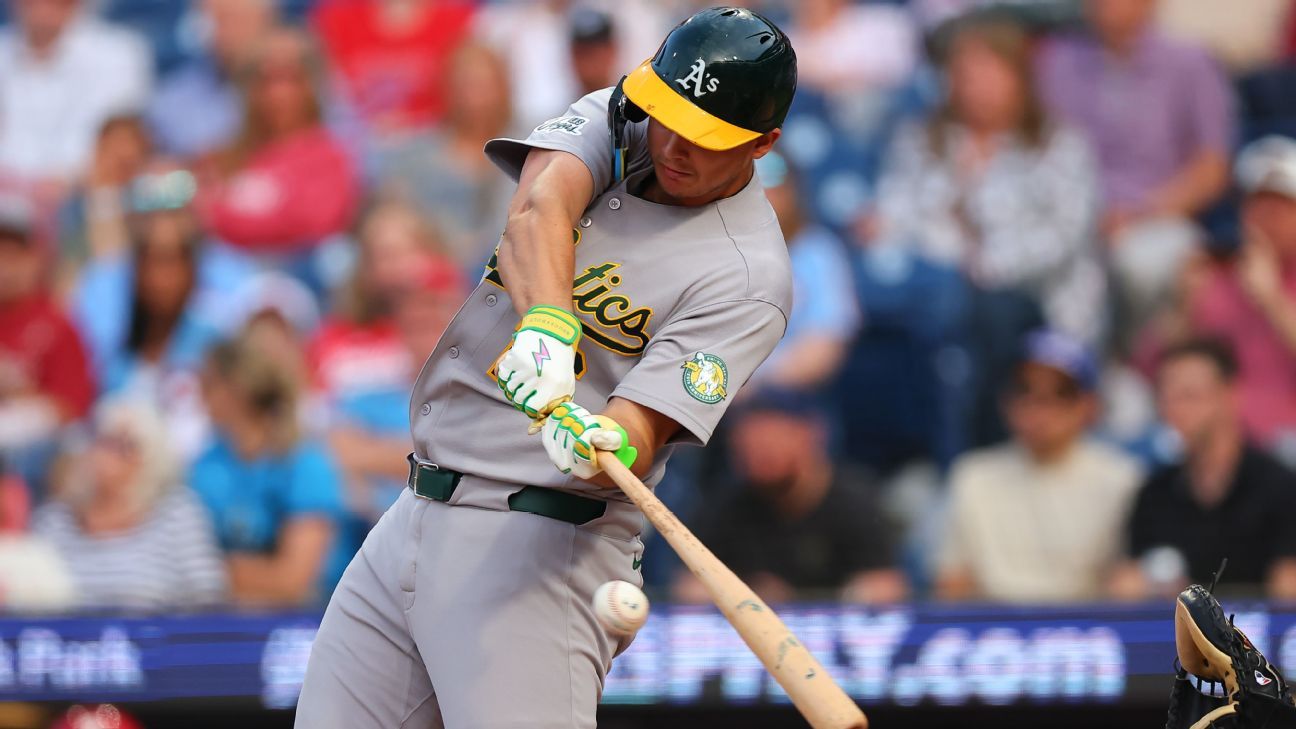
Nick Kurtz returned to the Athletics' lineup Saturday night against Minnesota as the designated hitter, batting second, ending a 15-day absence from a right thumb strain sustained on July 10. Oakland optioned Max Muncy to Triple-A Las Vegas to create the roster spot, a move that clarifies the team's offensive hierarchy with just over a week until the trade deadline.
Kurtz's reinstatement is straightforward injury management—the 23-year-old missed the All-Star Game and entered Saturday hitting .266 with 20 home runs and 66 RBI across 92 games. That production lands him squarely in the mid-tier slugger band: enough power to matter, a .770 OPS that reflects a hitter more valuable than league average but not an elite performer. Muncy's demotion tells you everything about Oakland's faith calculus. In 48 total games with the A's this season, Muncy appeared in just two games in his most recent stint, going 0-for-3 with three strikeouts. He's a depth piece, not a rotation player. Oakland is committing to Kurtz as the fulcrum of their DH production moving forward.
The timing matters for both the on-field and organizational chess. The Athletics sit in the middle of July with their All-Star back; that's a roster refresh that either fuels a push or gets cannibalized at the deadline if contention looks thin. Kurtz's return to 92-game production pace tells you the team believes his bat is healthy enough to contribute over the next 10 days before the deadline window closes. That's important because his power stroke—20 homers in 92 games annualizes to a 35-homer pace—becomes a selling point if Oakland pivots to teardown mode, or a building block if they're genuinely competing.
For prop bettors, Kurtz's first week back carries elevated volatility. Return-from-IL hitters typically see depressed line efficiency in games 1-3 as pitchers test their aggressiveness and spot placement, especially on a hand injury that affects bat control. His strikeout rate in the immediate games following IL stints historically sits 2-3 percentage points above his season average; thumb injuries in particular suppress early contact quality because grip strength hasn't fully reset under in-game loads. Oakland's opponent set over the next seven games—Minnesota, Kansas City, Houston—features three pitching staffs in the top 12 for K rate. Betting Kurtz's strikeout total in this window is a fade play; the market will price his season average, but his actual contact profile in games 1-5 back looks more like a high-strikeout, high-miss stretch.