Kurtz's Thumb Spiral Reshapes Oakland's First-Base Market
By Ty Whitney ·
A chronic volar plate tear has sidelined the A's reigning Rookie of the Year for a second time in four weeks, opening the door to a platoon that fundamentally changes Oakland's offensive profile.
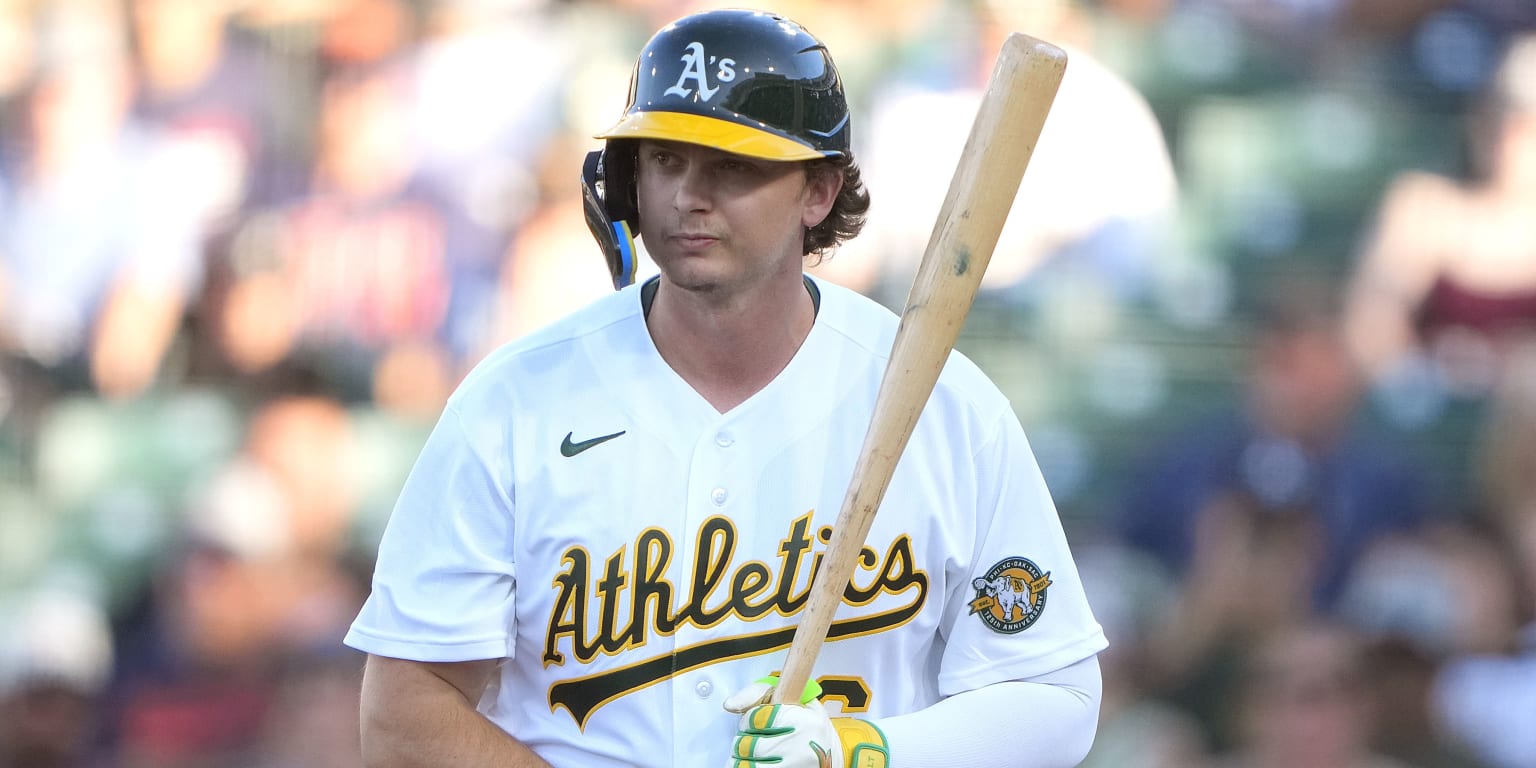
Nick Kurtz landed back on the 10-day injured list Tuesday after Dr. Steven Shin diagnosed an acute-on-chronic volar plate tear of the MCP joint in his right thumb—a reaggravation of the capsule strain that already forced him out for 10 days in late July. Manager Mark Kotsay declined to set a return timeline, suggesting Kurtz will remain unavailable beyond the standard 10-day window. The athletic department is prioritizing full recovery over roster urgency; with Oakland 50 games from season's end and 22 games back in the AL West, there is neither playoff race nor contention pressure forcing a premature comeback.
The timeline matters clinically and contextually. Kurtz first showed signs of trouble on June 28, when he was benched against the Angels. Since that date through today—37 days total—he is hitting .115 (6-for-52) with 27 strikeouts over 17 games, a stretch that included his initial IL stint and a brief return. The injury did not heal cleanly during those 10 days off; contact stress aggravated the weakened joint. Volar plate injuries in the MCP joint, which stabilizes the knuckle, are notoriously slow to resolve and prone to flare-ups when demand returns too quickly. Kurtz is 23 years old and the 2025 AL Rookie of the Year—the organization will not rush him back on a 45-67 roster.
First base now cycles through Jeff McNeil, Tommy White (Oakland's No. 7 prospect), and Jonah Heim, with Max Muncy recalled from Triple-A Las Vegas to add depth. This is not a like-for-like replacement. Kurtz, when healthy, has carried the team's offensive load at first base with power-for-contact upside. The rotating group is younger, less proven, and collectively thinner on the power dimension. McNeil is a reliable contact hitter but brings limited home-run upside. White is a prospect in an expanded September audition. Heim is a catcher by trade being deployed out of position. The net effect: Oakland's run production at the position will decline, team batting average may stabilize slightly (fewer strikeouts from a less aggressive base), but home-run frequency from the DH/1B alignment drops measurably.
For prop bettors, Kurtz's absence reshapes the Athletics' offensive ceiling. Unders on Oakland's team total—already depressed given the team's 45-67 record and fourth-place positioning—become more attractive as the primary power source rotates out. The A's were already a below-league-average run producer; the Kurtz injury accelerates that trend. Team totals under 4.0 or under 4.5 (depending on the night's pitching matchup) carry elevated expected value for the remainder of August and September. Additionally, daily first-base home-run props shrink in expected frequency; if books are still pricing Kurtz's absence into the lineup at his historical rate rather than accounting for the position's reduced power output, early-season unders on position-specific round-tripper props will have edge.
The durability risk is real and durable. Volar plate injuries do not resolve in weeks; they require months of controlled loading and anti-inflammatory management. Even if Kurtz returns before season's end—Kotsay's statement suggests it remains possible but not planned—the likelihood he swings through September at full strength is low. Fade any prop positioning that assumes Kurtz's return in August solves Oakland's offensive shortfall. He will not be available as a full-time, pain-free contributor for at least the next 6-8 weeks.