MLB
Rutschman's Fenway Arrival Signals Red Sox Deadline Gamble Is Starting to Pay
The catcher's 410-foot blast eight days after activation shows the three-prospect haul is producing run value on schedule.
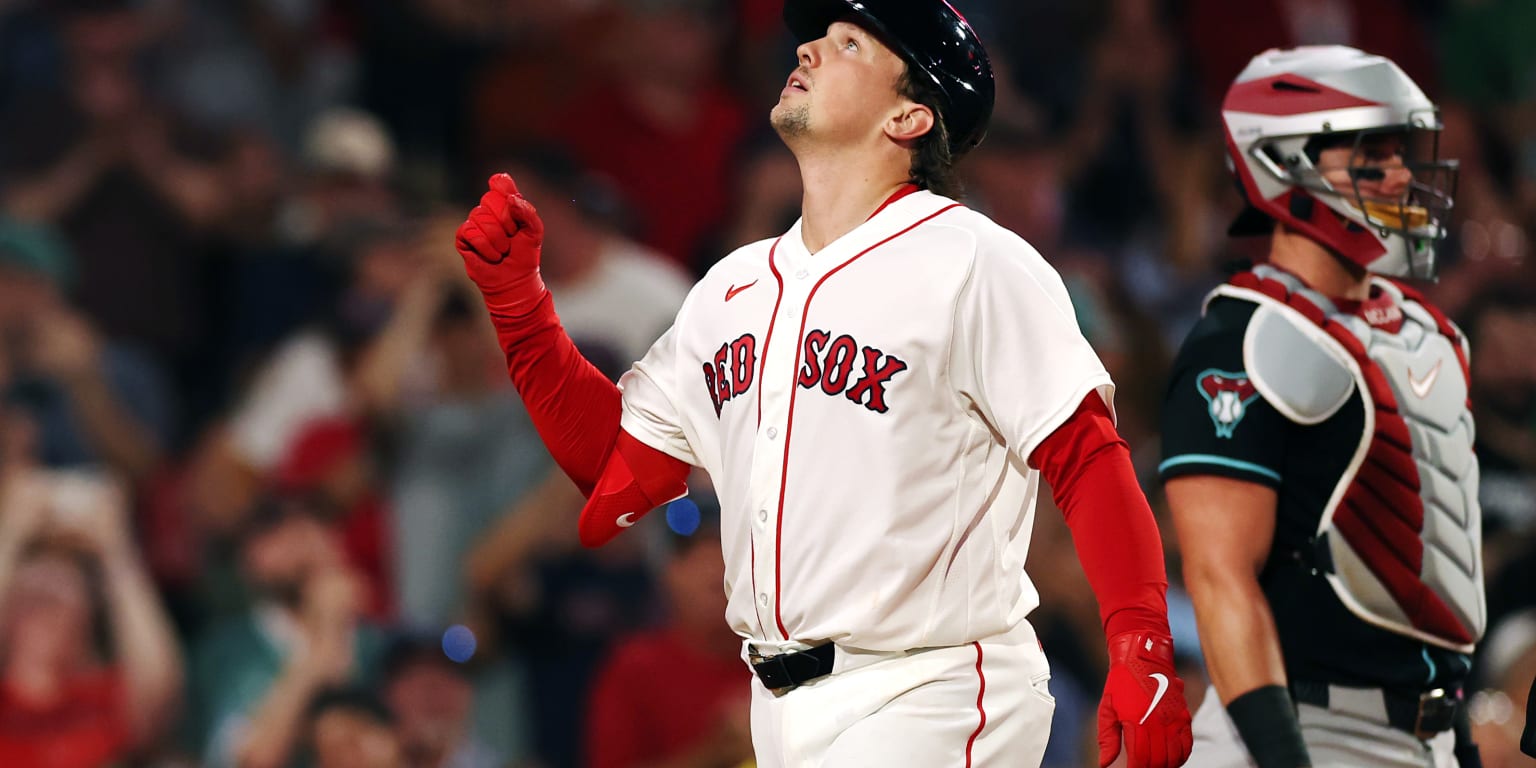
Adley Rutschman launched a 107 mph solo homer into the Fenway Park right-field seats Tuesday night—his first long ball in a Red Sox uniform and a clear turning point after an 0-for-19 stumble to start his Boston tenure. The shot off Arizona's Merrill Kelly traveled 410 feet and would have left the yard in all 30 parks, the kind of mechanical validation that separates early-slump noise from legitimate talent confirmation. Combined with Monday's two-hit performance—an RBI double and a two-run single that accounted for Boston's first two runs of that game—Rutschman is now operating at the production level that justified Craig Breslow's willingness to part with three top-five prospects at the Trade Deadline.
The timeline here matters. Rutschman was sidelined with left wrist inflammation when the deal went down on Aug. 3. He played two Triple-A Worcester rehab games before activation on Aug. 11, giving him exactly one week to acclimate to new pitching staff, new catcher's signals, and new ballpark dimensions before Tuesday's homer. The early hitless stretch—common for mid-season acquisitions still integrating—is already fading. What's emerging instead is a three-time All-Star catcher who, even before he started hitting, was drawing praise from Red Sox pitchers for his game management and pitch-calling precision. That institutional credibility matters. Backup catchers don't get premium offensive opportunity late in close games; proven framers do.
From a betting lens, Rutschman's activation creates a downstream impact on Red Sox run production. Catchers in the bottom half of the lineup typically don't carry outsized leverage in player props, but they do carry outsized leverage in team totals. A catcher who can produce 1.2 XBH per game in his established rate carries offensive equity that the broader roster didn't have before Aug. 11. The Red Sox team total line has already baked in some adjustment since the trade—Boston has gone 4-1 in Rutschman's five games—but the real test is whether that performance holds across a larger sample. His wrist inflammation remains worth monitoring; the original injury prompted the rehab assignment, and wrist tightness in catchers often flares under defensive load. If he stays healthy and integrated into the lineup four to five times weekly (which the Tuesday start suggests), Red Sox team totals at 4.5 or higher carry slight lean-over value because the pitching staff now has elite framing and game-calling behind the plate, a variable that doesn't show up cleanly in season-long ERA splits but compounds across bullpen usage and opponent weak-contact rate.
MLB Intelligence — Baseball intelligence beyond the box score. Open MLB Intelligence →