NHL
Michkov's Conditioning Reset Reframes Philadelphia's Offensive Ceiling
A 30-pound lean and Tocchet's renewed confidence suggest the Flyers winger's sophomore slump was correctable, not structural—and the market hasn't priced in the usage uptick yet.
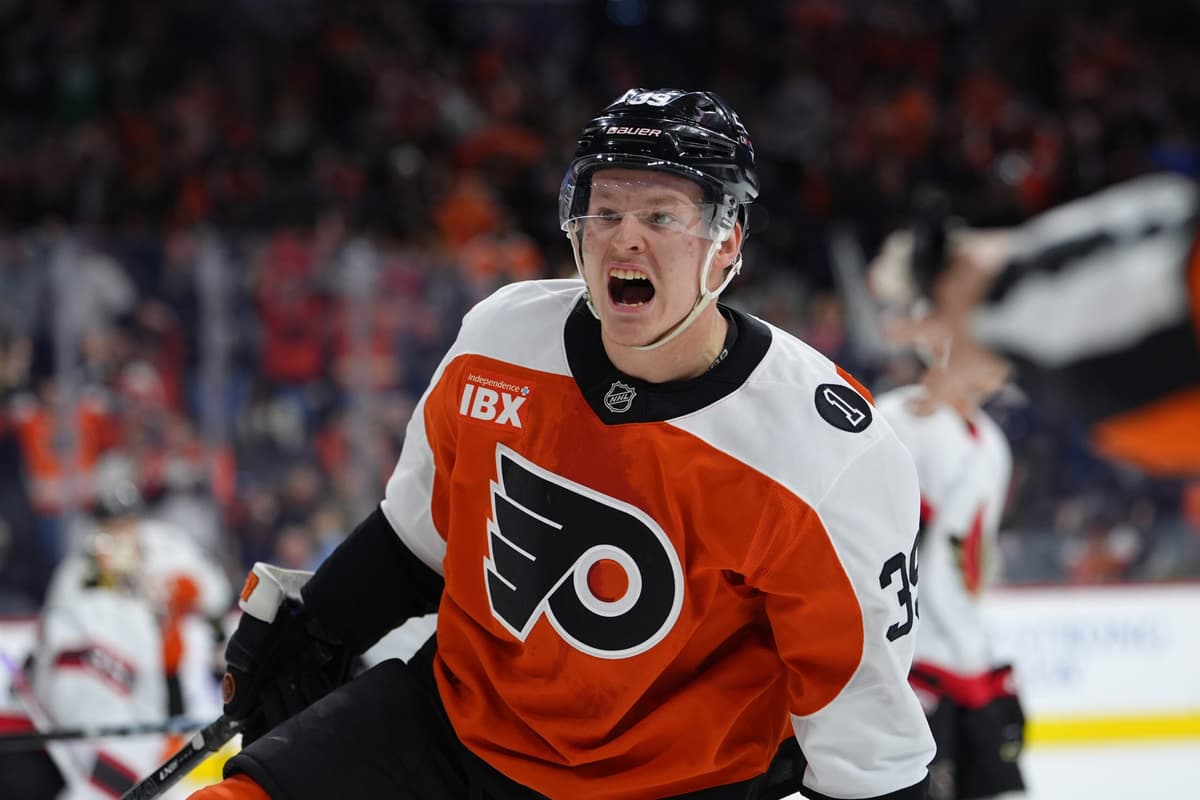
Matvei Michkov spent much of last season in Rick Tocchet's doghouse, benched for stretches and sat entirely in the Flyers' playoff elimination game against Carolina. The 21-year-old seventh-overall pick from 2023 finished the campaign with 20 goals and 51 points in 81 games—respectable volume on the surface, undershooting both his draft pedigree and the offensive ceiling his puck-protection skill (Tocchet compared it to Jaromir Jagr's) should theoretically unlock. The narrative was dark: a young franchise cornerstone and organizational investment had failed to translate elite tool-set into production under pressure, in a high-pressure market.
The conditioning question haunted his season, and it was real. Michkov reported to this year's training camp noticeably leaner—reportedly 30 pounds lighter than his weight at the same point last year—and sources inside the organization describe him as markedly faster, with his compete level dialed back in. This isn't cosmetic recovery spin. Conditioning directly correlates to both on-ice efficiency (first-step quickness, edge work in transition) and decision-making speed (reaction time to defensive rotations, puck retrieval in the neutral zone). A winger carrying excess weight doesn't simply lose a step; he loses anticipation, which compounds over 82 games into a gap between expected and actual production.
Tocchet's visible shift in tone from last season's frustration to this camp's optimism carries organizational weight. The Flyers have also surrounded Michkov with age-matched support—he's been paired with 2023 third-round pick Denver Barkey (the same age, and being retooled as a center after playing left wing) during the preseason. Barkey's defensive responsibility and hockey IQ, per team sources, complement Michkov's high-variance play-making. More critically, Michkov won't carry the season's entire offensive narrative on his shoulders; 2025 first-round pick Porter Martone is in the NHL, Tyson Foerster is healthy after extension, and 2022 sixth-overall David Jiricek anchors the blue line. The pressure has diffused. Michkov is entering his contract year—final season of his entry-level deal—with tangible motivation (peer Ryan Leonard signed a blockbuster extension this summer) and a cleaner slate.
For bettors, the gap between last year's usage and this year's likely deployment is the edge. Michkov's 20 goals in 81 games (0.25 goals per game) came while he was effectively playing out of favor; ice time allocations in limited roles tend to mask true talent. The preseason window already shows tighter pairings with Barkey and elevated role expectations. When a winger carrying a Jagr comp for puck-retention and a conditioning reset enters camp with his coach's confidence restored, plus a contract year incentive and lower offensive pressure from supporting depth, his shots and goals prop lines are priced for last year's frustration, not this year's reset. The line market will adjust once the regular season sample accumulates, but early-season Michkov shots (likely in the 2.5 to 3.5 range) and anytime goal props should reflect the historical discount.
Michkov is also uniquely dependent on line stability and ice time continuity. If Barkey's injury from Monday's preseason game is serious, the setup fractures. Watch injury reports closely through the first week—if Barkey plays and the pairing holds, Michkov's volume props carry angle into October. If the line shuffles again, the conditioning narrative loses its mechanical leverage and reverts to variance play.