NHL
Michkov's Fitness Reboot Signals Breakout Year as Flyers Push Contention
Philadelphia's young winger enters year three of his contract measurably lighter and faster after a second season marked by declining output and ice time—a combination that could unlock the production the Flyers paid for.
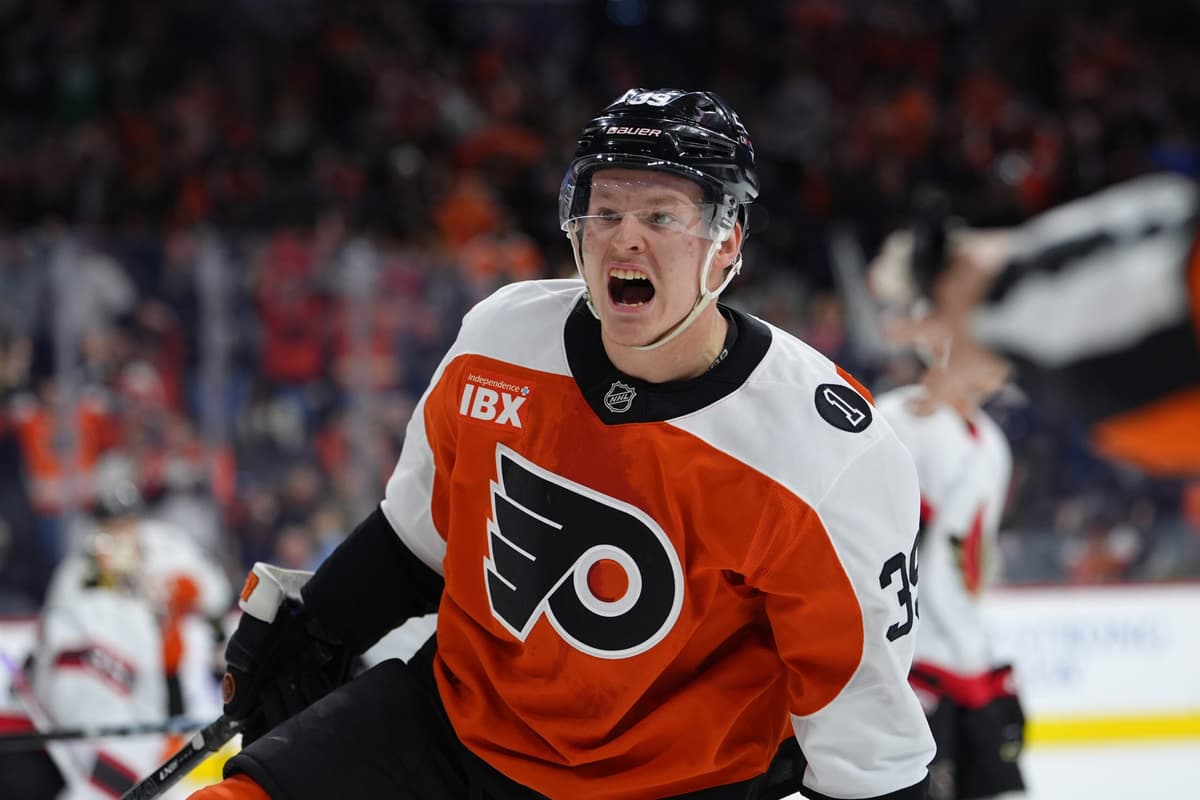
Matvei Michkov is leaning into a deliberate physical reset ahead of the Flyers' season opener against Pittsburgh on September 30. The 21-year-old Russian winger, who finished his second NHL campaign with just 51 points across 81 games, has spent the offseason cutting body weight and overhauling his nutrition regimen—eliminating processed food, sugar, and fast food except for occasional chocolate on rest days. The reported result: a measurable gain in top-end acceleration that Michkov himself described as feeling "lighter right now, more speed."
This isn't cosmetic commentary. The decline in Michkov's game last season was both real and visible. His rookie year (2024-25) yielded 63 points in 81 games with a top-end speed of 21.91 mph. Last year, that speed dipped to 21.49 mph while his scoring contracted 12 points and his average ice time per game fell by nearly two minutes under head coach Rick Tocchet—a signal that trust eroded alongside his physical fitness and defensive reliability. The Flyers drafted him seventh overall in 2023, betting on a high-ceiling talent. Two seasons in, that ceiling still hasn't been approached, and the contract math grows tighter: Michkov is in the final year of his entry-level deal, meaning a breakout or extended productive stretch carries major downstream implications for the franchise's cap flexibility.
The fitness angle matters because it attacks the most controllable variable in his second-year slump. Poor defensive positioning, lack of explosive separation on the wing, and reduced leverage in the cycle all compress when a player loses a step. Tocchet's reduced deployment wasn't punishment—it was symptom management. A player who regains 0.4+ mph in top-end speed doesn't necessarily get it back in 10-game spurts; the delta compounds across 82 games through tighter gaps, more first-step separation, and cleaner entry passing angles. Michkov's assist-to-goal ratio last season also skewed offensive (more goals, fewer playmaking touches), which suggests he was playing more perimeter-oriented, isolation hockey rather than the aggressive interior game that unlocked his rookie production.
For prop bettors, the mechanism points to a measurable increase in both shot volume and assists if the fitness gains translate to ice-time reinstatement and confidence renewal from the coaching staff. Michkov's rookie season average was 0.93 shots per game; last year it dropped to 0.72. A return to 0.85+ SPG across a full 82-game slate—still below his rookie pace—would put him on track for 70+ points for the first time since year one. The Flyers' playoff run last spring (including a first-round elimination of division rival Pittsburgh) proves the team's core is capable of winning now, not just developing. Michkov is the last piece that needs to mature into his contract value.
Watch his shot volume and assists over the first 10 games. If Tocchet restores him to 18+ minutes per night and the speed gains are real, Michkov's season point total tightens to the 65-70 range rather than another mid-50s outcome. The fitness work is the honest signal here—franchises don't let players publicly announce dietary discipline and speed gains if the internal testing doesn't back it up.