Quinn Hughes Extension Talks Begin: What a Long-Term Deal Means for Minnesota's Cap Picture and Fantasy Ceiling
By Justin Erickson ·
Minnesota owner Craig Leipold confirmed contract extension talks with Hughes are imminent, and the term length—not the dollar amount—will determine whether the Wild cement a franchise cornerstone or preserve cap flexibility.
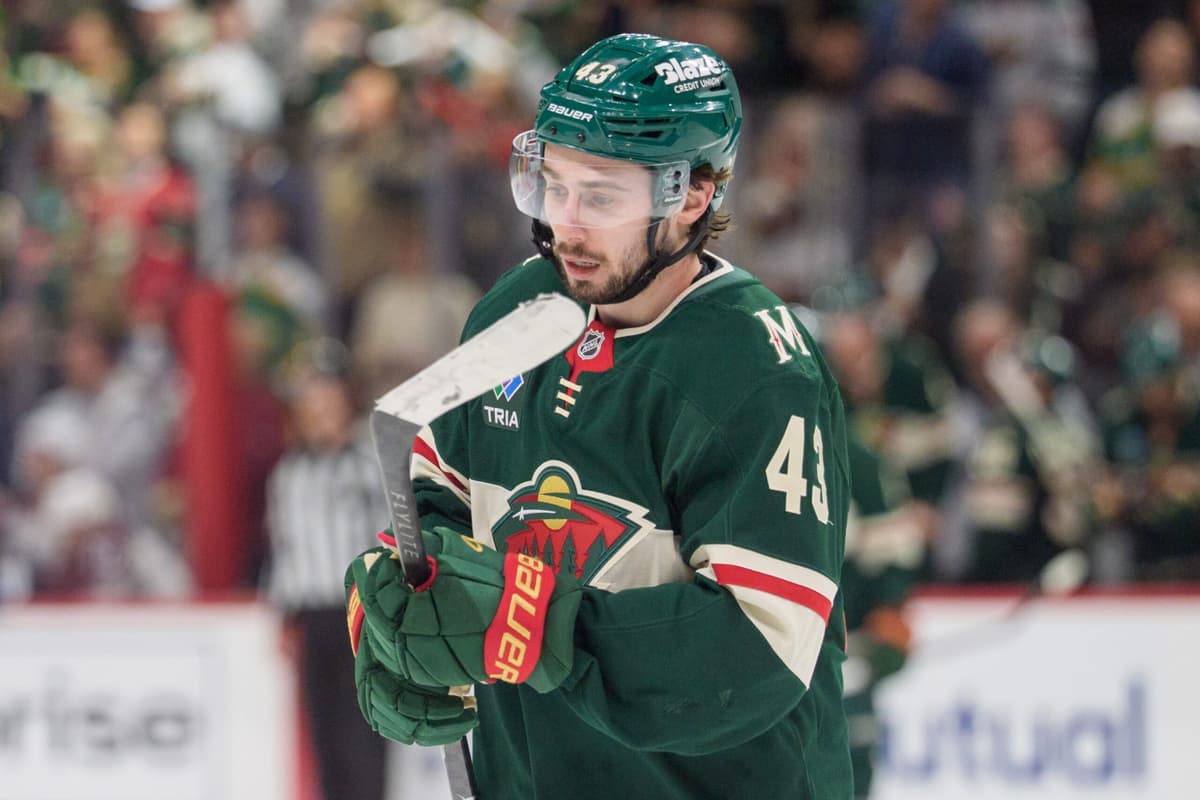
Quinn Hughes becomes eligible for a contract extension in the coming days after his December trade to Minnesota, and Wild ownership has already signaled confidence a deal will get done. The defenseman's market value hinges entirely on a single variable: whether he prioritizes maximum annual value on a shorter runway or accepts a discount to lock in a seven-year commitment with the franchise. This isn't a salary negotiation—it's a time-horizon bet, and the outcome reshapes Minnesota's salary architecture for the next half-decade.
Leopold and general manager Bill Guerin have indicated a preference for term, but Hughes is 26 years old with $40 million already earned and the leverage to dictate structure. The comps are sharp: Eric Karlsson's 2019 extension set the market-setting ceiling at 14.1% of cap ($16M AAV against today's $113.5M cap); Kirill Kaprizov's $17M AAV is Minnesota's internal reference point. The math reveals a fork: a long-term deal (seven years, $17M AAV) approaches $120M total but locks Hughes as the franchise's centerpiece through his early thirties; a shorter commitment (four to five years, $15–16M AAV) totals $60–80M, preserves optionality for both parties, and lets Hughes test free agency when his prime years remain. Guerin is building around Hughes as a primary offensive engine, and his 2025–26 output—solid production on a team that reached the playoffs' second round in his first season—validates the December acquisition premium Minnesota paid.
Hughes' assists and points totals carry direct leverage in this negotiation because offensive defensemen command cap premiums. His shot volume and defensive metrics anchor his tier relative to the market; a player generating 50+ assists annually can justify top-dollar AAV. If the extension lands on the shorter-term side—likely within the next 7–14 days—Minnesota preserves flexibility to acquire forward depth or retain role players. If term dominates the agreement, the Wild lock in predictability but surrender negotiating room after 2027 when other stars' deals mature.
For bettors, the contract announcement timing matters less than the term structure's downstream effect on team construction. A long-term Hughes extension signals Guerin believes the current roster core can contend within the cap constraint; it locks the betting narrative around Minnesota's ceiling into that configuration. A shorter deal telegraphs anticipated cap flexibility—a proxy for aggressive future asset-moving or young talent development. Team totals for Minnesota's assists and points output remain stable regardless of which version Hughes signs; his individual props are the cleaner angle. If Hughes inks a seven-year deal within the week, it's a bullish macro signal for Minnesota's offensive continuity and stability. If it's four to five years, watch for mid-season trade speculation come December 2027—a potential volatility driver for his season-long performance metrics.