Sabres Claw Back to Even as Vegas Closes In on Conference Finals
By Justin Erickson ·
Buffalo's overtime escape and Montreal's goal-line misfortune reset an Atlantic semifinal, while Vegas inches closer to a Western Conference appearance.
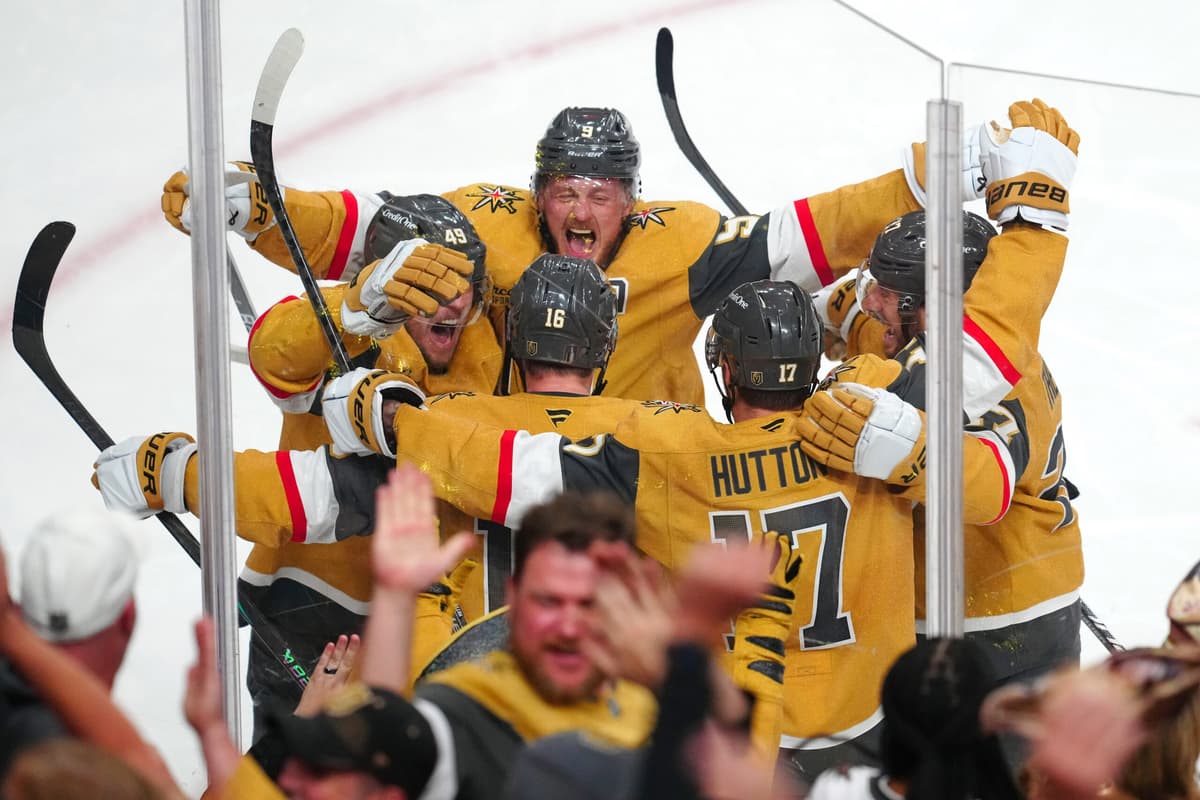
The Stanley Cup Playoffs delivered a pair of divisional clashes on Tuesday night that reshuffled the upper bracket. The Buffalo Sabres forced even footing in their Atlantic Division Final against Montreal with a 3-2 victory, erasing a 2-0 series deficit. Concurrently, Vegas edged closer to its first Western Conference Finals berth in three years with an overtime win, leaving Anaheim one loss from elimination.
Buffalo's comeback hinged on a critical first-period review. Jack Quinn's shot appeared stopped by Canadiens goalie Jakub Dobes' glove, but the video review revealed the puck had crossed the line entirely—a goal that shouldn't have counted by conventional save metrics. That review goal served as an inflection point: the Sabres seized momentum off a possession that could have gone either direction, and Montreal never regained control of the scoreboard. Such swing moments in playoff hockey carry outsized weight on team confidence and pace-of-play metrics. The Sabres' forecheck intensified after the review confirmed the score; Montreal's shot volume in the second and third periods dropped noticeably as the team chased a deficit.
From a shot-generation standpoint, Tuesday's result signals a meaningful shift in series dynamics. The Canadiens had controlled expected shot volume in Games 1 and 2, but Buffalo's victory flipped possession architecture. When a team is forced to mount a comeback, defensive structure often loosens—Montreal's high-danger chance count (clear offensive looks generated within the home plate area) climbed as they pressed forward, but so did their exposure to counterattack. The Sabres' deeper roster depth in scoring depth allowed them to capitalize on those openings. Quinn's goal, though controversial on review, was symptomatically emblematic: Montreal gave up a Grade-A scoring chance rather than a neutral-zone turnover or a screened shot.
For bettors tracking this series, the momentum swing carries direct implications for Game 5 pricing. Buffalo's comeback victory, especially one fueled by a favorable video review, often triggers market overreaction. Books will shade totals upward because the narrative now reads as "Sabres surge energy." However, Montreal still possesses superior goaltending depth (Dobes has posted elite crease control metrics in the playoffs) and hasn't yet faced the pressure of an elimination game. The Canadiens' second-period shot totals—how many Grade-A chances they generate when playing from behind in Game 5—will determine whether Buffalo's comeback was a structural advantage or a one-off variance spike. Early totals at 5.5-6.0 goals likely overweight the Sabres' offensive output from Game 4; the market may not have fully priced Montreal's defensive tightening once elimination looms. Conversely, if Montreal's penalty kill units (which have been vulnerable in this series) face sustained pressure in Game 5, the over becomes genuine value.
Vegas's overtime result in the West carries similar implications for series totality. A team one win away from the Conference Finals is rarely priced as undervalued; the market has already loaded Vegas into favorites for tonight's closeout opportunity. The sharper angle here is NOT to chase Vegas moneyline at short odds, but rather to track whether the Golden Knights' goaltender workload (minutes, high-danger saves) correlates to Anaheim's shot volume in Game 6. If Vegas closes out, it's because they've compressed Anaheim's offensive opportunities, not because of scoring volume alone. That disciplined defensive structure will persist into a Conference Finals matchup. Early season sample sizes in playoff matchups are volatile, but game-state shooting efficiency (shots per minute while leading vs. trailing) is one of the stickier predictive signals. Teams that defend well in close playoff series tend to defend well against the next opponent, too.