Babcock to Edmonton: A Coaching Gamble That Rewires Oilers Volatility
By Justin Erickson ·
The Oilers are hiring a 700-win coach with documented player-management liabilities, a decision that injects uncertainty into their core group's performance trajectory.
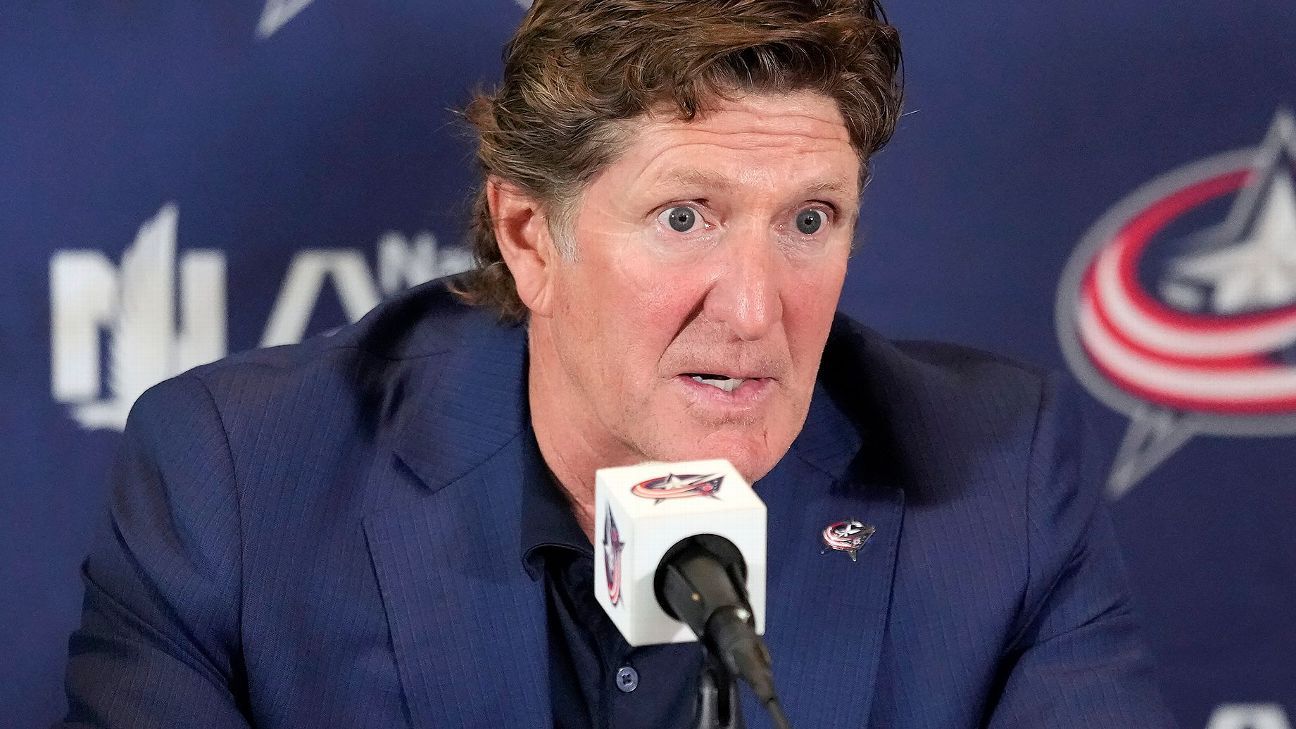
The Edmonton Oilers are closing in on a deal to make Mike Babcock their next head coach, according to multiple sources confirmed to ESPN on Monday. The 63-year-old, 12th all-time in NHL coaching victories with 700 wins, last coached the Detroit Red Wings and won a Stanley Cup in 2008. Babcock's arrival replaces Kris Knoblauch and marks the Oilers' third coaching change in five seasons—a structural signal that roster stability has not translated into system stability.
Babcock's resume contains genuine pedigree: two conference titles in Detroit, a Cup run, and an NHL coaching footprint that spans Anaheim, Detroit, and Toronto. But the resume is now shadowed by two separate conduct issues. He resigned from the Columbus Blue Jackets in 2023 after an NHLPA investigation confirmed he violated players' privacy by asking to see photos on their cellphones—a violation serious enough that Blue Jackets president John Davidson later said "we got it wrong" in hiring him. In Toronto, Babcock's psychological tactics came under scrutiny, including an incident where he asked rookie Mitch Marner to rank hardest-working teammates and then shared that ranking with the roster. These moments map onto a coaching philosophy that relies on information asymmetry and psychological pressure—tactics that can destabilize locker-room cohesion.
For the Oilers, the hire is a desperation move dressed in experience. Edmonton's ownership, led by Daryl Katz, has explicitly consulted the core group (McDavid, Draisaitl, Bouchard) about Babcock's hiring, a sign that the team is buying into a narrative of "proven winner" to offset legitimate questions about chemistry and accountability. Babcock's methods worked in Detroit during an era of different player expectations and NHL culture; Toronto's later firing and Columbus's immediate resignation suggest those methods don't travel cleanly to 2026. The NHLPA has already confirmed it reached out to the Oilers about any open investigations into Babcock's conduct—a procedural formality that underscores the reputational risk baked into this hire.
From a betting mechanics standpoint, coaching volatility compounds existing outcome variance. The Oilers' 2025-26 season will unfold under a new system with a coach whose interpersonal approach has destabilized two previous rosters. This matters most for team-total props and spread pricing. If Babcock's system emphasizes structural discipline and reduces offensive creativity—a real possibility given his defensive-first coaching philosophy—Edmonton's shot volume and goal rate could decline relative to roster talent. Conversely, if the core group rebels against his psychological methods (a genuine risk given prior incidents), team cohesion could fragment mid-season, creating second-half performance cliffs. Markets will open the 2026-27 season pricing the Oilers based on McDavid and Draisaitl's talent alone; the coaching variable introduces hidden volatility into that pricing. Early-season team totals and moneyline moves will telegraph whether the system is installing or combusting.
The prop edge here is asymmetric: fade heavy Oilers team totals in the first 10 games of 2026-27 and watch for mid-season regression if locker-room friction emerges. The high-leverage plays—McDavid assist lines, Draisaitl goal props—should hold steady because elite players generate volume regardless of system. But Edmonton's fourth-line production, depth scoring, and power-play secondary options will absorb system shock. Books will price the Oilers favorably early because the narrative is "Babcock + McDavid = proven upside." Reality will be more textured: a new system overlaid on a roster that has already cycled through multiple coaches in five years.