Sabres Face Early-Season Depth Test as Zucker Sidelined by Sports Hernia Surgery
By Justin Erickson ·
Buffalo opens the season without a 45-point winger and a newly acquired defenseman, forcing accelerated playing time for depth forwards and a reconsidered power-play setup.
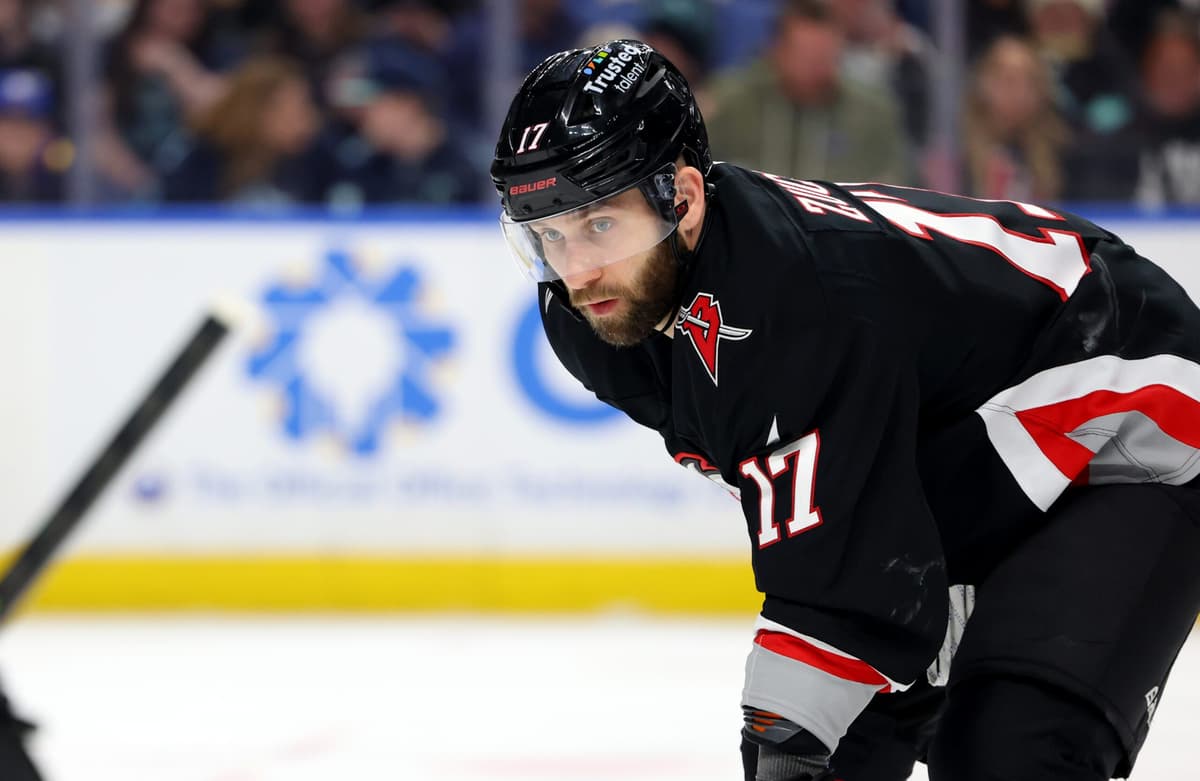
Jason Zucker will not be available when the Buffalo Sabres open their 2026-27 campaign. The 34-year-old winger is recovering from offseason sports hernia surgery, per GM Jarmo Kekalainen's announcement on Wednesday. Zucker produced 24 goals and 21 assists across 62 games last season but spent much of the year managing injury setbacks. His absence creates an immediate vacancy in Buffalo's top-six forward group and forces the coaching staff to elevate secondary scorers earlier than planned.
Defenseman Louis Crevier's status is equally uncertain. The 25-year-old, acquired from Chicago in the Bowen Byram trade, underwent shoulder surgery this offseason and may not be ready for opening night. Crevier averaged 17-plus minutes with the Blackhawks last season and appeared destined for a similar role in Buffalo's top-four. His potential absence stacks depth pressure on the blue line and leaves the Sabres playing defensive lineups against more talented opponents in October, when depth margins typically matter most.
Zucker's injury timeline remains vague—no return window has been announced publicly. Sports hernia repairs typically require 6-10 weeks of recovery before game availability, which would place a realistic return in late October or early November. That window covers at least the Sabres' first 10-15 games. Crevier's shoulder surgery carries similar ambiguity, though shoulder injuries in hockey often extend timelines if the player is expected to handle contact and workload management through a full season. The preseason begins September 21 against Pittsburgh; neither player is expected to play in tune-up games.
For betting purposes, Zucker's absence directly affects Buffalo's forward depth scoring and power-play structure. Last season, Zucker logged meaningful time on the second and third power-play units. His 45-point output came in a limited role, making him one of the team's most efficient generators per minute. The Sabres will lean on secondary players—likely depth forwards like Jeff Skinner or converted wingers—to absorb those minutes and touches. This compression flattens the scoring distribution; instead of spread risk across six reliable scorers, Buffalo now depends more heavily on one or two established names. Team totals should factor in fewer multi-scorer games early on. Additionally, anytime goal props on the Sabres' secondary wings become less predictable. Without Zucker's presence, role clarity shifts, and ice time allocation becomes volatile until the lineup stabilizes.
Crevier's absence from the blue line is subtler but meaningful for shot volume. A 6-foot-8 defenseman with 17-plus minutes per game in Chicago represents significant shot-generating opportunity and penalty-suppression responsibility. If he misses the opening stretch, the Sabres insert a smaller, less-experienced defenseman into those minutes. Opposing offenses will probe that pairing early. Shot volumes against Buffalo may tick upward in the first 15 games if a defensive depth piece replaces Crevier; this is a structural, not temporary, exposure that will persist until he returns.