NHL
Quinn's Late-Season Surge Sets Up Buffalo's Offensive Gamble
Jack Quinn's 0.69 points-per-game pace down the stretch suggests the Sabres' replacement for Tuch's 33 goals may already be in house—but early-season volatility keeps the upside capped.
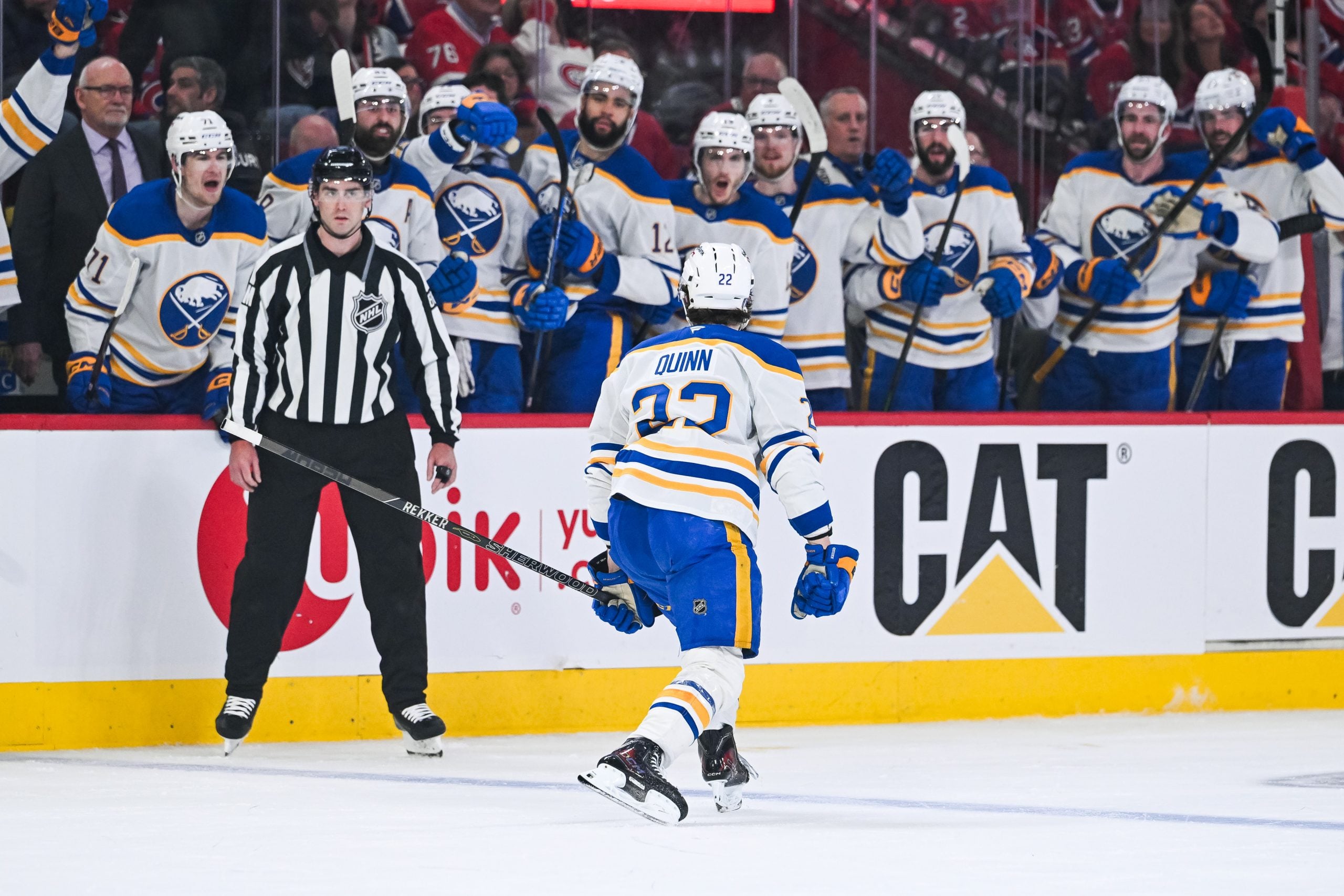
Buffalo is banking on Jack Quinn to carry offensive load in 2026-27 after trading Alex Tuch to Washington. Quinn finished the 2025-26 season with 20 goals and 60 points, but the path there matters more than the total: he opened with 3 goals in 20 games, then averaged 0.69 points per game over his final 62 contests. That second-half transformation came with a twist—he scored 20 goals on a career-worst 10.5% shooting percentage, meaning he was finishing chances at a higher rate even as he was being less efficient from a pure volume standpoint. The question isn't whether Quinn can score. It's whether his poor start was correctable or predictive.
Head coach Lindy Ruff's public messaging about Quinn shooting well but not finishing through December and January traces a specific mechanical issue: a shot that generates danger was missing the target or going high. Over the final 62 games, that tightened. Quinn showed flashes of dominance—dancing through defenders, generating dangerous chances from anywhere on the ice—and the Sabres' offense deepened as a result. At 25 years old and poised for an elevated role with Tuch's 33 goals departed, Quinn has room to climb. Losing Tuch hurts; the veteran winger brought net-front presence and playoff experience Buffalo will need to replace elsewhere. Quinn alone won't make it up, but his ceiling in this offense—surrounded by capable linemates and given consistent top-nine deployment—now includes a legitimate 30-goal season.
The betting market will price Quinn's season props based on recent form and role, which means early-season lines may overweight the 0.69 PPG second-half pace. That's where the edge sits. Quinn's first 20 games last year weren't noise; they were a real part of his profile. But the market knows about the hot finish and will price it in. What gets underweighted is the variance between his 0.15 PPG November-December stretch and his 0.75+ PPG March-April clip. He's not a 60-point player locked into consistency. He's volatile with an upside trigger.
For prop bettings purposes, Quinn's assists and points lines will likely land in the 45–52 range for the full season, assuming he gets 70+ games of ice time. If the early line is 48.5 points, that reflects the market's attempt to split the difference between his slow start and hot finish. The smarter angle is fade that number for the first 10 games of the season. Quinn historically takes time to generate consistent offense early in the year; lean unders on his game-level props in October and November, then reassess after Thanksgiving. His shots-on-goal line—if priced around 2.8–3.1 per game—may already capture his elevated role; that's less exploitable. But his points and assists props in Month One are vulnerable to recent-form bias in the opening set of games.