NHL · transaction
Montreal's Cap Architecture Means Demidov's 2027 Extension Will Anchor the Team's Ceiling
Ivan Demidov's contract negotiation in summer 2027 will test whether Kent Hughes' salary-cap framing can hold when a franchise cornerstone has market leverage.
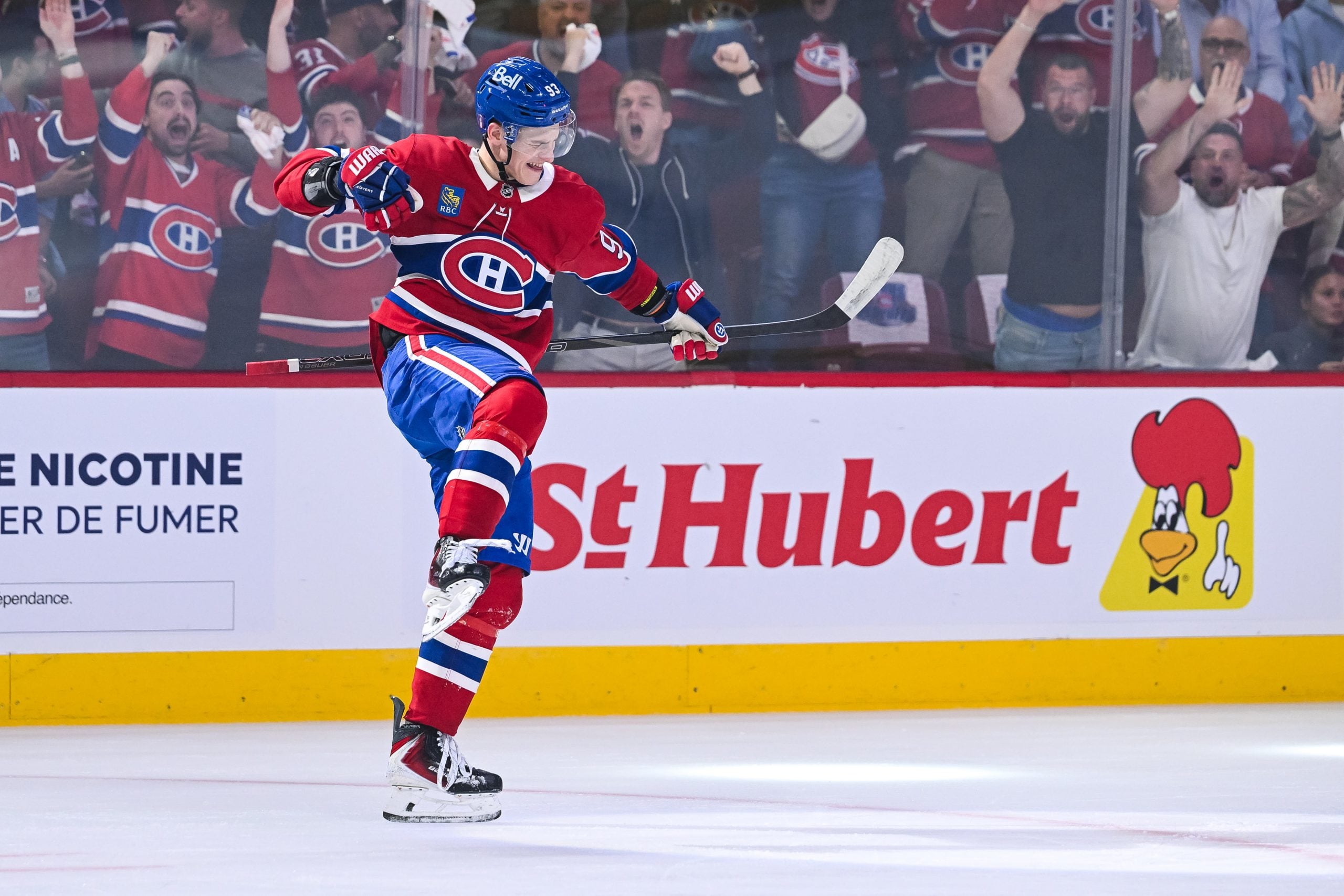
Ivan Demidov finished his rookie season with 62 points in 82 games and second-place Calder voting, and the Canadiens now face a structural choice: how much of their $104M projected 2027-28 salary cap will they commit to keeping their most talented young forward. The negotiation arrives with built-in constraints. Hughes has established a deliberate internal ceiling by anchoring Nick Suzuki's contract at $7.875M AAV, then successfully signing Cole Caufield ($7.85M) and Juraj Slafkovsky ($7.6M) within that framework. Demidov's deal will land in or near that same band—not because the market demands it, but because Hughes has weaponized organizational discipline as a negotiating tool.
The five most recent comparable RFA extensions reveal what's at stake. Lucas Raymond signed at 9.2% of the cap hit ($9.45M on an $102.5M cap), while Cole Caufield came in at 9.4% ($7.85M on an $83.5M cap). Seth Jarvis landed at 8.43% ($7.5M on an $88.8M cap), and Lane Hutson at 8.51% ($7.5M on an $88M cap). These percentages matter because they show how elite young talent gets priced once it clears the entry-level threshold. Demidov's 62-point rookie is already ahead of where many of these comparables were—Caufield had 52 points in his first full year, Jarvis 53. The gap widens if Demidov hits 75-80 points in year two, which his trajectory suggests is probable.
Hughes' leverage rests entirely on a cultural sell. He's betting that Demidov values long-term security, a clear role in a competitive organization, and the prestige of building a contender in Montreal more than chasing maximum annual dollars. The eight-year term (still legal under the CBA) becomes the vehicle—life-altering guaranteed money spread over a decade, locked in before his potential peak earning years. This pitch has worked twice already with Caufield and Slafkovsky, both of whom took less than their unrestricted market value would have commanded. But Demidov is a different animal: a foundational talent drafted for his offensive ceiling, already producing like a top-50 NHL forward in year one. The agent will have comparable comparables in hand and a clear argument that 9% of the cap (roughly $9.36M at $104M) is the floor, not a negotiation point.
For the betting market, this contract becomes a proxy for Montreal's forward-group cap flexibility over the next three seasons. If Demidov signs for $8.5M or less (8.2% of cap), Hughes has held the line and the Canadiens retain firepower to address depth and defense. If he lands at $9.2M-$9.5M, the Suzuki-Caufield-Demidov core consumes 27-28% of cap before you account for role players and defensive assets. The narrower the deal, the more aggressive Montreal can be on the trade market in early 2027—earlier line movement on Canadiens over/unders for points and goals against during the 2027-28 and 2028-29 seasons may reflect early signals from Hughes' camp about where negotiations are trending.
The betting implication is subtle but durable: monitor Canadiens forward-group production lines (team totals, individual assist rates) in the 2026-27 season. If the front office is selling Demidov on long-term culture and cap discipline, expect mid-season cap casualties or quiet depth acquisitions—signals that Hughes is preparing the ledger for a lower-cost extension. Conversely, if Montreal starts chasing immediate performance and aggressively trades prospects for veterans, the market is pricing in a richer Demidov deal and flagging cap strain for 2027-28. The contract itself closes in summer 2027, but the financial posture becomes visible now.
NHL Intelligence — Hockey intelligence beyond the scoreboard. Open NHL Intelligence →