Hurricanes' Defensive Breakdown Against Canadiens Exposes Save-Rate Risk in Game 2
By Justin Erickson ·
Carolina's worst defensive showing of the playoffs—highlighted by a catastrophic first period and Andersen's lowest save percentage—signals a reversion opportunity that Game 2 markets may not have fully repriced.
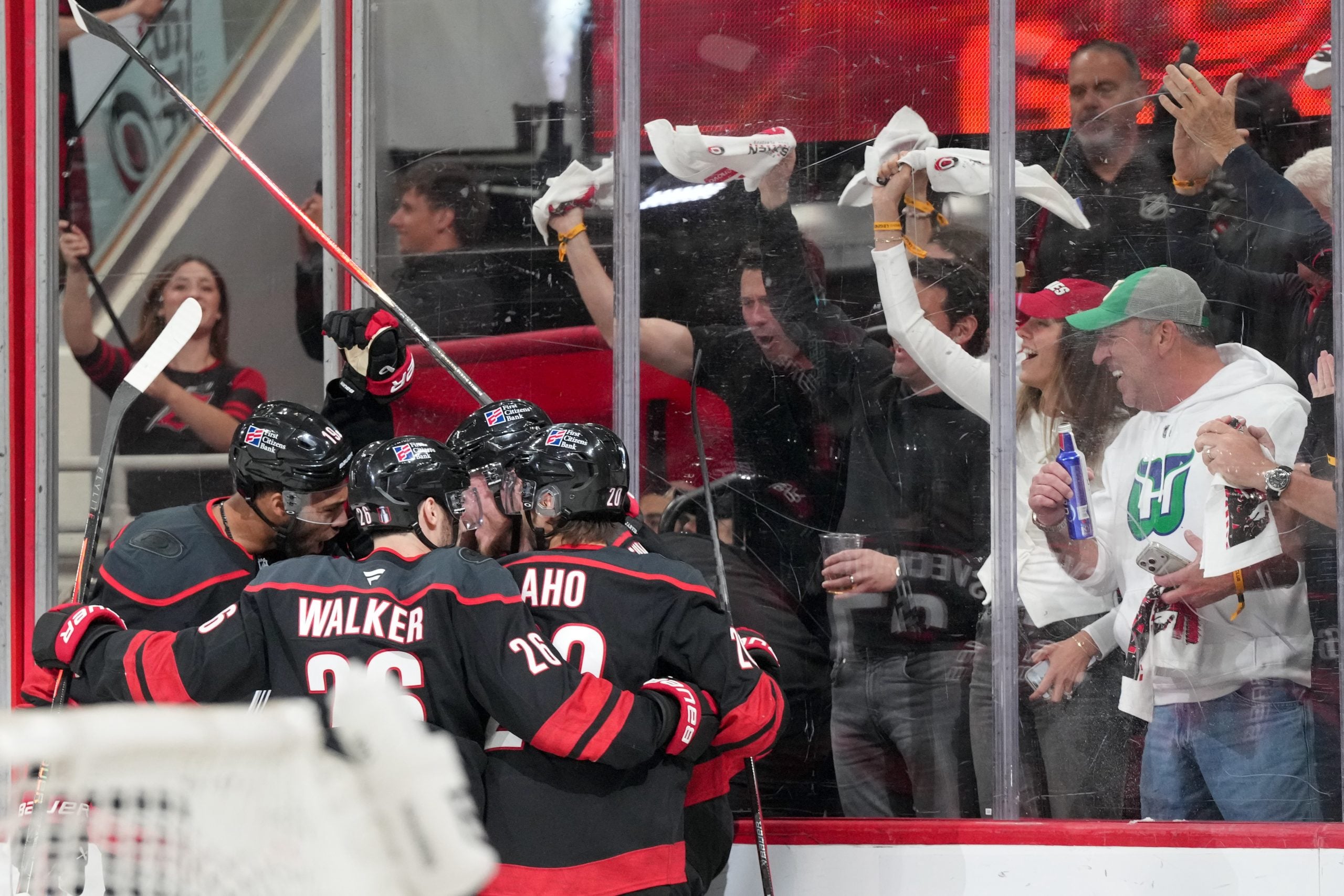
The Hurricanes' 16-game playoff winning streak ended hard: a 6-2 Game 1 loss to the Canadiens in which Montreal scored four goals in the first 10:37. Seth Jarvis gave Carolina a 33-second lead before Cole Caufield answered 27 seconds later, and the collapse was immediate. What looked like a dominant postseason run—one that had carried them through two rounds without a regulation defeat—crumbled in one period of defensive dysfunction.
The defensive structure that anchored Carolina's success vanished. Jaccob Slavin, the league's most reliable defensive defenseman, finished minus-4; Jalen Chatfield was minus-3. K'Andre Miller's decision to double-shift on Alex Newhook instead of staying attached to Ivan Demidov on a breakaway made it 4-1 by the second period. The Canadiens weren't outworking the Hurricanes—they were exploiting a team that looked timid, pinched at the wrong moments, and exposed early. Frederik Andersen faced 21 shots and stopped 16 for a .762 save percentage, the worst performance of his entire playoff run. The second and third periods showed modest improvement, but the damage was terminal.
One game does not erase organizational structure, and the Hurricanes' first-seed pedigree remains factual. Colorado lost Game 1 of the 2022 Western Conference Final and still won the Cup. Carolina has Game 2 on home ice to reset. But the prop market hasn't fully priced the persistence of this vulnerability. Slavin's minus-4 was uncharacteristic, yes—but it wasn't random. The Canadiens' forecheck was relentless, and Montreal's speed at transition exploited every gap in Carolina's backcheck. If the Hurricanes enter Game 2 with the same defensive structure and assignment patterns, expect Montreal's high-danger chance rate to remain elevated.
Andersen's .762 save percentage is a statistical outlier for him, but it wasn't caused by fluke angles. The Canadiens generated one-timers off turnovers and had time and space on most of their scoring plays. If Montreal's offensive pressure returns—and their transition game remains sharp—Andersen could post another sub-.800 night. The market has likely tightened the moneyline and moved the total downward for Game 2, overweighting the narrative that Carolina must respond. What it may have underweighted: whether the defensive adjustments are structural or just emotional. Andersen's save-percentage total for the series, if offered, carries value on the under side. A repeat of Game 1's chaos—even in milder form—keeps him well below his seasonal norm.
The Hurricanes will adjust personnel and messaging. Slavin and Chatfield will play tighter minutes. Miller will review tape on defensive coverage. But one-game defensive breakdowns can propagate into series patterns if the root cause isn't fully corrected. That uncertainty is the edge. Back the under on Andersen's cumulative save percentage for the series if the market is anchoring on his career average rather than his actual exposure in a Montreal series where speed and transitions are Montreal's primary weapons.