Barron's Nashville Reprieve: One Year to Prove or Perish
By Justin Erickson ·
Justin Barron stays in Nashville on a prove-it deal, but reduced minutes and organizational uncertainty make his 2026-27 season a high-variance defensive bet.
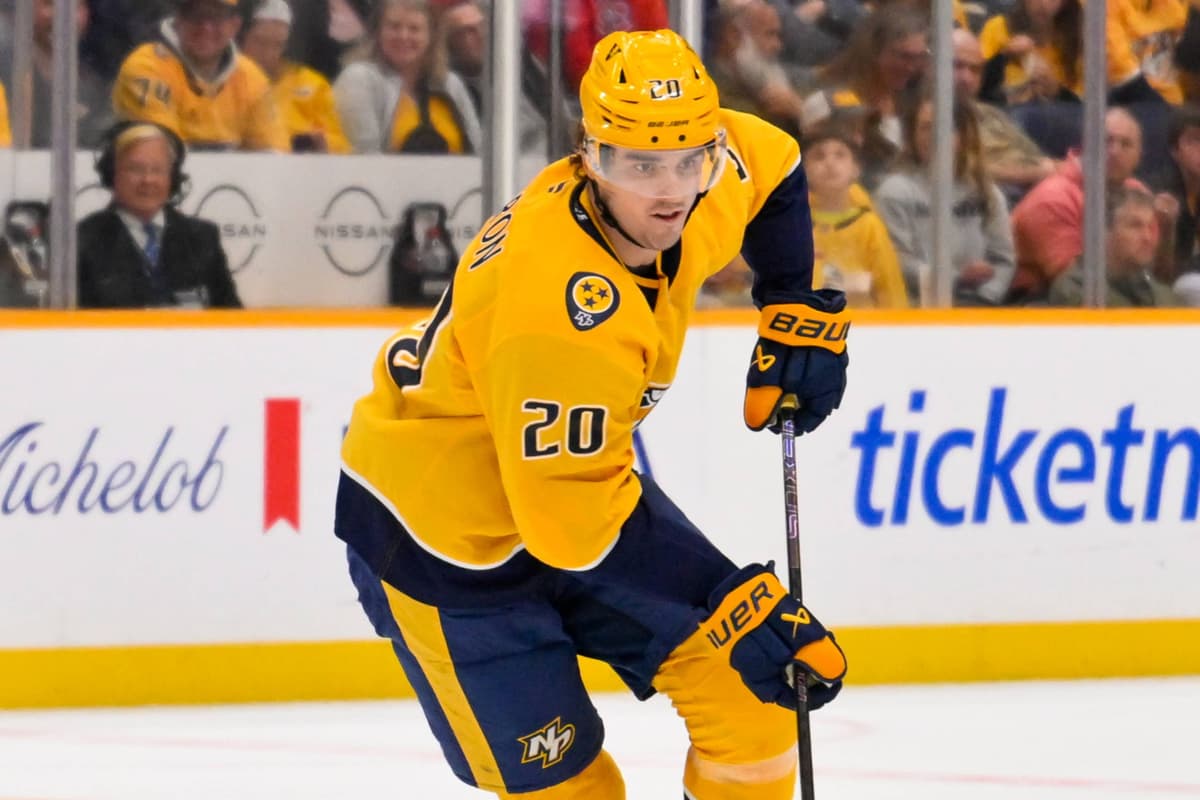
Nashville locked in defenseman Justin Barron on a one-year, $1.575 million contract Monday, keeping the 24-year-old in the fold for the 2026-27 season after a rotational first year with the Predators. The deal structure—a short-term, cap-friendly anchor—signals neither confidence nor commitment; it's a holding pattern that delays an organizational decision rather than resolving one.
Barron arrived in Nashville as a reclamation project with modest pedigree. The Colorado native appeared in 38 games last season for the Predators, recording 2 goals and 8 assists while averaging 15:42 in ice time. Those minutes place him outside the top-four defensive core, a fourth-pairing or healthy-scratch reality that reflects his inconsistency. A first-round pick (2018) by Montreal, Barron has never stabilized into reliable NHL usage—he was squeezed out of depth charts in Colorado and again in his Predators debut. Nashville's willingness to extend him at this price point, rather than expose him to waivers or trade him for anything of substance, suggests the team views him as organizational depth with development potential rather than a plug-and-play solution to their back-end struggles.
The $1.575 million cap hit is near the league minimum for an RFA arbitration case, indicating limited leverage and a lack of other bidders. This contract serves Nashville by deferring the harder decisions—whether Barron becomes a consistent NHL player or fails to unlock the upside that once justified a first-rounder. For Barron personally, it's a final audition: a full season to earn consistent ice time and prove he belongs in a permanent lineup role. If he doesn't, he enters the 2027 offseason as a 25-year-old potential waiver candidate with a declining trade market.
From a prop-betting perspective, Barron's role compression creates a disciplined angle on Predators defensive depth. His 15:42 average ice time from last season, combined with Nashville's organizational uncertainty, projects to continued back-end deployment in 2026-27. That means limited opportunities for blocked shots, assists, or offensive touches—the primary scoring vectors for NHL defensemen in the props market. If sportsbooks treat Barron as a potential breakout candidate based on his pedigree or Nashville's roster moves, that would represent a mispricing; the contract itself is an anti-endorsement of that narrative. His blocked shots and assists totals, should they be offered, are likely to sit in a range that undervalues his marginal role. Additionally, games in which Barron logs heavy minutes often correlate with Predators defensive injuries or blowouts—high-variance scenarios where offensive stability evaporates.