Pittsburgh's Shea Decision Could Reshape Defensive Depth—and Blue Line Scoring
By Justin Erickson ·
Ryan Shea becomes a free agent in 8 days, and the Penguins face a critical choice between retaining proven depth and building a younger, more aggressive defense.
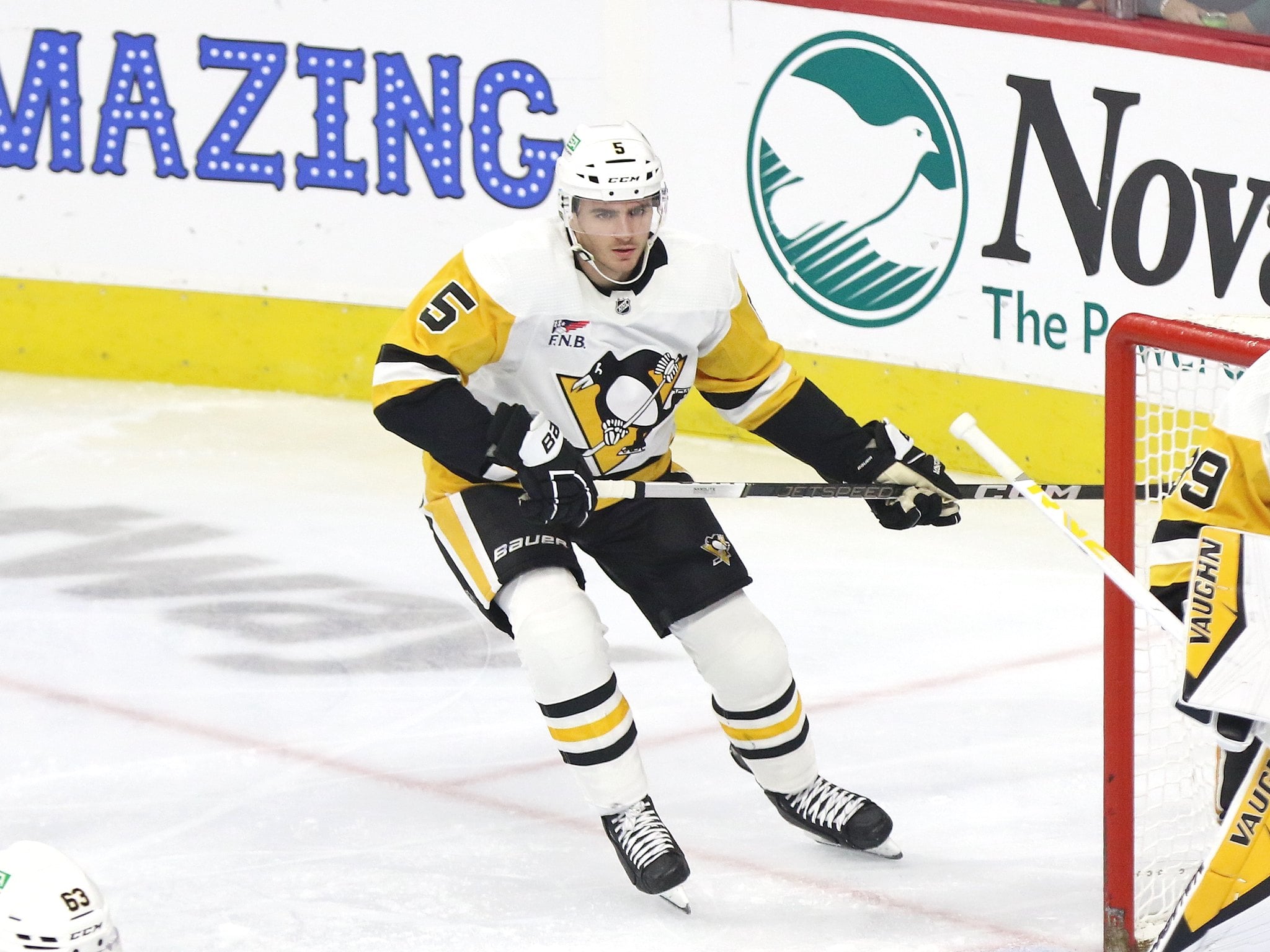
The Pittsburgh Penguins made the playoffs for the first time since 2022, a success story that masked a fundamental roster gap: defensive depth. Ryan Shea, the reliable left-side defenseman who evolved from a marginal two-season contributor into a legitimate NHL blueliner, hits unrestricted free agency on July 1—just over a week away. The window for Pittsburgh to re-sign him is closing fast, and the organization must decide whether his consistency is worth the likely contract premium he'll command on the open market.
Shea's 2025-26 season was remarkable not in flash but in volume and dependability. He played all 80 games, posted 35 points (6 goals, 29 assists)—a quantum leap from his three goals and six points across his first two seasons—and averaged 18:53 of ice time while serving penalty-kill minutes. More tellingly, he provided the kind of quiet, positional defense that doesn't generate highlight footage but fills games without catastrophic errors. He wasn't always the smoothest puck-mover and occasionally got caught flat-footed against aggressive forechecks, but his three-zone reliability was real and measurable. At 29 years old, with one month until he turns 30, Shea has entered his prime defensive years—the zone where veteran defensemen typically deliver their most stable play.
Yet GM Kyle Dubas faces a structural problem that Shea alone can't solve. The Penguins' existing defensive core (Kris Letang, among others) sits firmly on the wrong side of 30, and Dubas has repeatedly signaled that contention requires younger, more dynamic talent. The draft appears thin at the position, and Dubas has grown disciplined with term since 2023—most recent non-entry-level deals have been one or two years, suggesting he's wary of locking in aging players. Shea will almost certainly seek multi-year security and a raise; the open market includes comparables like Brett Kulak, Logan Stanley, and Carson Soucy, and while Shea edges them on point production, he's not a needle-mover that pins teams to long-term commitments. Harrison Brunicke, a young prospect, remains several seasons away from regular minutes. The Penguins' calculus appears grim: pay Shea to maintain depth or gamble that an incoming free agent or trade pickup can handle a hybrid role at lower cost.
For prop bettors, this decision ripples into Pittsburgh's defensive workload distribution. If Shea departs, the Penguins lose 1,500+ minutes of left-side defense and roughly 35 points of depth scoring from the blue line. That void doesn't vanish—it redistributes. The team will ask remaining defensemen to absorb shift load, reduce their rest, and likely play tighter, more conservative positions to compensate for missing depth. That defensive tightening typically correlates with fewer power-play opportunities, lower assist rates from the blue line, and higher blocked-shot volume as players prioritize containment. Conversely, if Dubas re-signs Shea, it signals a pivot away from aggressive buy-now contention and toward roster stability—a message that could weigh on over/under team totals because it telegraphs a cautious offensive stance. Shea's 35 points this season represented roughly 2.2% of Pittsburgh's offensive output; losing that without a clear replacement compresses bench depth scoring and may reduce assists from defensemen league-wide for the Penguins.
The market hasn't yet priced this outcome because Shea's status remains unsigned and public. The moment he either re-signs or walks, Pittsburgh's defensive minute allocations will shift, and team total overs built on 2025-26 depth scoring suddenly become exposed. Early-season player props tied to Pittsburgh defensemen—particularly assist lines for players who'd assume Shea's secondary power-play slot—are vulnerable to compression if the team loses him. The flip side: if Dubas does re-sign Shea, his assist line becomes a candidate for a modest uptick, as the team can continue to trust secondary power-play depth. This is not a multi-season pattern; it's a single structural decision with measurable two-week impact.