NHL · transaction
Jarry's Redemption Window Is Open—and Closing Fast
A failed 2025-26 season and the arrival of three competing netminders mean Edmonton's goaltender is auditioning for his NHL life in September.
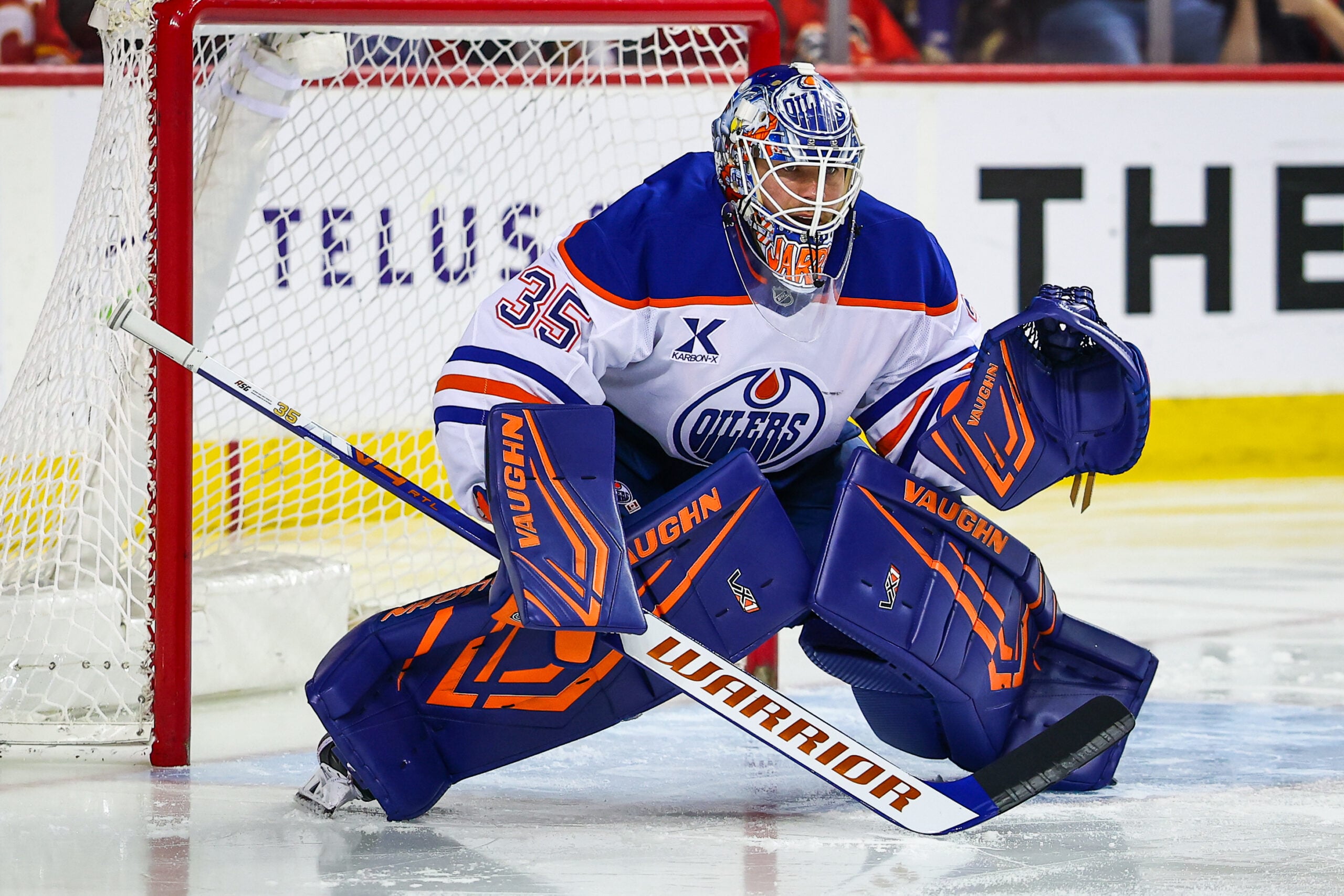
Tristan Jarry arrives at training camp for the 2026-27 season under conditions that could hardly be more precarious. The Oilers' trade for him last December—surrendering Stuart Skinner and Brett Kulak to Pittsburgh—was supposed to stabilize a roster with Cup aspirations. Instead, Jarry appeared in only three games before injury derailed him entirely, and he never reclaimed form. Now, nearly ten months later, he's competing for ice time against Devon Levi (acquired from Buffalo) and Frederik Andersen (signed as a free agent), with Andersen sidelined through training camp due to an offseason injury. The three-goalie rotation isn't a comfort net; it's a pressure cooker.
Jarry's path to redemption traces back to Edmonton's rink itself. He won a Memorial Cup with the Oil Kings in 2014 and carried that pedigree into the NHL with Pittsburgh, where he posted respectable regular-season numbers from 2017-18 through 2025-26 without ever crystallizing into an elite starter. The return to Alberta was pitched as a reset—a homecoming that might unlock the ceiling he showed as a teenager. Instead, Connor Ingram displaced him, and the organization has since hedged its bet by adding two additional options. That hedge is the market's read: Edmonton doesn't believe Jarry is the answer, and his window to prove otherwise is measured in weeks, not months.
The weight of this audition falls hardest on September and October. Andersen's absence creates opportunity, but it also means failure is immediately visible. If Jarry falters early, the Oilers won't hesitate to lean on Levi, a younger asset with developmental upside. If he plays well, the narrative shifts from "sunk-cost trade" to "organizational recovery." Mike Babcock's arrival as head coach adds a wildcard—Jarry's rapport with the system and its defensive structure will matter enormously to his actual workload and performance ceiling. The 2027 Trade Deadline (March 1) is Edmonton's formal checkpoint, but the team's mind will be made up well before then based on the next 60 days.
For bettors, Jarry's volatility creates a direct pricing angle on Oilers goalie props and team defensibility. If he steadies early, Edmonton's defensibility improves, which pressurizes opposing offenses and lowers team totals. Conversely, a shaky start forces the Oilers into a reactive strategy—leaning on offense to cover defensive lapses—which inflates pace and total-points lines. The key mechanic: Jarry's save percentage and early confidence directly correlate with team structure. At .910 or above, the Oilers can lock in defensive shape and play at a measured pace. Below .900, they abandon structure to score by volume. The market has not yet separated this; opening Oilers season totals and overs/unders are being priced as if the goaltending depth chart is stable. It isn't. The first week of preseason games will signal whether Jarry's mechanics have recovered from injury or whether Edmonton is really auditioning Levi as the starter.
Watch the early-season shot volume and quality-control metrics closely. If Jarry's high-danger-chance save rate is south of .800 in September, the Oilers' total will creep upward as the season progresses, and offenses will have an easier target. If he holds .850 or better, the team tightens defensively, and unders become more durable. The prop angle isn't whether Jarry finishes at .910 or .920—it's whether he finishes the season at all, and what that means for team totals along the way.