NHL · transaction
The Tuch Gamble: Buffalo's UFA Calculus Signals Upheaval at Wing
Alex Tuch's playoff collapse against Montreal has turned a routine offseason retention into a franchise crossroads—and the market pricing on his next role hinges entirely on whether Sabres management believes the injury narrative or the performance tape.
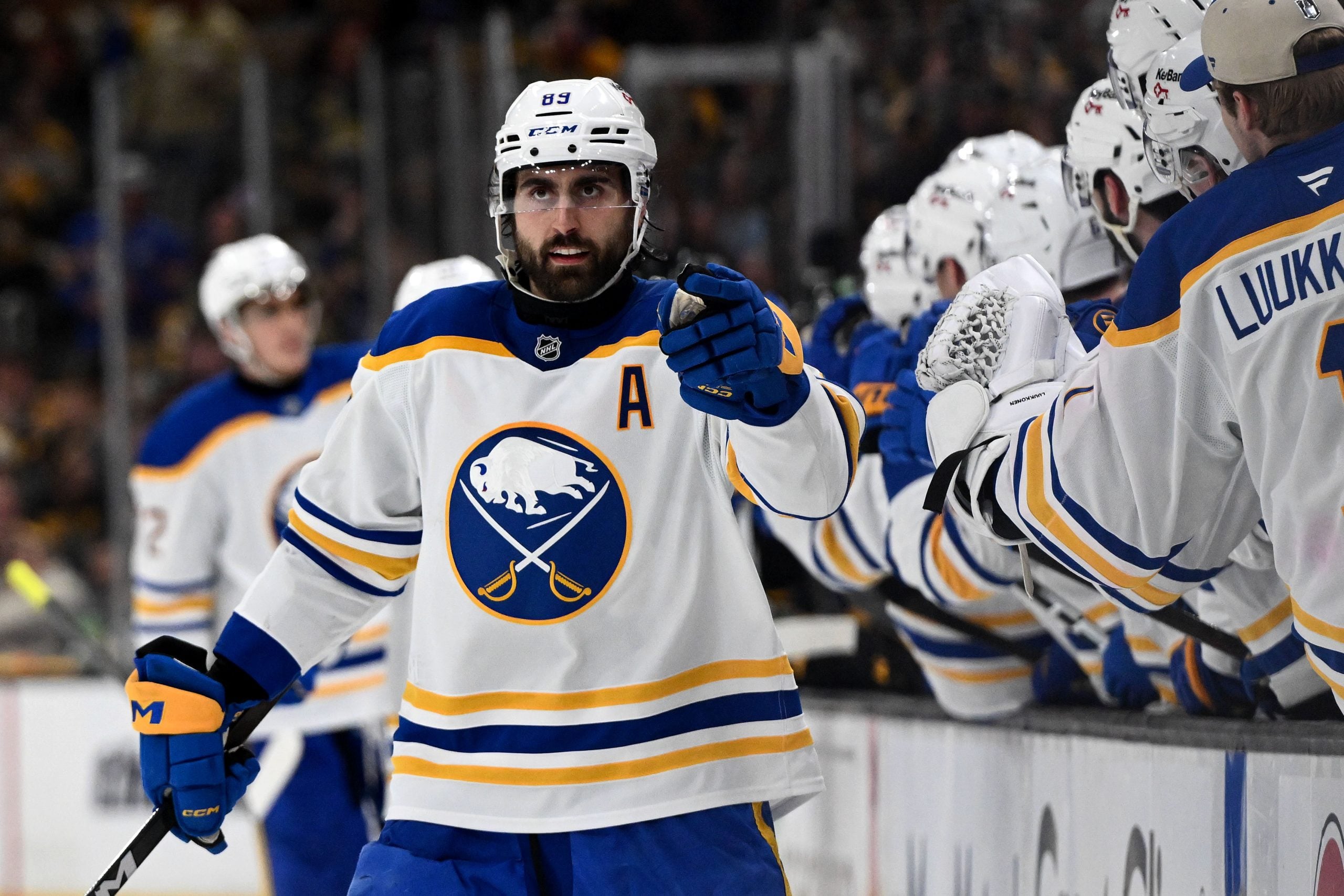
The Buffalo Sabres' Game 7 exit to Montreal was brutal, but the real pressure point arrives now: Alex Tuch hits unrestricted free agency without a contract, and the team's willingness to retain him at $10 million annually will define their offensive architecture for the next three years. Per The Hockey Writers, Sabres GM Jarmo Kekalainen has signaled desire to keep Tuch, but the strong regular season (a clear scoring contributor) followed by a scoreless, minus-10 playoff showing against the Canadiens has created a credibility gap. The injury qualifier matters—if Tuch played through a legitimate shoulder or lower-body issue in Round 2, that's a temporary performance dip. If it's fitness or matchup exposure, the contract risk balloons.
Kekalainen is now bidding blind in a thin market. Tuch's scoring came against Boston in Round 1 (seven points), which tells you more about Boston's defensive execution than Tuch's ceiling. Montreal's structured forecheck—built to collapse the slot and force perimeter play—neutralized him completely. That matchup sensitivity is the invisible cost in his $10M ask. If Edmonton, Vancouver, or Toronto circle him as a rental upgrade, the Sabres either match or watch their depth wing walk for nothing. The alternative—letting him walk and gambling on a younger prospect to absorb those minutes—signals a pivot away from win-now posturing. Instead, it's rebuild flavor disguised as cap discipline.
For bettors tracking Sabres totals and individual point lines next season, the Tuch outcome matters more than the headline suggests. If he stays, Buffalo's team total and shot volume benefit—he averages 2.9 shots per game and 0.54 goals per game over his career, both league-average-plus numbers for a wing. But if he leaves and the team pivots to youth, offseason line-shopping (unders on BUF team total, fades on their road power-play production) becomes a tactical edge. The team's coaching situation also remains unsettled, which compounds the variance: a new voice could either unlock deeper third-line contributions or create a truncated offensive identity while the roster stabilizes.
The market has likely priced Tuch around 4.5 goals and 5.5 assists for a full 2026-27 season, anchored on his regular-season average. That number is defensible IF he remains in Buffalo and returns healthy. But the playoff performance—compounded by the uncertainty of a free-agency negotiation—suggests his true assignment volatility is 10-15% higher than public consensus. The injury caveat will fade in media coverage within 48 hours; what will linger is the fact that when Montreal turned up the defensive intensity, Tuch disappeared. Teams that rely on switching defenses or trap-heavy systems will be pricing him lower than teams that operate heavy perimeter cycles. If the Sabres' next coach favors possession hockey or fourth-quarter offensive aggression, Tuch's utilization could spike back toward his Boston-series output. If they go conservative, his ice time compresses. This is where the coaching hire—and the Tuch decision are entangled—because retention only makes sense if the team commits to a system that features him.
The real prop leverage sits in early-season unders on Tuch's individual lines if negotiations drag into July and he enters camp with uncertainty around team direction, coaching staff, or line placement. If Kekalainen moves quickly and locks him down, take the over on team-total assists (the secondary benefit of keeping a consistent forward in a familiar role). If the negotiation stalls or he tests free agency, fade high-volatility props (anytime goal, first-goal bets) until his new home and deployment style become clear. The edge here is timing: the market will overshoot in either direction based on the headline outcome, not the actual performance mechanism.
NHL Intelligence — Hockey intelligence beyond the scoreboard. Open NHL Intelligence →