Tuch's Contract Limbo Signals Sabres Instability—What It Means for Buffalo's Offense
By Erik Schwartz ·
Alex Tuch's refusal to commit to Buffalo hints at deeper organizational uncertainty that could reshape the Sabres' roster and their offensive production next season.
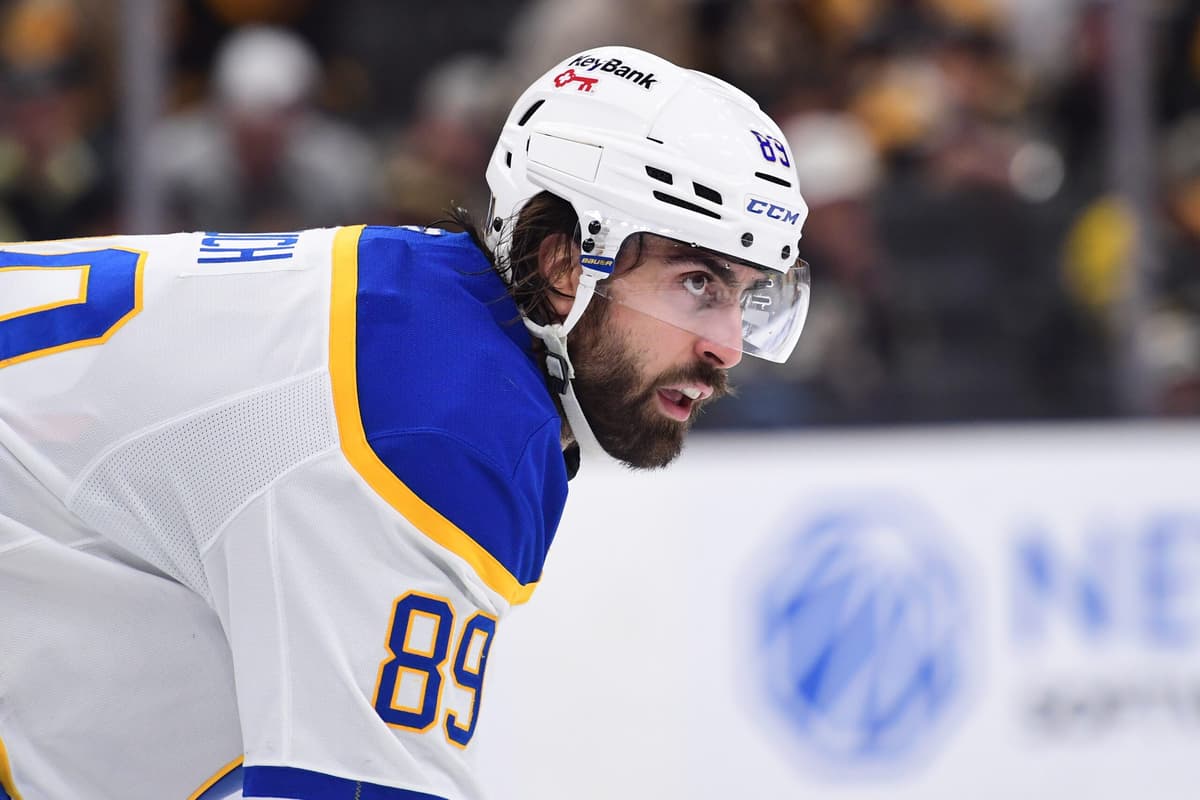
Alex Tuch left the door wide open on his future with the Buffalo Sabres when asked about re-signing, offering only a non-committal answer about family discussions and refusing to project where negotiations might lead. The Syracuse native's ambiguity matters less for emotional reasons than for what it signals about the franchise's stability at the moment when it needs to be consolidating talent.
Tuch has been a net-positive contributor for Buffalo this season—a versatile forward capable of playing multiple positions and fitting into various lineup combinations. His willingness to play in a secondary role while still producing at a respectable clip made him valuable depth. But the fact that a player of his profile feels compelled to hedge on his commitment, rather than express enthusiasm about staying, suggests the Sabres' trajectory doesn't feel settled even to someone embedded in the organization. Free agency uncertainty in May often signals organizational uncertainty that extends beyond contract dollars.
When a mid-tier contributor like Tuch treats his future as genuinely open, it typically means one of two things: either the team hasn't tabled an offer competitive with market value, or the team's direction feels uncertain enough that even role players are hedging. Both scenarios create downstream effects on roster construction. If Buffalo loses Tuch and doesn't replace him with equivalent offensive output, their shot volume and scoring depth contract noticeably. If Tuch stays but only after extended negotiations, the cap room available to address other needs shrinks, forcing the organization into reactive moves rather than proactive ones.
For bettors, the prop implications are straightforward: Buffalo's team total and game-by-game goal props are at risk of compression if the Sabres enter next season without clarity on their forward rotation. Tuch's departure wouldn't crater the offense, but it would remove a reliable secondary option who logs time in both even-strength and power-play situations. If the market prices Sabres team totals based on this season's offensive baseline and Tuch walks, unders become vulnerable to value. Conversely, if Buffalo re-signs Tuch but only after a protracted negotiation that delays offseason roster moves, early-season totals may not reflect the team's actual depth—creating opportunity on unders until the market prices in the delayed preparation.
The real tell is the lack of reassurance. A player comfortable with his team's direction says so. Tuch's deliberate vagueness suggests Buffalo's front office hasn't yet made the case internally that staying is the clear choice. That hesitation doesn't disappear when contracts get signed.