Robertson's 96-Point Season Becomes Dallas' Cap Problem—and Every Team's Opportunity
By Justin Erickson ·
A pending RFA winger with 15 power-play goals and elite offensive production is headed for the trade block, opening a window for contenders starved of secondary scoring.
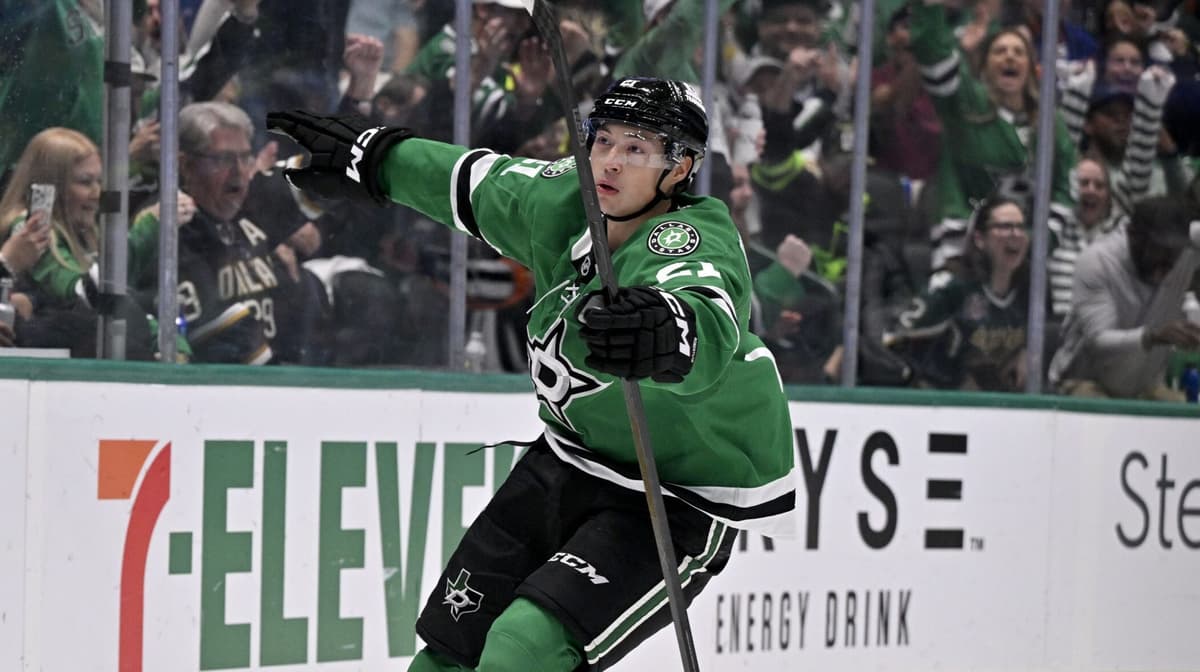
Jason Robertson is about to become the most obvious acquisition target in the June trade market. The Dallas Stars winger posted 96 points across 82 games this season and sits as a restricted free agent heading into an offseason where Dallas has minimal cap flexibility. General manager Jim Nill faces a choice: pay Robertson what he's earned, or extract value via trade rather than watch him walk or accept an offer sheet. The clock on that decision begins within days.
This isn't a marginal talent in play. Robertson generated 15 power-play goals—a volume that places him in the conversation with top offensive weapons—while functioning as Dallas's net-front presence and high-slot operator on the man-advantage. For teams in the bottom quartile of power-play efficiency, he's a direct offensive injection. Seattle, sitting with Jordan Eberle as last season's leading scorer and ranking 24th in goals-per-game, represents the clearest fit: a well-coached team that constrains its own ceiling through forward production drought. The Islanders, who finished 28th in power-play percentage, carry a second angle—Pete DeBoer's arrival as head coach suggests organizational reset appetite, and Robertson's track record with DeBoer in Dallas offers a known quantity.
The market mechanics here are clean. Robertson's 96-point pace projects to a contract in the $8M–$9.5M range for a 26-year-old winger in his prime. Dallas cannot absorb that hit without dismantling supporting depth. Any team acquiring him via trade surrenders prospect or pick capital, but absorbs only the contract—no cap acquisition cost beyond the player's salary. That arbitrage is especially valuable for cap-constrained contenders (Vegas, Colorado, Toronto) chasing secondary punch without internal budget room. The trade compensation bar sets lower than Robertson's open-market value because Dallas can't afford to let him test the RFA market; they need to move him before July 1.
For prop betting, the angle centers on Robertson's power-play participation volume and true shooting rate shifting franchises. His per-game power-play touches and shot allocation should increase materially under a team that finished bottom-10 in the man-advantage; lower defensive complexity and higher unit touches mean his anytime goal odds in power-play situations tighten across a dozen potential destinations. More specifically, teams acquiring Robertson should see elevated team totals (goals per game) in preseason projections—not because of one player, but because the trade itself signals internal belief in offensive capability and typically correlates with complementary roster adjustments. Watch for Robertson's new team's projected goal total to climb 0.4–0.6 goals per game above his Dallas 2025–26 pace-adjusted contribution, a sign the market is pricing in both the acquisition and the broader offensive philosophy shift it represents.