McKenna's Arrival Reshapes Toronto's Offense—And Goaltending Questions Persist
By Justin Erickson ·
The Maple Leafs' lottery win puts a playmaking prospect next to Matthews entering a new season, but goaltending depth moves hint at further roster turnover ahead.
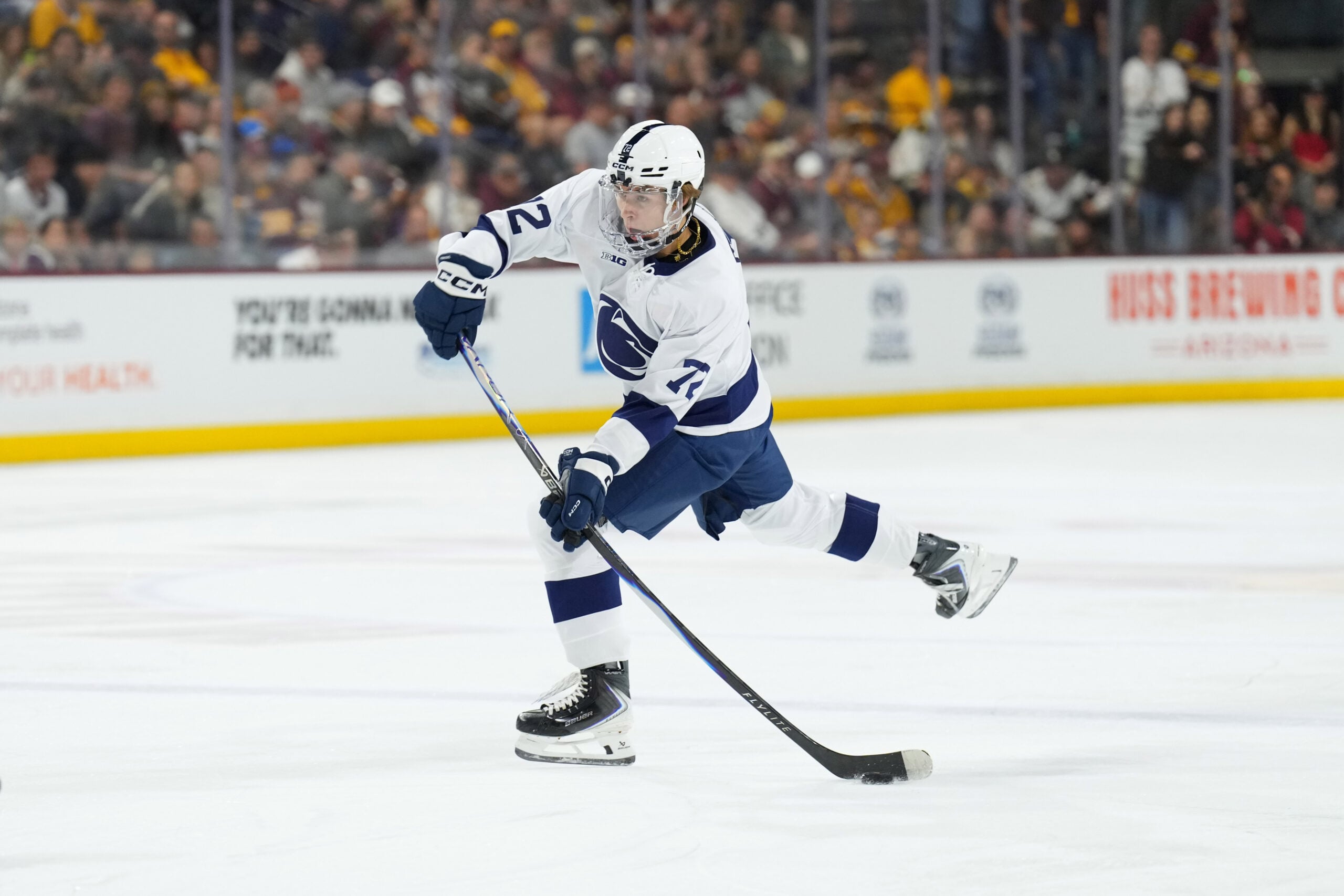
Toronto's draft lottery windfall has reframed the entire offseason conversation. With the first-overall pick locked in, the Maple Leafs are preparing to inject Gavin McKenna—a Penn State prospect widely lauded for his playmaking and hockey IQ—into a lineup anchored by Auston Matthews. The fit is deliberate: McKenna has publicly positioned himself as a facilitator whose strength is threading passes to elite finishers. Matthews, one of the league's most efficient goal scorers, thrives on catch-and-shoot opportunities off the flank. If McKenna develops as scouts project, that pairing could generate measurable gains in Matthews' scoring rate and rebound efficiency starting next season.
McKenna's comments to TSN reveal a maturity beyond the typical lottery-pick bravado. He acknowledges that playing alongside Matthews and John Tavares will accelerate his acclimation to NHL pace and structure—a signal that Toronto's front office values not just raw talent but also coachability and role comprehension. That distinction matters for projection models. Young wings with defined roles and veteran anchors tend to stabilize faster than those thrust into creation duties immediately. For Matthews specifically, a steady left-wing source of secondary scoring could reduce the offensive burden that has historically compressed his game into high-variance stretches late in seasons.
But even as the McKenna euphoria builds, general manager John Chayka's goaltending pruning suggests the roster surgery isn't finished. Moving Joseph Woll to Philadelphia cleared immediate logjam issues, yet Anthony Stolarz remains in trade speculation. The logic is straightforward: Dennis Hildeby is no longer waiver-exempt, and Artur Akhtyamov has demonstrated NHL-caliber depth behind the starter. That surplus creates optionality—and optionality in goal typically precedes a trade. If Stolarz moves, Toronto signals that the starter role (Joseph Woll's departure and the remaining goaltender's workload) will shift, potentially altering team-save totals and backup-goalie leverage metrics for the upcoming season. Bettors should monitor Chayka's next move closely; a midseason goaltending trade often signals a team in win-now mode, which typically correlates with a spike in overall offensive volume and higher moneyline confidence.
For prop bettors, the McKenna-to-Matthews pipeline is the headline story, but the goaltending churn is the mechanism. If Stolarz is shipped out and Hildeby earns a larger share of starts, save totals for whichever backstopper emerges as the primary will climb above typical preseason projections—simply due to workload concentration. Conversely, if Hildeby takes the bulk of the work and posts a high save percentage early, Toronto's negative expected goals-per-game could drop, lowering unders on the team total in tight matchups. The draft lottery win is a ceiling raiser; the goaltending depth moves tell you when that ceiling gets cashed.