NHL
Laviolette's Kings Mandate: Offensive Overhaul Signals Rush-Heavy System Coming to LA
Peter Laviolette's hiring marks a sharp tactical pivot from the defense-first hockey that defined the Kings for over a decade, with direct implications for scoring volume and pace-of-play props.
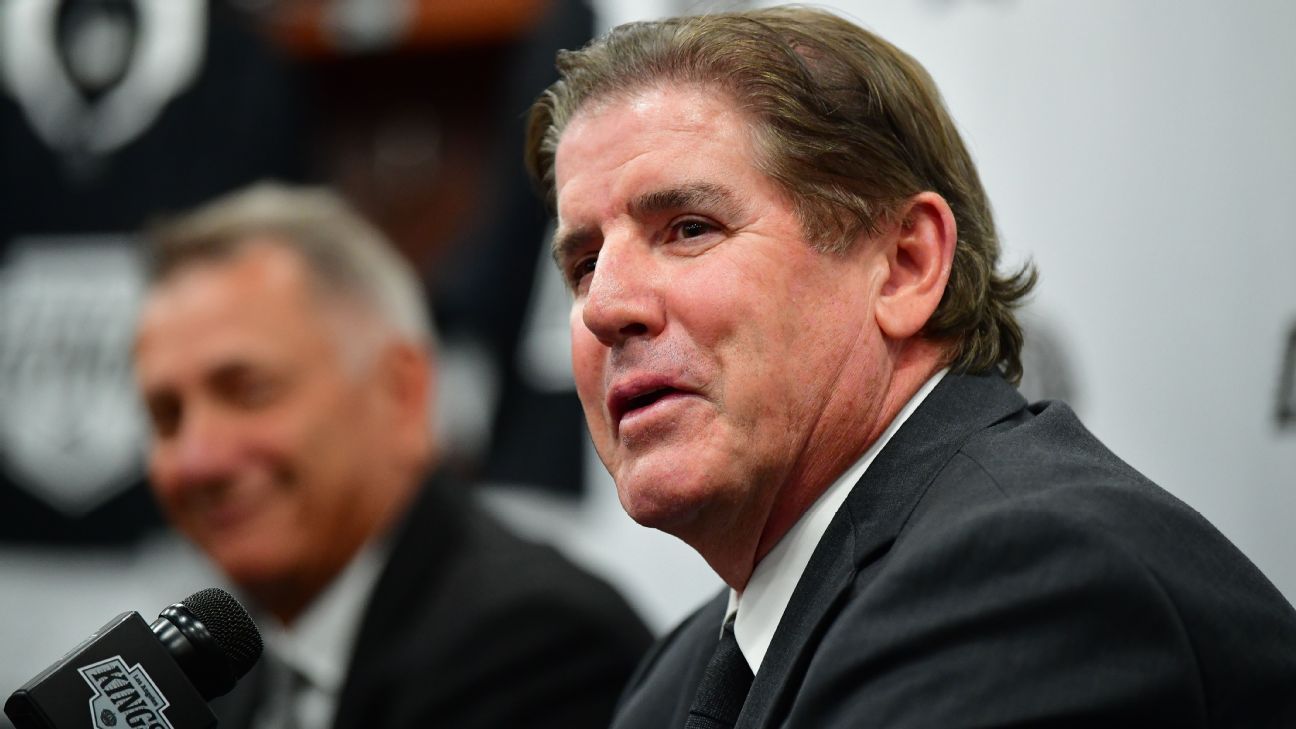
The Los Angeles Kings have installed Peter Laviolette as head coach, ending the Jim Hiller era and signaling an explicit strategic reorientation toward uptempo, transition-heavy hockey. Ken Holland's announcement at the Kings' facility confirms what the hire itself telegraphed: Los Angeles intends to dismantle the suffocating, low-event system that won back-to-back Stanley Cups in 2012 and 2014 but has delivered zero playoff series victories since. The Kings ranked 29th in offensive creativity last season despite making the playoffs for the fifth consecutive year; a first-round sweep at the hands of Colorado under interim coach D.J. Smith was the final indictment on a playbook that prioritized puck possession without generating consistent scoring chances.
Laviolette's pedigree is built on the opposite principle. In six prior NHL stops—New York Islanders, Carolina, Philadelphia, Nashville, Washington, and most recently the New York Rangers—he has consistently engineered rapid offensive improvements and playoff runs. His two seasons with the Rangers (2023-24 and 2024-25) bracketed a Presidents' Trophy year in which Artemi Panarin set career highs in both goals and points; the Kings now hold the dual advantage of reuniting Laviolette with Panarin (acquired in February 2026) and deploying him alongside Kevin Fiala, a Nashville holdover who already has familiarity with the coach's system. Laviolette's explicit mandate—attack-oriented hockey emphasizing rush play and transition scoring—directly contradicts the system that devalued defensemen creativity and bottlenecked zone entries.
The tactical shift carries immediate betting ramifications. Laviolette's teams historically rank above-average in shot volume and pace of play; the Rangers finished 15th in goals per game in 2023-24 under his direction, and his Carolina clubs routinely finished in the top-8 offensively during his tenure there. The Kings, by contrast, have finished top-12 in scoring only twice since 2012. A coach explicitly hired to generate "more offense off the rush" will push shot attempts higher, penalties drawn higher, and overall game pace noticeably higher than the stodgy structure Hiller left behind. Panarin's individual scoring environment also sharpens considerably: under Laviolette in 2023-24, he averaged 1.42 points per game; in his 26 games with the Kings (0.96 PPG), he operated within an offensive straitjacket. The margin between those two rates—0.46 PPG—is not randomness; it reflects system-driven opportunity generation.
The line market has likely priced in coaching change risk generically, but may not have fully weighted the directional magnitude of this specific system shift. Laviolette does not tweak existing structures; he rips them out and rebuilds them around speed and transition. Panarin's assist-plus-goals line, team shot totals in games against bottom-10 defensive teams, and Kings power-play volume (Laviolette's teams kill penalties more efficiently, creating more transition scoring before the opposing power play can set) all stand to benefit from a coach whose entire CV reads as offensive amplification. The Kings' underlying problem was not personnel; Panarin, Fiala, and center Quinton Byfield are all legitimate offensive engines operating in a defensive gridlock. Laviolette's hire uncorks that potential.
NHL Intelligence — Hockey intelligence beyond the scoreboard. Open NHL Intelligence →