NHL · roster-move
Doughty Inherits Kings Captaincy as LA Navigates Transition Without Kopitar
The 36-year-old defenseman becomes the franchise's 15th captain and sole remaining bridge to two Stanley Cup championships, a symbolic crowning that masks deeper questions about the team's ability to convert playoff access into meaningful runs.
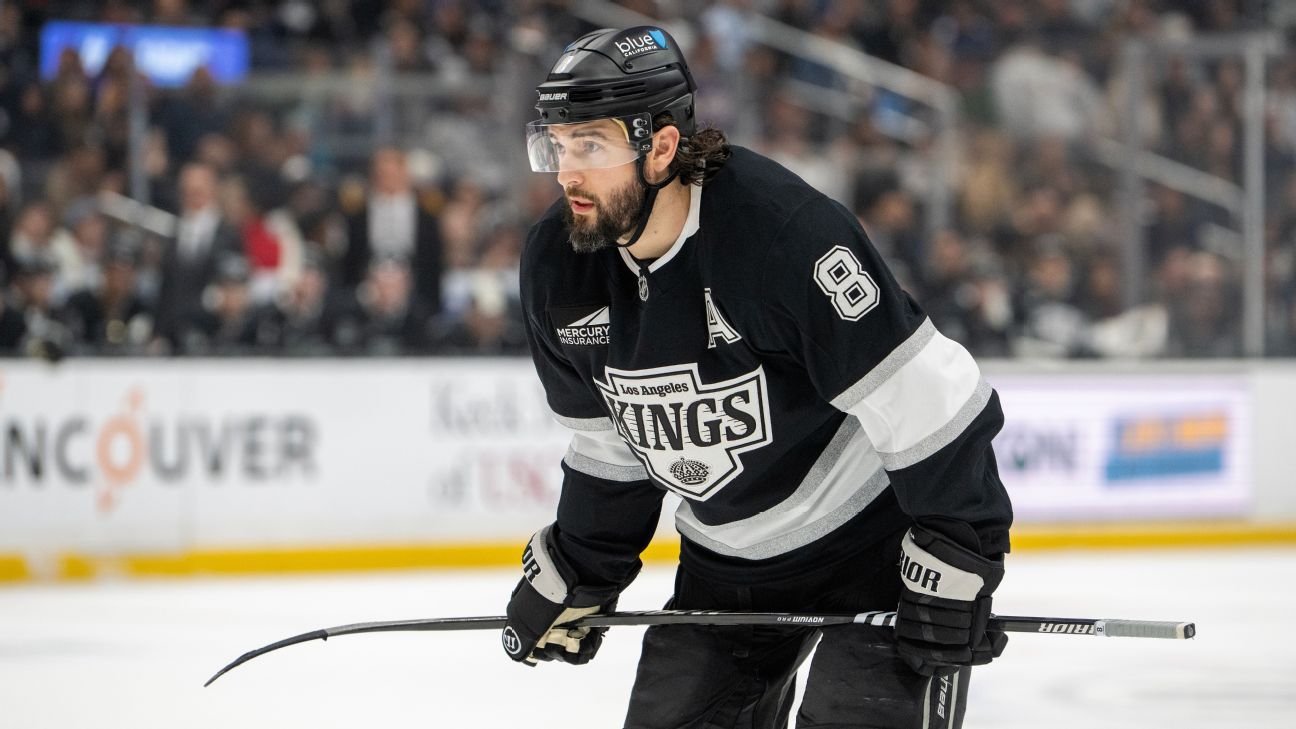
The Los Angeles Kings named Drew Doughty captain on Wednesday, installing the 36-year-old defenseman as the franchise's 15th leader and the only remaining player from the 2012 and 2014 Stanley Cup teams. Doughty inherits the role from Anze Kopitar, whose retirement this summer closed a 20-year chapter and forced the Kings to reckon with a franchise reset they've postponed through incrementalism for the better part of a decade. The move is less a declaration of future ambition than an acknowledgment of accumulated equity: Doughty has played his entire 19-season career in Los Angeles, was drafted second overall in 2008, won the Norris Trophy in 2016, and carries two Olympic gold medals. He is 17 games shy of tying Dustin Brown for second in franchise games played. In organizational terms, he is the last standing monument to the Kings' last era of dominance.
What matters tactically is that the captaincy arrives with a roster in flux. New coach Peter Laviolette enters his first season with LA, and the front office—perhaps sensing the urgency of Kopitar's exit—has stocked the roster with veteran reinforcements: Erik Haula, Corey Perry, and Mats Zuccarello all signed in the offseason, joining deadline acquisition Artemi Panarin from last season. The Kings have made the playoffs in five consecutive seasons but exited in the first round all five times. That pattern is the real story, not the ceremonial choice of captain. The captaincy is a nod to continuity; the roster moves are a bet that continuity alone won't break the first-round ceiling.
For prop purposes, Doughty's role and minutes allocation matter more than the title. As a 36-year-old defenseman entering his 19th season, his offensive production—assists and points—has been in decline relative to his peak years. The Kings will lean on him for leadership and defensive stability, not as a primary playmaker driving team offense. His per-game assist rate historically sits in the 0.4–0.5 range; expect it to stabilize there regardless of captaincy status. The real indicator to monitor is total team offensive output under Laviolette and with the addition of Panarin and the veteran wing depth. If those additions meaningfully elevate team power-play points and overall shots on goal, the edge shifts to overs on team totals. If the first-round problem persists—a signal that talent stacking hasn't solved defensive or depth issues—team totals should remain constrained.
Doughty's leadership status does create one subtle prop angle: his shift in on-ice responsibilities and fourth-quarter deployment. Captains often absorb additional ice time in close games and on the penalty kill, particularly veterans on teams chasing playoff success. Watch for a modest uptick in his blocked shots and hits per game as the season progresses. More reliably, assume his assists remain floor-bound because the Kings will continue to rely on younger or more mobile scorers to generate offense. The captaincy is symbolic capital, not a stat multiplier.