NHL
Jarry's Save Percentage Lies: Why Edmonton's Goaltending Decision Hinges on Shot Quality, Not Volume
The Oilers face a critical evaluation of Tristan Jarry after a 6-5 OT loss, but a .739 save percentage masks the real question: which goals were preventable?
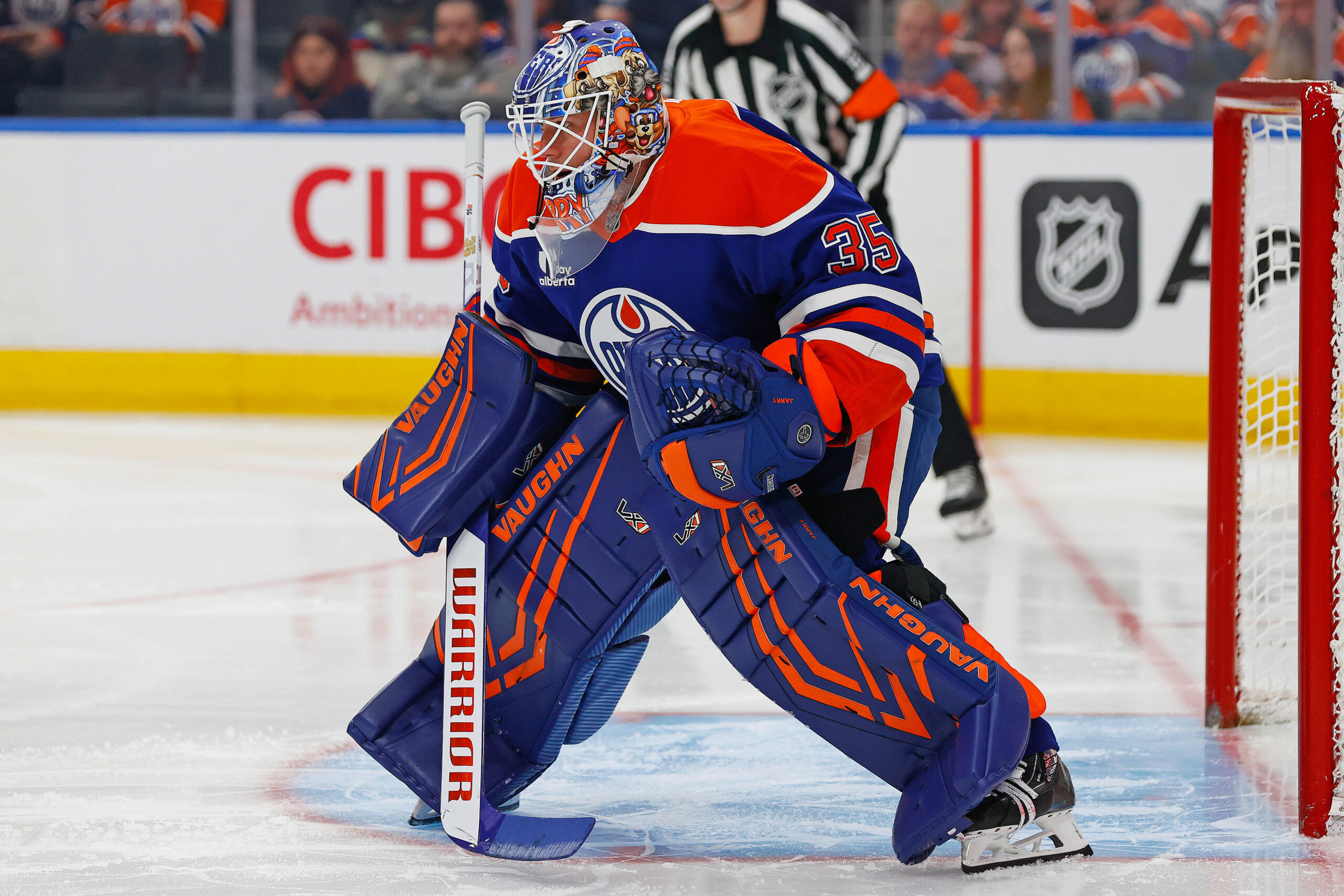
The Edmonton Oilers' decision on Tristan Jarry's next start against Vancouver tonight turns entirely on how the coaching staff interprets one number: .739. Jarry faced 23 shots and allowed six in Tuesday's season opener, a result that screams urgency to pull the starter. But raw save percentage is a blunt instrument. A shot from the point and a rebound tap-in register identically in the tally, even though they demand vastly different execution from the goaltender. The Oilers' real task is isolating which of those six goals represented elite chance suppression and which represented breakdowns Jarry could have prevented.
The third-period goal by Jonathan Lekkerimaki crystallizes the issue. A giveaway created the opportunity—that was Edmonton's error—but Lekkerimaki beat Jarry between the pads from the right circle. A giveaway does not excuse soft goaltending on a manageable chance. If Jarry established his angle, arrived balanced, and closed the space beneath him, then the turnover cannot explain the result. That goal tied the game at 2-2 and preceded another Vancouver score within two minutes. Dependable goaltending—stopping a saveable chance—swings the entire momentum of that period. One save, one different outcome. That is the distinction the coaching staff must make: did Jarry face an onslaught of high-danger chances that any starter would struggle with, or did he surrender preventable goals from secondary scoring areas?
Mark Spector's assessment captured the duality: Vancouver created high-quality opportunities, and Jarry failed to make timely saves on enough of them. Both observations coexist. The Oilers' defense allowed dangerous chances—a structural problem separate from goaltending—but their goaltender needed to convert opportunity scarcity into stops. A review of how often Jarry faced a settled shooter with a clear sightline, versus chances requiring immediate positioning adjustments, provides firmer footing than save percentage alone. Expected goals models can help, but they miss details: screen positioning, deceptive releases, passing timing. Video confirms what the math suggests.
For betting purposes, Jarry's next start creates asymmetric risk on totals and goalie lines. If the coaching staff views this as a one-game sample with manageable chances that Jarry failed to stop, a second consecutive start is likely. Edmonton's implied expectation is that defensive structure stabilizes and Jarry gets a cleaner look at the next matchup. But if Vancouver's efficiency was real—converting high-danger chances at an unsustainable pace—unders become attractive on team totals because regression favors lower-volume outcomes. The danger is backing Jarry props (saves, goals-against) before confirming whether he gets the start; if Edmonton switches to a backup, all per-game goalie lines shift. The safest angle is waiting for the lineup confirmation before committing to goaltender-specific props. If Jarry starts again, monitor whether Edmonton's defensive breakdowns from Game 1 persist; if they repeat, game totals may have overcorrected lower based on the assumption of improved team structure.
NHL Intelligence — Hockey intelligence beyond the scoreboard. Open NHL Intelligence →