Seeley Avoids Arbitration, Settles at $850K: The Depth Calculus Behind Carolina's Quiet Summer
By Justin Erickson ·
The Hurricanes' defenseman contract sidesteps hearing but reveals limited cap room for Alexander Nikishin, the restricted free agent the team is openly shopping.
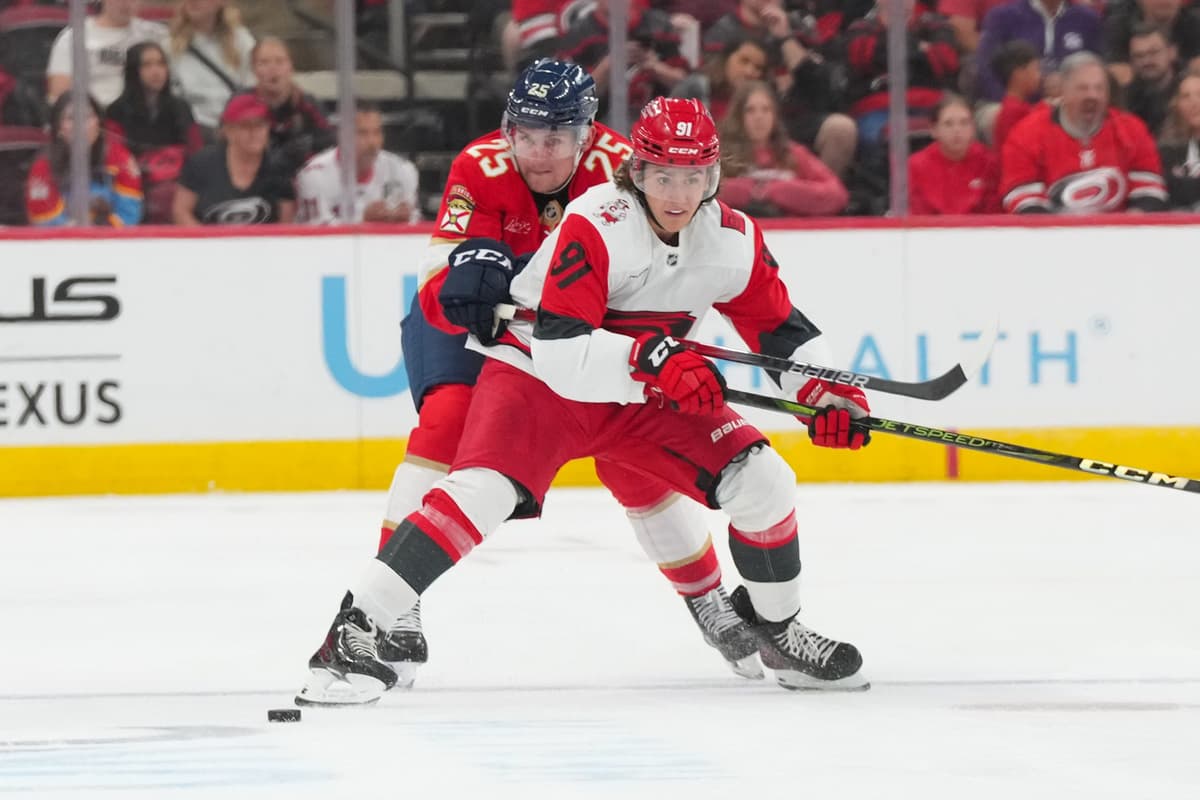
Carolina's front office moved fast Thursday, securing defenseman Ronan Seeley to a one-year, two-way deal carrying an $850,000 NHL cap hit and avoiding what would have been their only arbitration hearing of the offseason. The contract avoids the unpredictability of an arbitrator's ruling—typically a lever teams use when they believe the player's ask exceeds market value—and signals the Hurricanes are prioritizing roster certainty over cap flexibility in the year after winning their second Stanley Cup championship.
Seeley made his NHL debut last season in a single appearance, recording no points. The left-shot blueliner's real value lies in his AHL track record with the Chicago Wolves affiliate, where he appeared in 69 regular-season games as an alternate captain, posting 11 goals and 12 assists before adding 2 points in 21 playoff games as Chicago reached the Calder Cup Final. That AHL production—particularly his 23 points in a depth role—establishes him as a legitimate call-up option if Carolina faces injury depth at defense. The $160,000 guaranteed minimum signals the organization is comfortable carrying him as insurance rather than cap ballast.
The broader context matters more than Seeley's individual deal. Frederik Andersen left for Edmonton. Mike Reilly remains unsigned. And Alexander Nikishin, the emerging right-shot defenseman who has been openly floated as a trade candidate all summer, sits unsigned as a restricted free agent. By locking Seeley at $850K on the NHL side, the Hurricanes are consuming cap room that could have been reallocated if Nikishin walks or is dealt. This suggests either the organization views Seeley's development curve as steeper than public consensus, or they've already accepted a Nikishin departure and are rebuilding the back-end depth chart accordingly.
For prop purposes, Seeley's contract details offer a thin edge on Carolina's defensive playing time distribution entering 2026-27. If Nikishin is traded or traded away before the season opener, Seeley becomes a legitimate dark-horse call-up candidate for any defensive absences—particularly on the left side. That increases his expected ice time variance compared to a deep bench scenario. Given his 69-game AHL season and assistant captain designation, he's already familiar with heavy minutes at that level. His NHL debut in a single game doesn't establish a floor; his AHL trajectory does. Monitor whether Carolina's preseason deployment gives Seeley meaningful power-play reps. If he's getting secondary unit looks, his anytime-goal or shot-volume props in early-season games (should he debut) will carry inflated value, since the market will price him as depth while the team is clearly treating him as a credible depth option with multi-game usage potential.
The signing also locks in the Hurricanes' cap structure for the year, removing the arbitration wild card. That certainty is valuable for a defending Cup champion that just lost its star goalie and is managing a restricted free agent with lingering trade value. Seeley's deal is economically minimal but structurally revealing: Carolina is tightening its depth chart rather than widening it.