NHL
Hurricanes' First-Period Collapse Against Capitals Exposes Defensive Vulnerability and Shot-Quality Mismatch
Carolina's 5-2 loss on October 2 reveals a team still searching for structure after a season-opening defeat, with volume masking a fundamental efficiency problem.
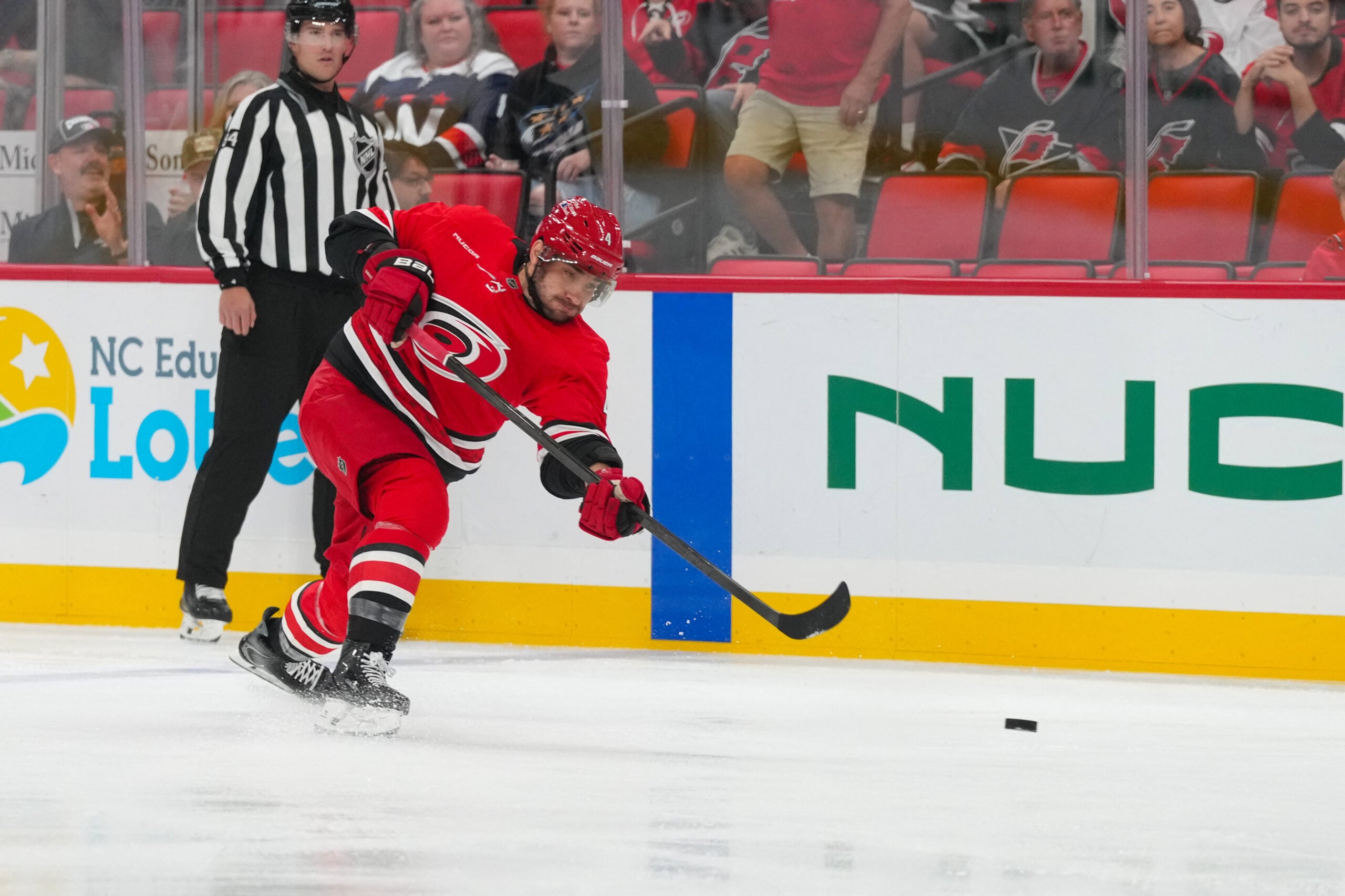
The Carolina Hurricanes fell 5-2 to the Washington Capitals on Friday, October 2, in their first Metropolitan Division matchup of the 2026-27 season. The loss came four days after a heartbreaking defeat to the Florida Panthers on September 29—a stretch that has left the defending Stanley Cup champions winless through two games at 0-1-1. The damage in Raleigh was done early. A miscommunication between goaltender Brandon Bussi and defenseman P.L. Dubois in the opening minutes led to an Alex Tuch goal, and within 10 minutes, the Capitals had extended their lead to 3-0. Bussi would later acknowledge he wanted some of those goals back, but the defensive collapses that preceded them were equally culpable. The Hurricanes looked loose in their own zone, generated multiple odd-man rushes, and failed to pressure the puck with any consistency—the kind of opening-period lethargy that buried them before the midpoint of the first intermission.
What followed was a hollow correction. Sebastian Aho finally notched the Hurricanes' first goal of the season at 16:50 of the first period on the power play, but Washington answered with another goal just eight seconds later, pushing the lead to 5-1. Logan Stankoven added a late third-period marker on a K'Andre Miller deflection, but by then the game was irrelevant. The Hurricanes generated 33 shots on the evening—double their season-opening output of 15—yet the volume masked a critical weakness: shot selection quality and execution in tight spaces. Washington blocked 28 Carolina attempts, compared to just nine blocks by the Hurricanes. More telling, Carolina managed only six shots in the third period despite being down four goals, a number that illustrates both their offensive constraint and the Capitals' defensive suffocation.
For prop bettors, this game reinforces a pattern emerging early in Carolina's season. The Hurricanes are generating volume without precision—a structural mismatch between shot count and expected goals that will persist until their spacing and personnel movement improve. Bussi's performance, while flawed in the first period, isn't the primary issue; the team in front of him is leaving him exposed to chances from dangerous areas. Over the next week, expect Carolina's game totals to remain depressed relative to their shot attempts because books are correctly pricing in their conversion inefficiency. The gap between 33 shots and a two-goal output isn't random variance—it's the result of broken defensive structure that generated odd-man rushes for opponents and perimeter offense for themselves.
Should the Hurricanes face a slower, more positionally sound defensive opponent in their next contest, their shot volume may climb further while still failing to produce proportional goals. This creates a contrarian edge: fade overs on Carolina's team total even if their shot-attempt share improves, because their inability to translate volume into quality chances has already been baked into the first two games. The Capitals won because they blocked a higher percentage of attempts AND converted theirs from better locations. Until Carolina's first-period discipline—specifically in their own zone and on transition defense—shows sustained improvement, they remain a fade for offensive prop bets despite generating the raw shot count that typically correlates with scoring.
NHL Intelligence — Hockey intelligence beyond the scoreboard. Open NHL Intelligence →