Bussi's Cup Run Rewrites the Waiver-Wire Playbook
By PropBetEdge Editorial Team ·
Carolina's emergency netminder played three games and won a Stanley Cup, upending conventional wisdom about playoff goalie depth and starter replacement.
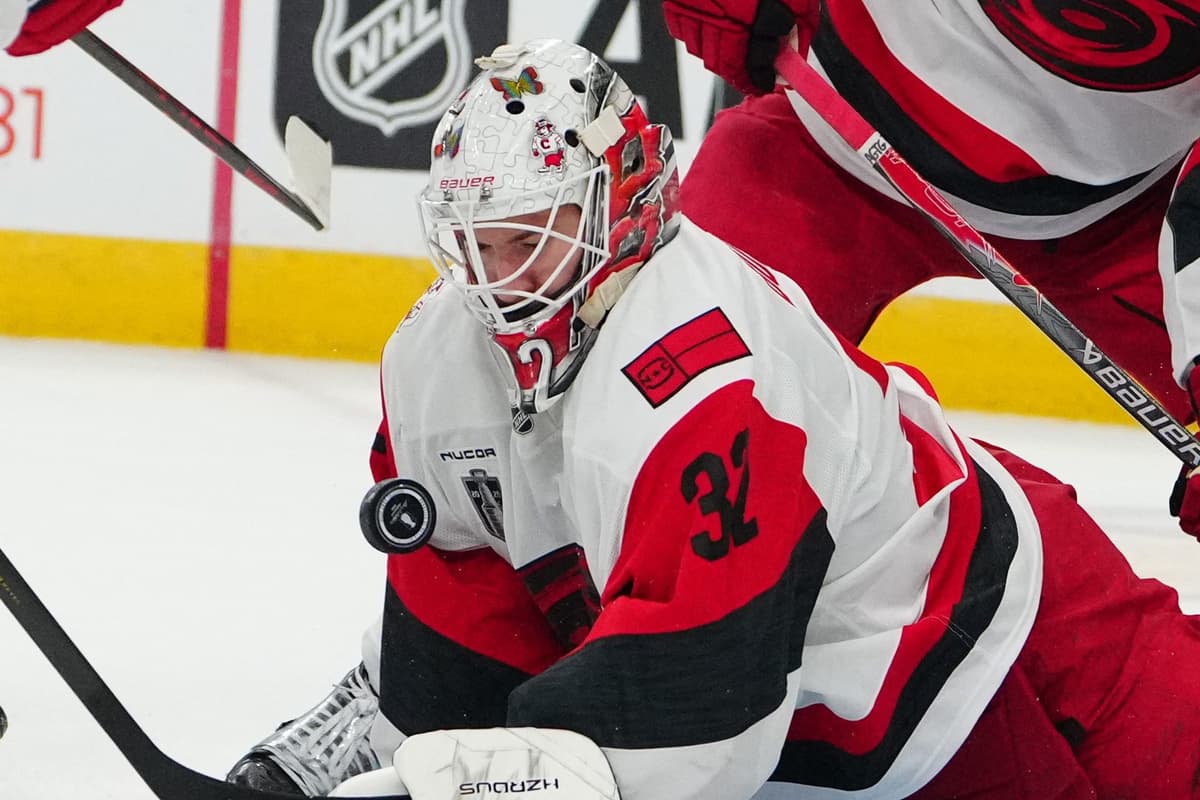
Brandon Bussi claimed off waivers by the Carolina Hurricanes on October 5, 2025, finished the job with a 3-0 shutout in Game 7 of the Stanley Cup Final on June 15, 2026—capping a championship run that required him to appear in only three playoff contests. The mathematical improbability of the outcome shouldn't obscure what actually happened: a backup goaltender, acquired via waiver claim mid-season after being cast off by the Florida Panthers, became the playoff narrative's dominant figure not through volume but through perfect execution in the moments that mattered most.
Bussi's path from organizational afterthought to Cup-winning starter tells a story about goaltender volatility that the betting market tends to undervalue. Most of his playoff work came in high-leverage spots—Games 3, 5, and 7 of a Final series—meaning his ice time concentrated in the situations where a single performance compounds. This is the inverse of a regular-season workload spread across 82 games. A goaltender playing three games carries no injury risk attached to overuse, no fatigue tax from back-to-backs, and no statistical regression toward a season-long mean. He arrives fresh. The Hurricanes effectively weaponized goaltender replacement-level play by deploying a rested arm at precisely the moments when starter fatigue becomes a liability.
The organizational valuation signal matters here: Carolina paid nothing to acquire Bussi. The Panthers let him clear waivers despite being defending Cup champions. That disposal reflected Florida's confidence in their own depth and goaltending plan—which collapsed anyway. Meanwhile, Bussi's emergency deployment suggests the Hurricanes were comfortable riding an unproven commodity, a decision that works only if the alternative (starter attrition, injury, or performance collapse) becomes the actual constraint. The market had already priced the Hurricanes' Finals odds before Bussi took the net in Game 3; his insertion wasn't a surprise move, which means sportsbooks weren't caught flat-footed by the substitution. What they may have underestimated was his ability to sustain a .950-plus save percentage over a three-game sample in elimination hockey.
For future playoff betting, Bussi's championship run is a cautionary tale about the reliability of goaltender prop lines built on season-long or playoff-long data. When a backup appears in fewer than five playoff games, his save percentage shouldn't be treated as a true talent indicator—it's a coin-flip variance artifact. The shutout in Game 7 was real; it was also the kind of binary outcome (win-lose, shutout-or-not) that doesn't trend over time. Bettors who backed Bussi anytime-goal props or shutout bets in Games 5 and 7 won on skill-based positioning; bettors who tried to project his playoff SV% or use his three-game sample to extrapolate his underlying ability were gambling on noise.
Carolina's Cup victory doesn't invalidate the analytics approach to goaltender evaluation—it validates the importance of deployment context. A rested backup in a Game 7 is not the same asset as a starter grinding through 50+ playoff games. The Hurricanes' organizational bet was that fresh legs and high-leverage appearances would outweigh starter reliability. It worked once. The broader betting lesson: monitor backup-to-starter transitions in the playoffs with extreme skepticism about historical averages. A three-game sample size, no matter how perfect, is not a stable foundation for postseason prop lines.