Vladař's Five-Year Deal Tests Philadelphia's Bet on Sustainable Excellence
By Justin Erickson ·
The Flyers are locking in their goaltender at bargain rates, but they're banking on a career-best season as the baseline—a dangerous assumption in a sport where save percentage swings are endemic.
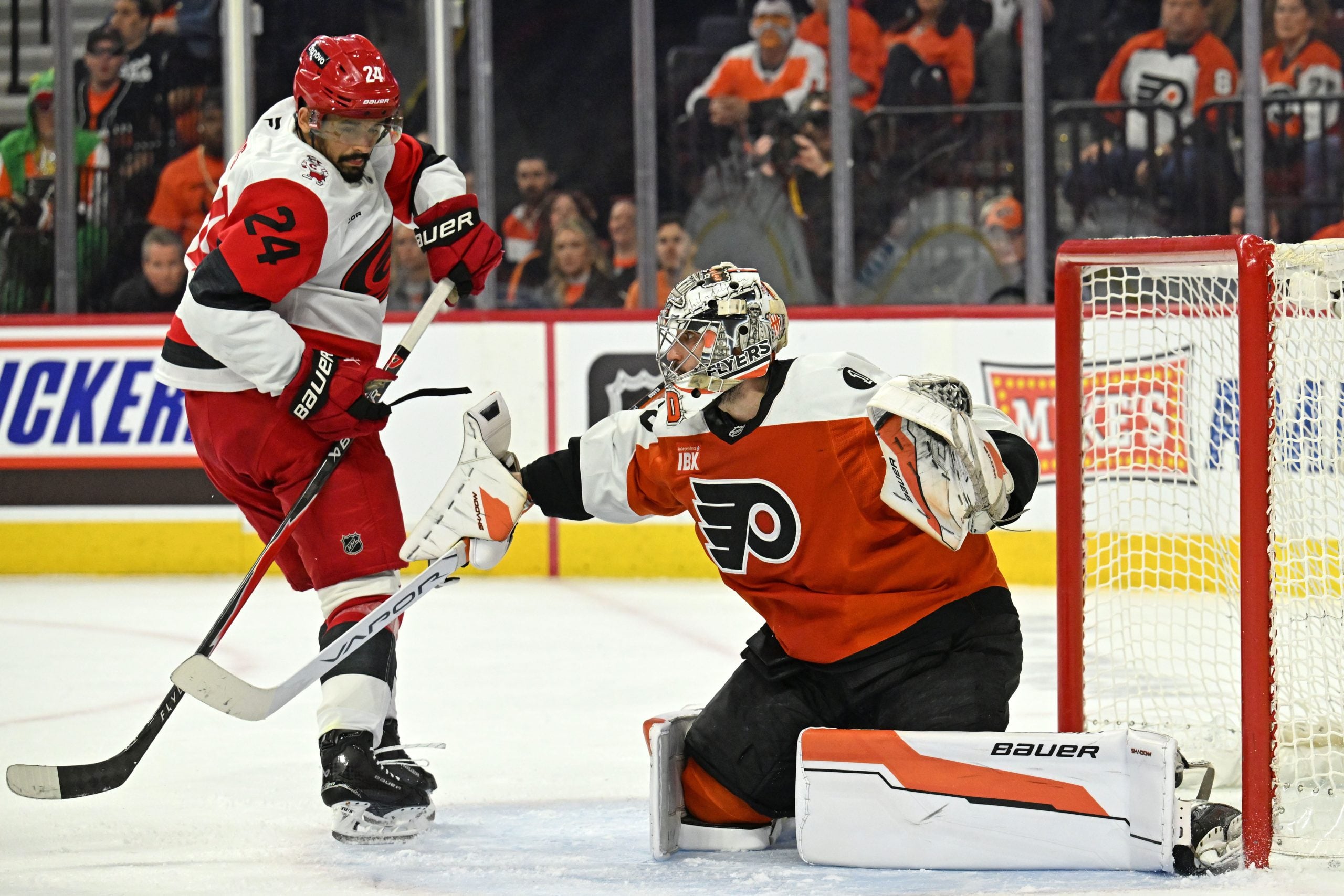
Dan Vladař is getting a five-year extension from the Philadelphia Flyers, per Elliotte Friedman's reporting earlier this week. The deal carries an estimated cap hit of $5.75 million annually—a steal on the open market for a 28-year-old goalie coming off a .920+ save percentage season. Vladař becomes extension-eligible on July 1, 2026, with one year remaining on his current contract, so the timing locks him in before free agency distorts the market.
The arithmetic is seductive. Vladař's 2025-26 campaign was legitimate: he backstopped the Flyers to 98 points and a second-round playoff appearance despite roster holes at center, power-play dysfunction, and a league-worst backup goalie. The organization's thesis—that elite goaltending can stabilize the franchise while prospect Egor Zavragin develops—mirrors the Islanders' successful deployment of Semyon Varlamov as a bridge to Ilya Sorokin. That template worked. Varlamov played well enough to push New York to consecutive Eastern Conference Finals before a mutually beneficial extension in 2023. If Vladař maintains even 85% of his 2025-26 form, the contract looks prescient. The cap hit buys the Flyers optionality in an otherwise tight salary structure.
But the risk is geometric. Vladař's 2025-26 season represents a statistical outlier—a 28-year-old goalie doesn't improve from a .897 career save percentage to .920+ and hold that margin for 65+ games without acknowledging variance. Backup goaltending was catastrophic (.870 SV%), which inflates starter workload and recovery time. The Flyers' defensive structure, while not elite, generated above-average shot quality metrics that season; those regress. By 2029-30, when the extension's final year hits, Vladař will be 32—precisely when the aging curve for goalies steepens fastest. Philadelphia already carries $39.85 million in cap commitments to six players 31 and older in that year. Adding another veteran into that bucket compounds the structural inflexibility when Zavragin is supposedly ready to earn his own long-term deal.
For bettors, the implications cut two directions. Short-term (2026-27, 2027-28), Vladař's presence suppresses volatility in Flyers goaltending props—he's the stabilizer, the high-floor play. Expect goalsagainst totals for Philadelphia to grade toward the tighter end of the range; his save percentage will likely modulate toward .910-.915 as outlier volatility regresses, which is still elite-tier. That translates to fewer blowout losses and tighter moneyline curves. Teams that prey on backup incompetence won't find it with Vladař in net. The anytimegoal market on Flyers opponents softens when he's starting; implicit odds baked into those props account for league-average netminding, and Vladař is above that line.
Long-term (2028-29 onward), if Vladař's save percentage dips to .905 or lower—a regression to mean that is statistically probable—Philadelphia enters a dead-cap trap precisely when young cores need cap runway. That constraint limits the organization's ability to add complementary depth via trade. The Flyers' teamtotal goals prop in years 3-5 of the extension becomes a short candidate if roster construction stagnates. This is not a single-season edge; it's a structural vulnerability that compounds. The market hasn't priced the long-tail risk because Vladař's extension is framed as insurance for the rebuild. It is insurance—at rates that assume sustained excellence. In goaltending, sustained excellence at that age is the exception, not the pattern.