NHL · injury
Faber's Concussion and Gustavsson's Hip Surgery Create Early Season Goalie Void for Minnesota
Minnesota loses its top defenseman and starting goaltender to injured reserve before the season opener, forcing the Wild into an unexpected rotation that will compress workload and volatility metrics.
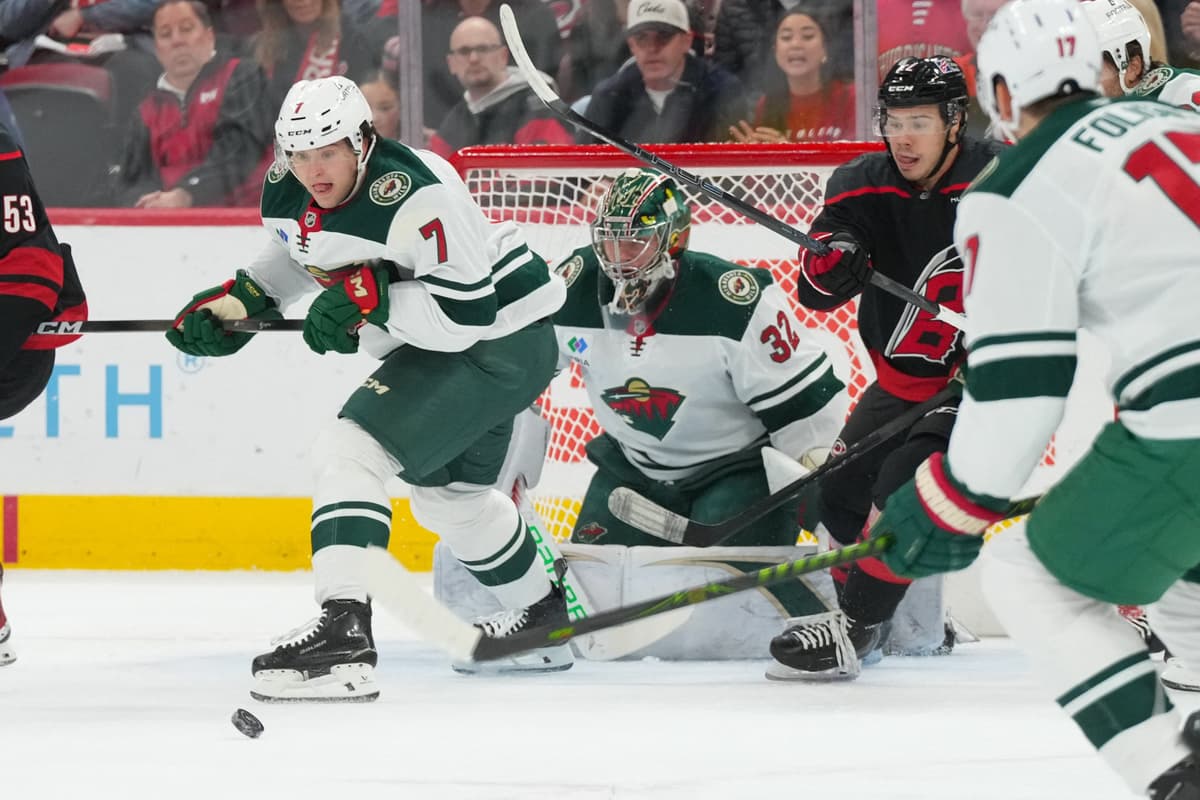
The Minnesota Wild opened the 2026-27 season without two cornerstone pieces. On Monday, the club officially placed defenseman Brock Faber and goaltender Filip Gustavsson on injured reserve, clearing both from the 23-man roster ahead of Thursday's season opener against Nashville. Faber, 24, entered concussion protocol after taking a puck to the head in a preseason game on Friday; Gustavsson, 28, remains in recovery from offseason hip surgery and is not expected to return until November.
Faber's injury is the more immediately manageable of the two. The 2026 U.S. Olympian and one of the league's elite young defensemen—he posted 15 goals and 51 points in 80 games last season while anchoring the top pairing alongside Quinn Hughes—is eligible to return as soon as the home opener against Boston on October 3, just five days from the season opener. His retroactive IR placement means the concussion clock began Friday, not Monday. That window is tight but navigable if protocols progress without complication. The Wild's defense will run through Hughes, Jared Spurgeon, Jonas Brodin, Olli Maatta, Zach Bogosian, David Spacek, and Daemon Hunt to start the season—a rotation that loses its most versatile option on the right side.
Gustavsson's absence is the deeper problem. He signed a five-year, $6.8 million cap-hit contract this offseason and was supposed to form a top-tier goaltending tandem with Jesper Wallstedt. Instead, Calvin Pickard will back up Wallstedt from day one, and the team has no timeline for when Gustavsson's hip will support a full workload. Hip surgery recovery in hockey typically stretches eight to twelve weeks; November is the outer edge of realistic return, but even then, ramping a 28-year-old back into consistent starts after that layoff carries reintegration risk. Gustavsson posted a .904 save percentage in 50 appearances last season—respectable but not elite—and appeared in just one playoff game, signaling he was already the second option in the hierarchy.
For bettors, this creates two distinct betting angles. Wallstedt's workload is about to spike. He was already the presumed number-one goaltender; now he absorbs the bulk of Minnesota's starts for at least the next five weeks, possibly longer. That elevation means elevated volume on Wallstedt's save and goals-against props—both directions become volatile because a single off-night in October carries more weight when a backup is unproven in relief. Pickard, a journeyman with a career .900 SV% across 23 appearances, will inherit spotty usage that could vacillate between back-to-backs and extended benches depending on results. His individual game props carry high variance and should be faded until the rotation stabilizes.
The second angle runs through team total goals. Minnesota's defensive depth is compromised without Faber's 51-point, offense-driving contributions from the back end. Even for the first week, while Faber may still be in protocol, the Wild lose a player who generated 15 goals and was second in team assists among defensemen last season. The available defense corps leans older and more positional; neither Bogosian nor Maatta operate as pace-setters. That drag on offensive generation—subtle but real over a six-game sample—makes unders on Minnesota's team goal total in early October more appealing than the opening schedule suggests. Look for total adjustments if Gustavsson's return timeline slips past mid-November; each week of delay further erodes the early-season ceiling.
NHL Intelligence — Hockey intelligence beyond the scoreboard. Open NHL Intelligence →