NHL · transaction
Brock Faber's Confidence Reset: Why the Wild's Defensive Core Stays Ahead of Projection
A rough start last season nearly derailed Faber's trajectory, but his mid-season recalibration and Olympic gold medal performance signal a defenseman entering his prime at defenseman—and that changes how to price Wild team defense.
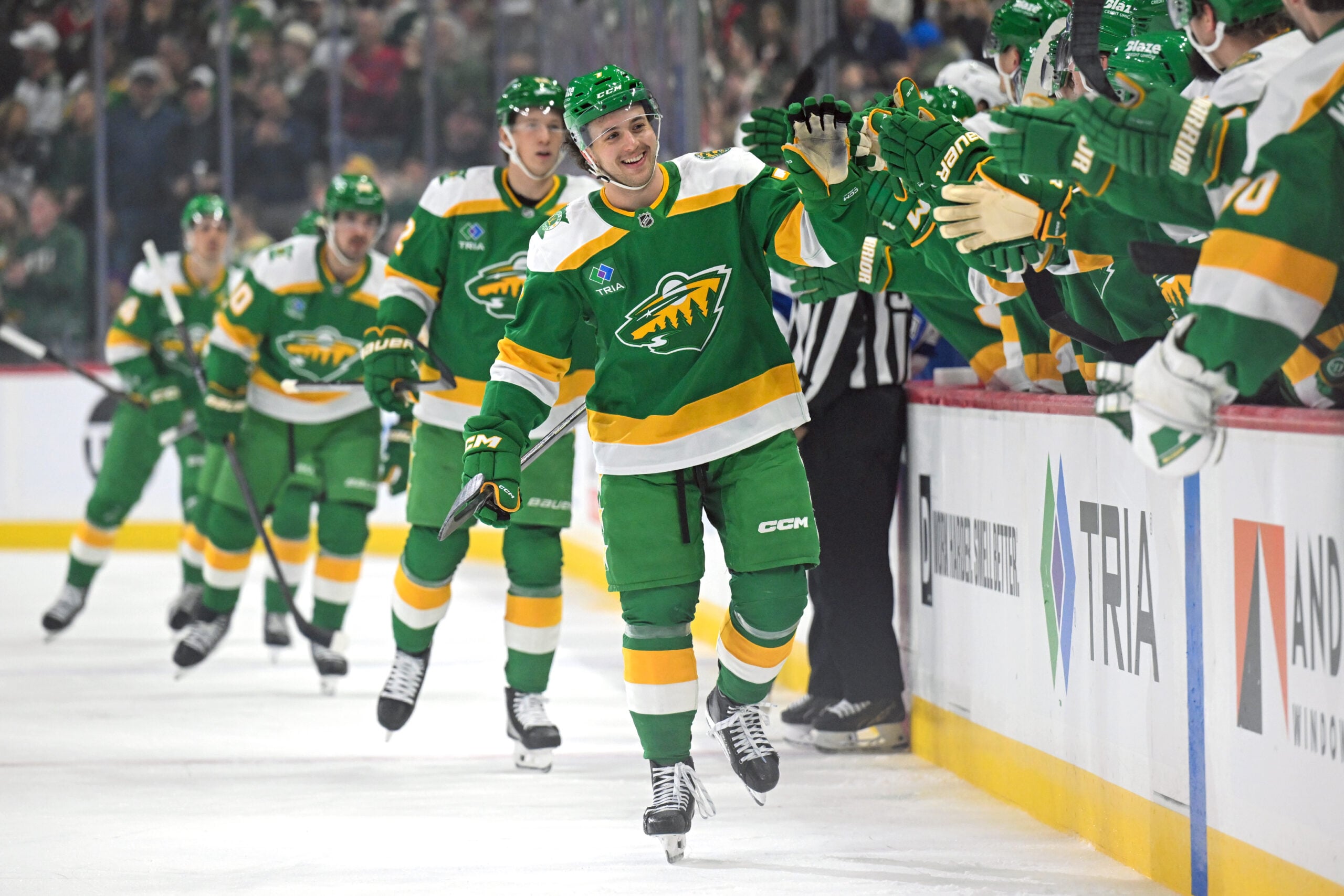
Brock Faber is four years into a tenure with Minnesota that began as a calculated gamble. The Wild traded forward Kevin Fiala—then fresh off his career-best season—to Los Angeles for a first-round pick in 2022 that became Liam Öhgren and the rights to an unsigned college defenseman. At the time, the move looked like Minnesota mortgaging a known scorer for uncertainty. Today, Faber is one of the anchors of their youth defense, and the organization has no regrets about the architecture of that deal.
Last season exposed something the film doesn't always reveal: Faber's mental resilience under pressure. He limped through the opening weeks in what he described as a confidence spiral—convinced he was getting scored on regularly, he compounded early mistakes by dwelling on them rather than compartmentalizing the variance inherent to a defenseman's role. That rut didn't persist. By mid-season, he'd recalibrated his self-talk and rebuilt his baseline. He finished with the best season of his career, then represented Team USA at the 2026 Winter Olympics in Milan, where he won gold. The postseason exit in the second round stung, but Faber treated it as instruction, not verdict.
The real story isn't Faber's individual redemption—it's the pairing. When Quinn Hughes arrived in Minnesota's system three full seasons into Faber's tenure, the two formed one of the NHL's most complementary defensive tandems. Hughes's edge-work and gap control align with Faber's read-and-react positioning; they don't always see the play the same way, but their skating syntax allows each to anticipate the other's next move. This is the kind of partnership that compounds over time. Both players have described how their communication has tightened, and their ice time together has increased accordingly.
For prop betting purposes, this matters more than box-score production. Faber's role is defense-first—blocks, clears, and breakout passes—not goal or assist chasing. But the stability of the Hughes-Faber pairing, combined with Faber's demonstrated ability to recover from mental lapses rather than spiral into them, reduces variance on Wild team totals and defensive metrics. A defenseman who can reset mid-season after a poor start is less likely to produce season-long regression. The market may price the Wild's regular-season over based on last year's strong finish; Faber's profile suggests they have the defensive spine to sustain it. His willingness to own early mistakes—and his track record of bouncing back—is a durability signal that doesn't always show up in advanced stats, but it explains why coaches keep him on the ice in high-leverage spots.
NHL Intelligence — Hockey intelligence beyond the scoreboard. Open NHL Intelligence →