Andersen Arrives: How Edmonton's Stanley Cup Goalie Reshapes the Save Equation
By Justin Erickson ·
Frederik Andersen joins the Oilers fresh off a championship run, and his save-percentage ceiling carries immediate implications for team total unders and starter workload props.
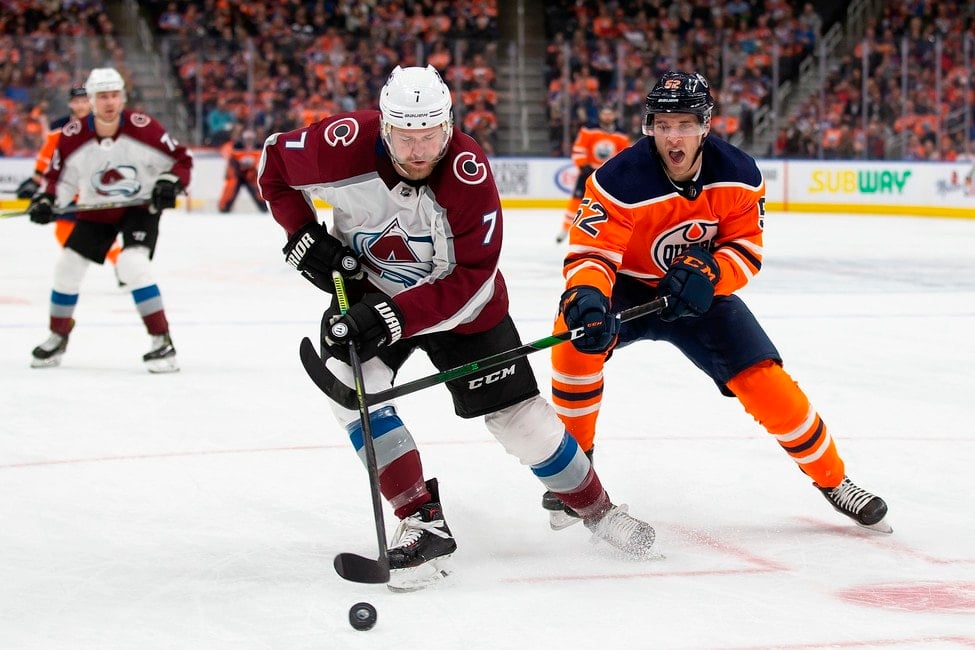
The Edmonton Oilers signed goaltender Frederik Andersen to a one-year deal this offseason, acquiring the Dane just weeks after he posted a .910 save percentage and 1.89 goals-against average across 15 playoff games that culminated in a Stanley Cup win with Carolina. The timing matters: Andersen is joining a franchise that has historically struggled with goaltending depth and consistency, and his championship pedigree—earned through high-leverage performance in the toughest playoff environment—carries measurable weight in how the team's defensive assignments will shift.
Andersen's 2026 playoff resume reads like a post-season masterclass. His 13-2 record across Carolina's run wasn't padding; it came in a structure where the Hurricanes leaked 2.08 goals per game in his starts, yet he kept them competitive enough to win a Cup. That .910 mark, sustained over 15 games when teams dial up shot volume and shot quality in playoffs, is the kind of performance floor that doesn't vanish in the regular season. For Edmonton, the internal calculus is straightforward: a goalie capable of stealing games at that level reduces the offensive burden needed to win. The Oilers' forward group—led by McDavid and Draisaitl—won't need to score 3.2 per game to guarantee victories if their goalie is operating at a .908+ clip over a season.
The franchise's historical relationship with Danish talent adds texture but no predictive value here. Poul Popiel in 1979 and Philip Larsen in 2013 were marginal depth contributors; Andersen arrives as an established starter with contract weight and playoff validation. What matters for betting is that Edmonton's goal differential and save volume will now flow through a goaltender who has demonstrated he can compress high-danger chances into lower-probability outcomes. When a team upgrades its net, the first market signal is usually a modest compression in team totals—fewer goals needed to hit overs if the defense performs at typical level.
The prop angle centers on team total unders. Andersen's presence doesn't change Edmonton's offensive capability, but it does reset the defensive efficiency baseline. If bettors price the Oilers' 2026-27 team total assuming a league-average .900 save percentage (their implied expectation), and Andersen's track record suggests a .905-.910 range is achievable, that three-to-five point reduction in GAA compounds over 82 games. A team that was projected to win 52 games with a .900 goalie might hit 54-55 with a .908 net, assuming stable offense. Unders at the opening total will price in the old goaltending baseline; early markets often haven't fully adjusted for a single-year rental's true impact until the first week of games. The edge is modest and will fade as the market recalibrates, but exists in the 48-72 hours after Vegas posts preseason totals.