NHL
Terry's Hip Surgery Erases Anaheim's Most Productive Forward Until Late Fall
Troy Terry won't skate for the Ducks until November at the earliest, gutting their forward depth just as the organization tries to build on a surprise playoff run.
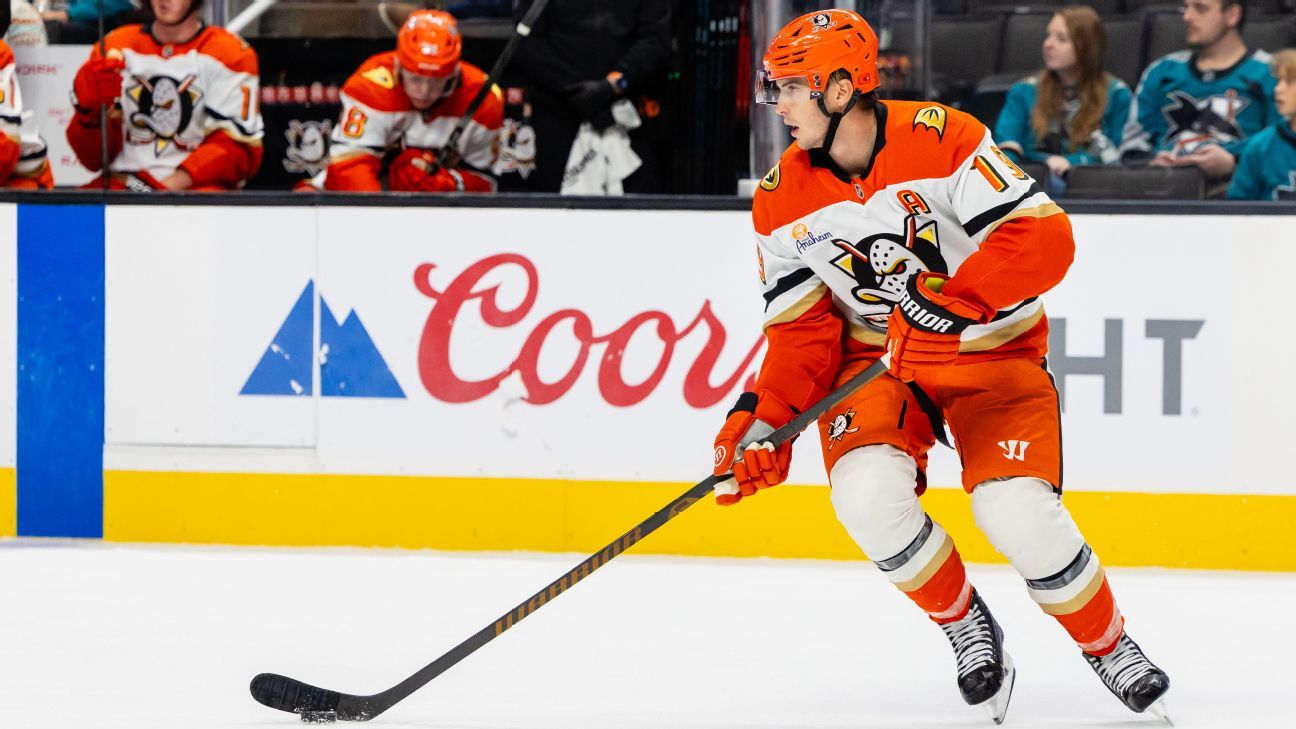
Troy Terry underwent hip surgery on June 9 and faces a 5-to-6-month recovery window, putting his season debut somewhere between mid-November and mid-December. The timeline wipes out the Ducks' entire offseason and opening month, removing one of their few proven scorers from a roster that still ranks among the league's thinner rosters. For a franchise that just made the playoffs for the first time since 2018, the absence of their most reliable offensive threat early in 2026-27 is a significant setback.
Terry's case is especially costly because his output matters more to Anaheim's win total than his games-played count might suggest. He dressed for only 61 games last season due to injuries—the fewest since 2020-21—yet still managed 19 goals and 57 points while playing through the hip impingement that now required surgical intervention. In the playoffs, he was a net-positive force across 12 games, averaging 17:55 in ice time and posting 11 points. His 3 goals and two-way consistency against Vegas showed he's capable of elevated responsibility in high-leverage situations. For comparison, Leo Carlsson led the Ducks in playoff scoring, but Terry's contribution relative to the team's overall punch was outsized.
The Ducks' playoff momentum will evaporate into the calendar by the time Terry can rejoin. An October and November without him forces the coaching staff to reconfigure the top-six forward group and lean on younger or journeyman complementary pieces. Anaheim's offseason moves—if they pursue a depth scorer or veteran deadline help—will now carry extra pressure to shore up scoring depth that Terry's absence will expose. The organization will run a roster-construction experiment they didn't plan for.
From a betting lens, Anaheim's season-long win total and playoff odds just shifted meaningfully downward, though most books have likely already priced in the uncertainty since Terry's injury was reported in May. What matters now is how the Ducks perform in October and November without him, because his mid-season return will look like a surprise upgrade rather than a scheduled arrival. Any props targeting Ducks team totals, power-play production, or season-long forward scoring should account for a truncated first half: the Ducks will play anywhere from 15 to 20 games before Terry steps back into the lineup, and early-season variance often sticks harder than teams expect. If books had built Anaheim's total around a full-roster forecast and the injury was already baked into the price, no fresh adjustment is needed. But if the window for Terry's return pushes closer to December, every game the Ducks play in November becomes a data point on how they perform as a structurally weaker team—and that performance may not fully revert once he returns.