NHL
Sabres' Draft Capital Play Opens Hellebuyck Door—But Market May Price It Already
Buffalo flipped defensive depth for the fourth pick and cap flexibility, but acquiring the Jets' ace requires moving assets teams guard fiercely.
The Buffalo Sabres shipped defenseman Bowen Byram and forward Jordan Greenway to Chicago on Tuesday night, extracting the fourth overall pick in Friday's draft plus a 2026 second-rounder and defender Louis Crevier in return. On its surface, the trade signals aggressive front-office intent: the Sabres now hold $22 million in cap space and a top-five asset with which to reshape their roster before the start of the 2026–27 season.
The trade mechanics matter here. By dealing Byram—a 23-year-old defenseman with legitimate top-pairing potential—the Sabres accepted immediate downgrade at the blue line to buy optionality. Greenway's $4.2 million salary exit freed space. The fourth pick itself carries no direct cap burden but trades at premium value in blockbuster conversations because teams will fork over young players, picks, or retained salary to move it. Chicago, having just cleared deadline inventory and sitting well outside the playoff picture, took a return that signals a modest rebuild pivot rather than full teardown.
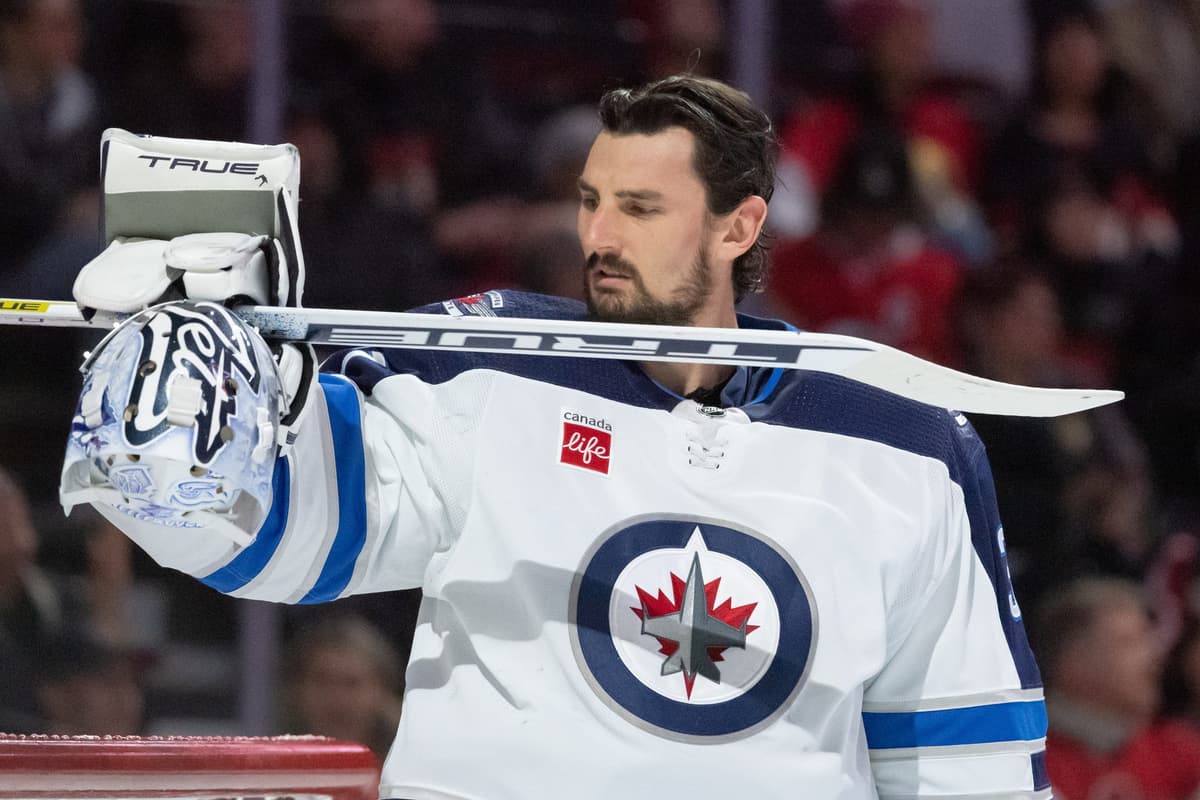
Connor Hellebuyck's name has circulated in Buffalo speculation because his acquisition makes internal sense: the Sabres' goaltending depth chart lacks a true franchise-caliber starter, and Hellebuyck remains a Vezina-class talent under contract through 2027 at $8.7 million AAV—tradeable salary for a team managing the cap cliff. The rub is mechanical. Winnipeg won't move Hellebuyck without a package that stings: likely a top-ten prospect, the fourth pick itself, plus additional assets. The Sabres lack the prospect depth to sweeten that deal cleanly. Using the fourth on a forward or defenseman—address at a premium position—and then pursuing Hellebuyck separately via separate trade discussions puts them in a bind where they've spent their chip and still face a bidding war.
For betting purposes, the Sabres' cap flexibility and trade activity signal a team willing to spend aggressively in the short window, which typically translates to offensive reinforcement and higher goal volume. If Buffalo lands a premium scorer or forward prospect at four and maintains current defensive personnel via free agency, their team totals for 2026–27 should trade at slightly elevated levels—the offensive tempo will expand. Goaltending remains the major variable. If Hellebuyck lands in Buffalo, save percentages and goals-against totals shift materially in their favor, likely driving down team total unders. If he doesn't, and they patch the position with a lower-tier acquisition, that edge evaporates and team overs regain appeal. The market hasn't yet priced the Hellebuyck scenario with full confidence because the trade infrastructure required remains uncertain.
The real angle is timing: bettors should monitor Buffalo's draft selections and free-agency moves through early July before locking in any full-season team prop wagers. A Hellebuyck acquisition surfaces within days of the draft if it's going to happen at all. Until that clarity arrives, team totals carry embedded uncertainty that won't resolve until the roster shape stabilizes.