Celebrini's Discount Play Could Unlock Sharks' Cap Edge Over Pacific Rivals
By Justin Erickson ·
A 20-year-old MVP-caliber center willing to leave $2M+ on the table reshapes San Jose's ability to build around him—while Anaheim's Carlsson deal handcuffs the Ducks' forward depth.
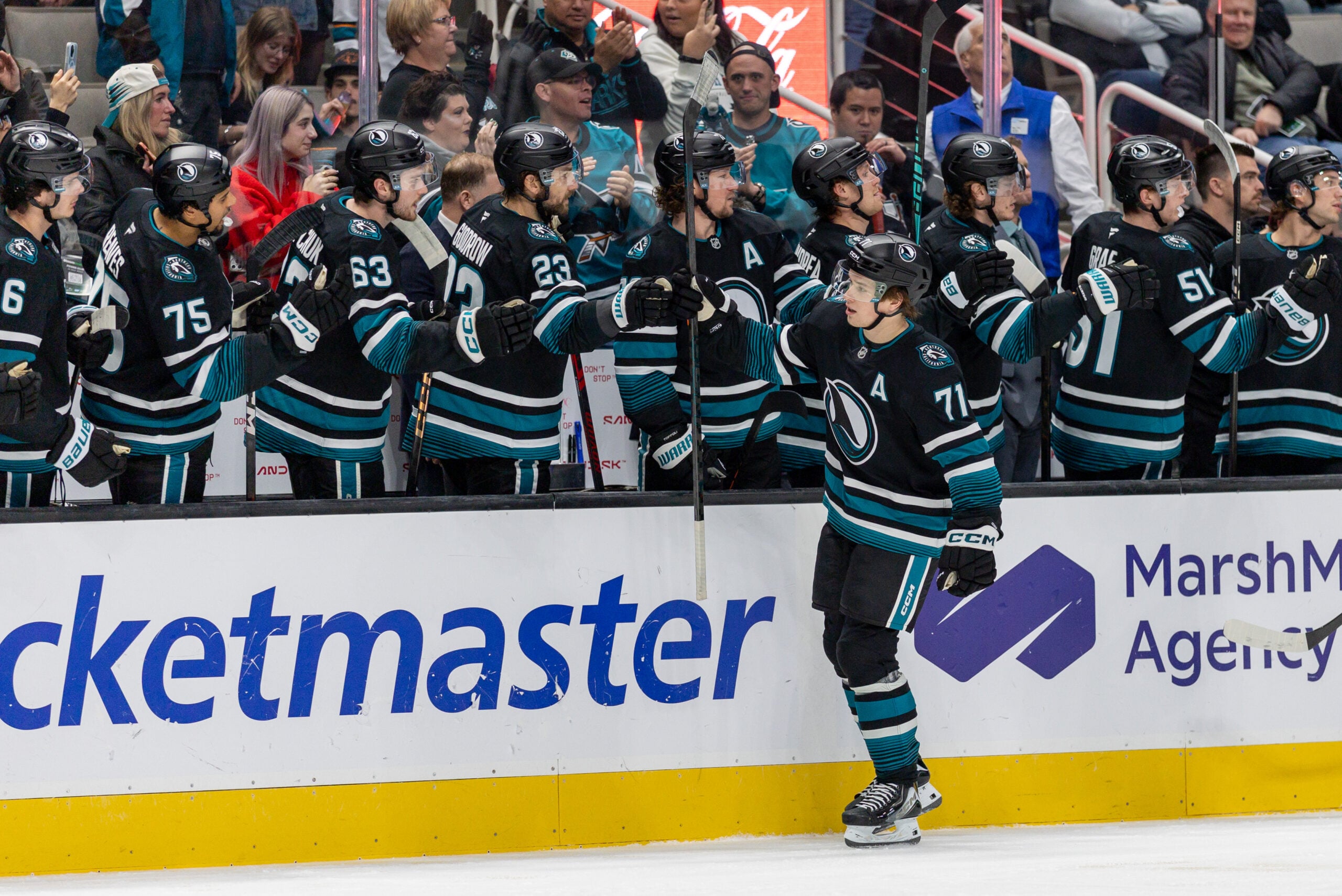
Macklin Celebrini just finished a historic 2025-26 campaign: 115 points in 82 games, broke the Sharks' franchise single-season record, led Team Canada in goals at the Olympics, and claimed the cover of NHL 27. At 20 years old, he's already the franchise cornerstone. The news that matters, though, isn't his production—it's what he's signaling about his contract: he's willing to take a discount to give San Jose cap flexibility.
The context is Anaheim's catastrophe. Leo Carlsson, Celebrini's contemporary, just signed an offer sheet from Philadelphia (matched by the Ducks) at $18M AAV. Carlsson posted 67 points in 70 games. Celebrini eclipsed him by 48 points and is already a better all-around player by virtually every measure. Yet Carlsson now holds the NHL's largest contract ever. That's the market signal: young superstars are being paid at peak rates. Celebrini would have leverage to demand the same. Instead, he told ESPN he'd take less. A $16M AAV deal—roughly $2M below Carlsson—still seems generous on its face. But here's the cap math: at the current $104M ceiling, $16M represents 15.4% of cap space. Crosby's first major deal at $8.7M consumed 15.3% of Pittsburgh's $56.7M cap in 2006-07. The historical comparison is apt. Celebrini is setting a precedent about winning over maximizing.
The Ducks, meanwhile, are now trapped. Cutter Gauthier, their restricted free agent winger, has reportedly indicated he won't accept less than Carlsson's $18M. Anaheim already shed defensemen (Jacob Trouba departed to San Jose) and has roughly $9M in cap space to re-sign Gauthier and patch a depleted blue line. San Jose, by contrast, gains breathing room. If Celebrini signs at $15.5M to $16M—a real discount relative to market—the Sharks open a 2-3 point gap in cap flexibility that compounds over the contract's length. That's the difference between adding a 40-50 point secondary scorer and settling for depth scraps.
For bettors, this matters because roster construction directly affects offensive output. The Sharks' depth scoring—specifically their secondary-line assist chains and power-play setup plays—depends entirely on whether the front office can fund complementary talent. A discount Celebrini deal unlocks $1.5M to $2.5M in annual cap space over five years (roughly $7.5M to $12.5M in total spending flexibility). That capital flows to wingers and depth centers who drive secondary scoring volume. Celebrini himself becomes a more efficient playmaker if he's surrounded by NHL-caliber linemates rather than journeymen. His assist totals, already projected to climb given his 2025-26 baseline, gain another layer of runway. The Ducks face the inverse: Gauthier locked in at $18M consumes cap dollars that would otherwise fill out a competitive second or third line. Anaheim's team-total goals will lag San Jose's over the next five seasons, not because of star power—Celebrini and Carlsson are peers—but because San Jose can afford the ancillary players who generate incremental scoring.
The edge for bettors is forward-looking team totals and power-play props on the Sharks. Celebrini's contract discount is a valuation gift to San Jose's front office, and they will deploy it. Over five seasons, expect the Sharks to consistently out-pace the Ducks in team goal production and secondary-line assists. The Ducks will have one elite forward (Carlsson) and diminishing depth. The Sharks will have one elite forward (Celebrini) and superior supporting cast. That gap widens playoff odds in California's favor and depresses Anaheim's scoring ceiling.