Ovechkin's One-Year Deal Signals Capitals' Win-Now Stance—And a Scoring Stability Play
By Justin Erickson ·
Washington locks in its franchise pillar on a cap-friendly structure while adding Kyrou and Tuch, creating a clear offensive framework for bettors to size.
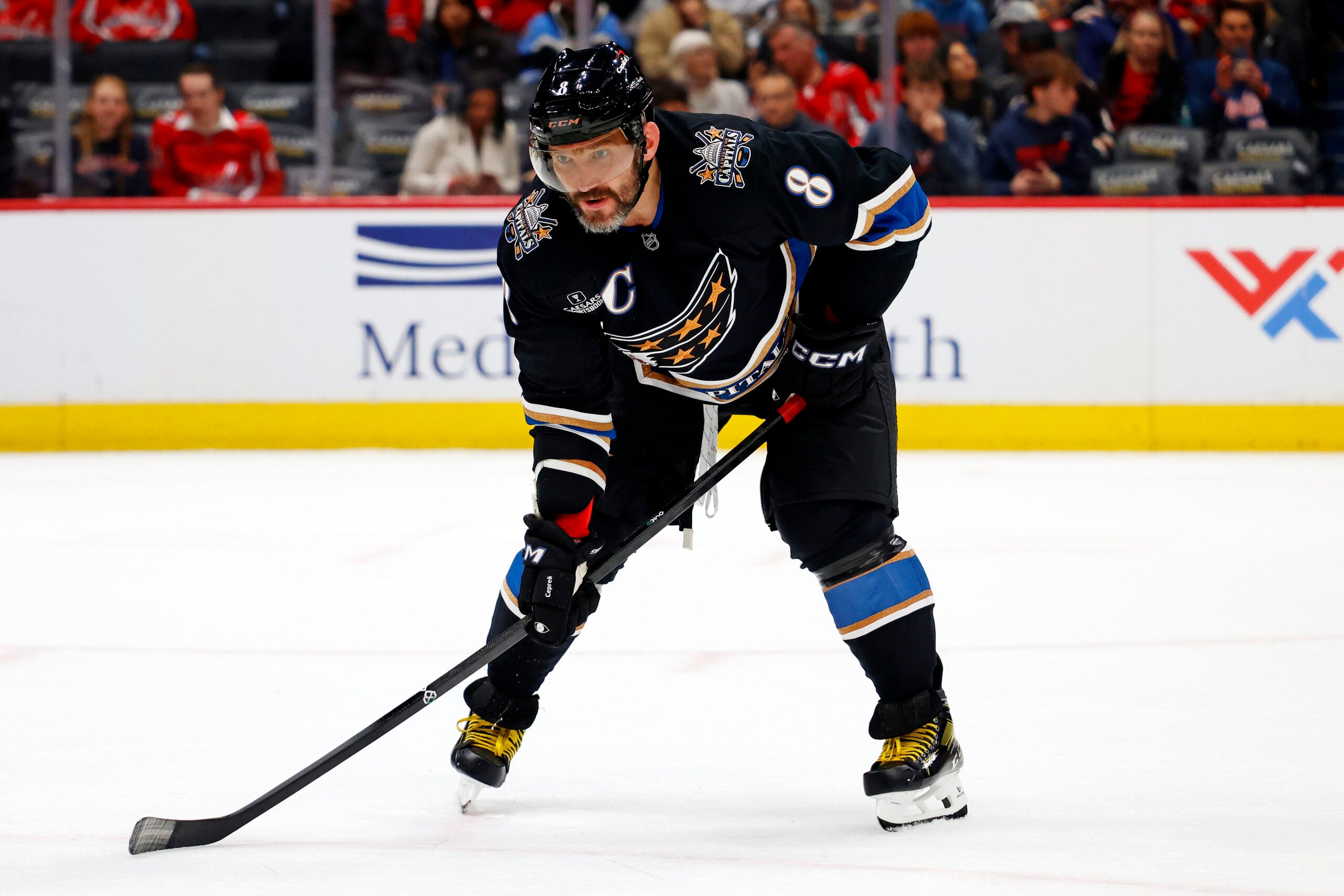
The Washington Capitals announced Thursday that captain Alexander Ovechkin has re-signed on a one-year contract carrying a $4.25 million cap hit, though his actual compensation reaches $9 million if he plays at least 10 games. The deal structures $3.25 million as a signing bonus, $1 million in base salary, and a $4.75 million performance bonus—a framework that keeps the salary cap clean while rewarding their 40-year-old franchise centerpiece. For bettors tracking Capitals offensive architecture, this matters more than sentiment alone. Ovechkin's presence anchors Washington's power-play unit and drives first-unit ice time in ways that directly shape teammate scoring volume and shot-generation patterns.
The timing of this extension alongside the trades for Jordan Kyrou and Alex Tuch reveals management's explicit intent: maximize the remaining window around Ovechkin rather than coast on historical equity. Kyrou's 27-year-old legs and rush-attack creativity address a specific offensive gap Washington has carried. Tuch, at 29, brings a different scoring vector—power-forward utility that functions across top-six pairings without requiring primary playmaking responsibility. Neither signing is defensive or speculative. They're offensive depth designed to depress ice time concentration on Ovechkin's line and create secondary scoring pressure that exploits defensive schematic weaknesses.
For prop construction, this restructuring has immediate operational consequence. When Ovechkin operates alongside Kyrou, the Capitals move from a heavy left-flank isolation system to a multi-vector attack that generates shots from unexpected positions. Kyrou's assist rate over his last 80 games with St. Louis sat at 0.48 per game; Tuch's playoff experience and board play reduce defensive collapsing against Ovechkin's net-front gravity. The effect isn't that Ovechkin scores more—he's been a shot-volume steady at 3.2-3.5 per game for five consecutive seasons—but that his linemates' conversion rates and assist totals should expand. A one-year deal also eliminates uncertainty about roster coherence; Washington's front office isn't managing decline or testing fringe players. They're building.
Market books have already reflected Ovechkin's individual scoring prop lines during early July lookahead posting, but the secondary-option assists and team total construction haven't yet fully priced the Kyrou-Tuch catalyst. Kyrou's assist line in St. Louis hovered around 0.5 per game on a team with inconsistent secondary scoring; in Washington, opposite a now-established top-six architecture, his role expands into consistent first-unit minutes. Tuch's power-play time should tick upward from his Arizona deployment, where he was often second-unit or defensive-matchup adjacent. The Capitals' team total is likely to move up 0.3–0.5 goals per game once sportsbooks fully model the new forward cohesion, but that adjustment typically lags the formal roster announcement by 48–72 hours.
The one-year structure is also a betting signal: Washington doesn't believe it's rebuilding or testing incremental paths. This is a 2026–27 championship-or-bust roster, and those teams tend to have outsized scoring volumes in regular season—coaching staff leans on offensive pressure to lock in chemistry before the playoffs. Expect Capitals team totals to trend north, and expect secondary-assist props (Kyrou, Tuch, secondary-line wings) to carry positive edges once the market adjusts beyond just Ovechkin's individual line.