Pettersson on the Block Signals Vancouver's Offense Is About to Reshape
By Justin Erickson ·
The Canucks aren't just shopping a star; they're dismantling the offensive architecture that's defined them for three seasons.
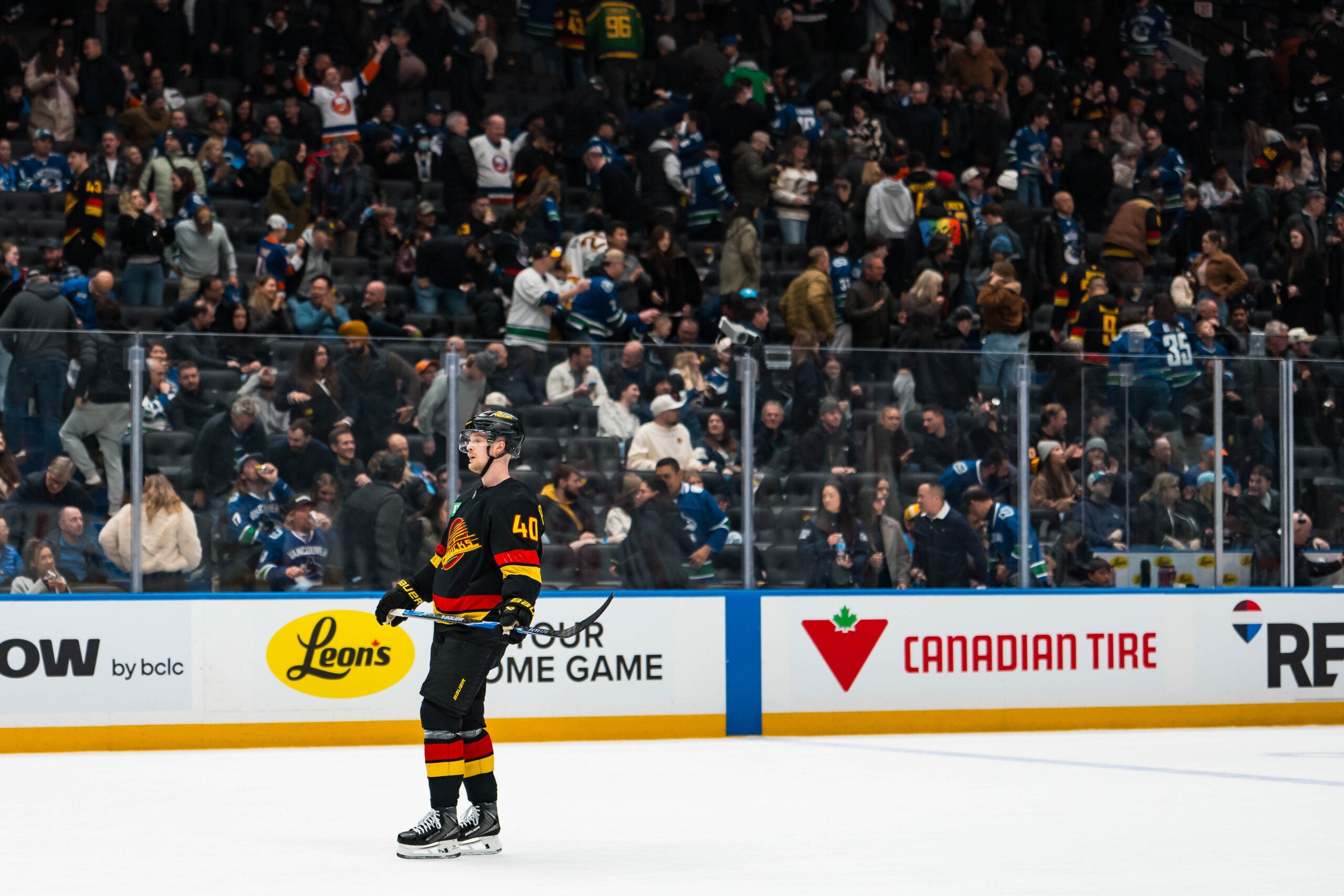
The Elias Pettersson conversation in Vancouver has shifted from idle speculation to active market testing. Per TSN's reporting, the Canucks have opened discussions with multiple teams about his availability, and the fact that Brock Boeser and Jake DeBrusk are simultaneously in play suggests this isn't a fire-sale moment—it's a structural reset.
Pettersson's decline is real, not a narrative construct. After a 102-point season in 2022-23, he's posted 45 and 51 points over the past two seasons, a productivity cliff that coincides with recurring injuries and the league's defensive evolution. At $11.6 million through 2032 with likely $5-plus million retained, his contract complicates any return, but the Canucks' willingness to discuss him at all signals something deeper: they no longer believe he's the offensive engine that carries them through tight playoff matchups. The simultaneous availability of Boeser (22 goals, 48 points on a $7.25M deal through 2031) and DeBrusk (23 goals, 42 points) indicates Vancouver is contemplating a wholesale rewiring of forward positioning and responsibility distribution.
What matters for projection purposes is what happens after any trade, not the deal itself. Pettersson has been the Canucks' primary offensive catalyst in transition and the default beneficiary of their power-play architecture. Remove him and you're not just subtracting 50-60 points from the lineup—you're redistributing usage, matchup responsibility, and ice-time hierarchy across a roster that's never had to reorganize that way. Younger players or secondary forwards suddenly inherit tougher defensive assignments, power-play reps shift, and the pace-of-play in the Canucks' half-ice sets changes materially. This is the mechanism that governs individual player prop performance going forward: role uncertainty and deployment flux.
For bettors, the near-term implication is volatility. If Pettersson stays, his assist totals face continued headwinds because Vancouver has already soured on his productivity tier. If he moves, the team's total goals-for and power-play conversions will dip sharply in the first 10-15 games while new lineups stabilize. Neither scenario produces clean prop value until the market has priced in the new structure. The safest approach is to fade individual Canucks forward props through the draft period and into the first three weeks of the season—the assignment patterns and usage data you'd normally rely on are compromised by architectural uncertainty.
What does hold steady: defensive workload and goalie touches. If Vancouver trades Pettersson and absorbs the lineup churn, they'll likely see increased defensive zone starts and higher save volume in the short term as they lean on depth and stability. That's a single-event edge that survives early line movement, since it's driven by structural necessity rather than performance variance. Goalie totals for any Canucks starter—whether that's Thatcher Demko or another—will likely trend higher through September as the offense finds its new rhythm.