Boston's Korpisalo Dump Clears a Crease and a Cap Problem
By Justin Erickson ·
The Bruins traded away a struggling backup to make room for DiPietro and freed $3 million in cap space — a low-risk move that positions them to upgrade their top-six or secondary scoring depth.
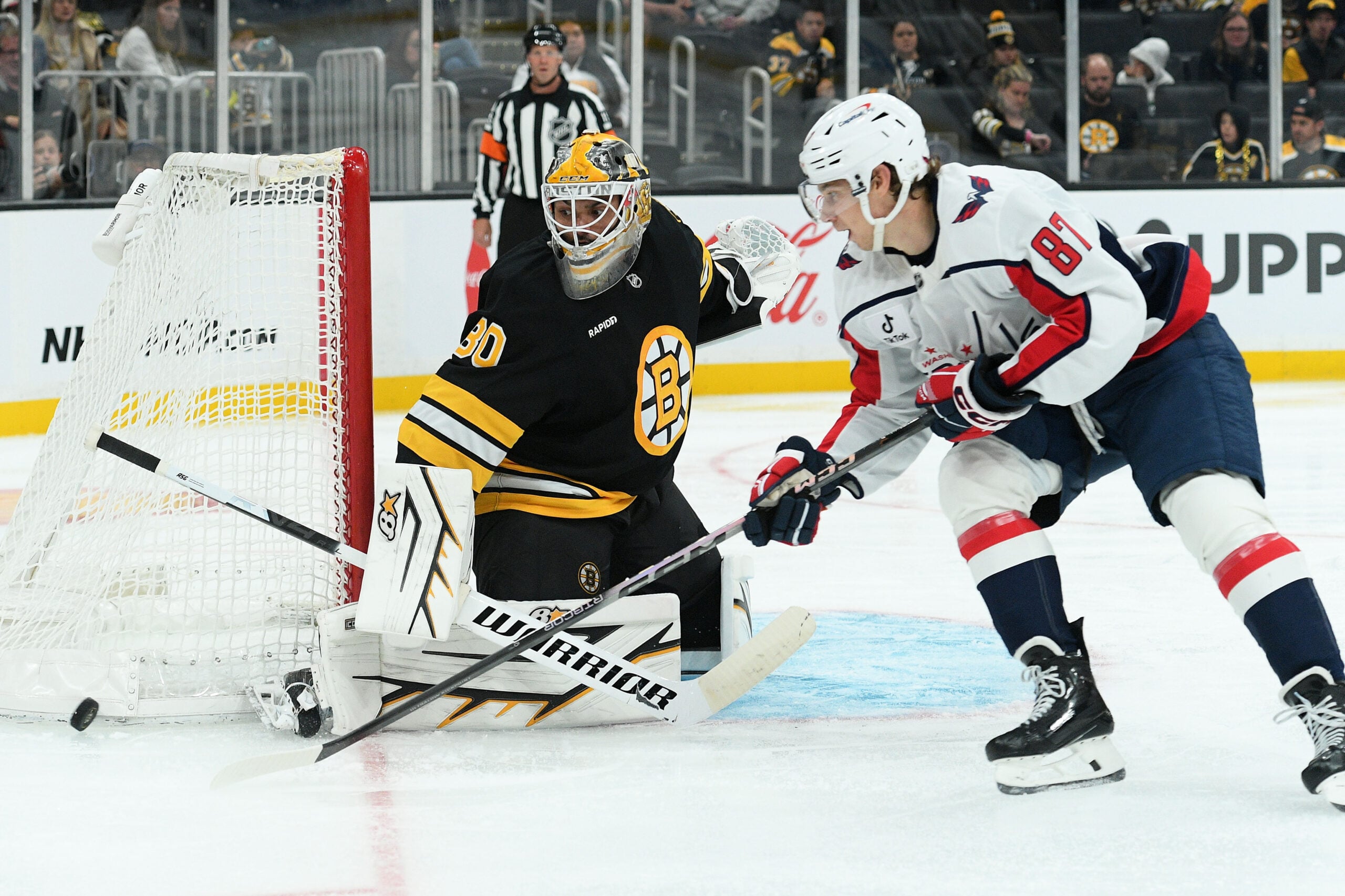
The Boston Bruins shipped Joonas Korpisalo to the New York Rangers in exchange for a 2028 fourth-round pick and prospect Kalle Vaisanen, clearing $3 million in cap space in the process. On its surface, the trade reads as organizational housekeeping — moving out a backup who failed to earn postseason minutes despite a 58-game run in the regular season. But the subtraction carries strategic weight. Korpisalo's .894 save percentage and 3.03 goals-against average over 2025-26 marked a sharp decline from his Columbus days, and his single playoff appearance (six saves in 13 minutes against Buffalo) suggested the Bruins had already moved on. The Rangers, retooling after the departures of Vincent Trocheck and Artemi Panarin, inherit an aging depth piece behind Igor Shesterkin; Boston gets room to maneuver.
The real value lies in what the cap relief enables. Sweeney confirmed the trade opens a direct pathway for Michael DiPietro to challenge Linus Ullmark for primary duties, giving the organization a two-year audition window on a younger netminder. DiPietro's ceiling as an NHL starter remains unproven, but the Bruins are betting that two years of legitimate competition time — without Korpisalo's $3 million anchoring the backup slot — yields either growth or actionable trade data by 2028. The fourth-rounder arriving in 2028 is secondary value; the cap relief is the real asset.
Vaisanen, the 6-foot-5 Finnish prospect arriving in the deal, profiles as a long-term Providence organizational piece rather than immediate NHL production. With four points in 51 games for Hartford last season and nine points in 48 games for TPS in Finland during 2024-25, he's a slow-burn project with size and playmaking potential for a bottom-six role. He won't factor into Boston's 2026-27 depth chart, but the Bruins inherit organizational depth on a cheap, controlled contract.
From a goaltender-workload perspective, this trade matters for Ullmark props going forward. If DiPietro proves capable of stealing games or forcing regular rotation, Ullmark's minutes, shots-faced totals, and save percentages could compress compared to typical starter workloads. Conversely, if DiPietro struggles, Ullmark becomes a volume play — more starts, more shots, more save-percentage variance. The market hasn't yet priced in the shift from a three-goalie committee (Ullmark-Korpisalo-Swayman for depth) to a cleaner two-horse race. Early-season unders on Ullmark's shots-on-goal props carry moderate edge if DiPietro is named the backup and the Bruins operate a true 65-35 or 70-30 workload split rather than the murkier distribution Korpisalo's presence created.
The cap space is the lasting tell. Boston now has $3 million to spend on reinforcement: a fourth-line center, a depth defenseman, or secondary scoring to bolster the top-nine. Watch for Sweeney to deploy this flexibility before or during the season. Teams that free cap at the deadline almost always have a target in mind.