Reichel's $950K Depth Gamble: Why Boston's Low-Cost Flyer Changes Nothing for Lineup Props
By Justin Erickson ·
The Bruins signed a former first-rounder on a prove-it deal, but his roster placement and ice-time uncertainty make him a liability for individual player props and team total bets.
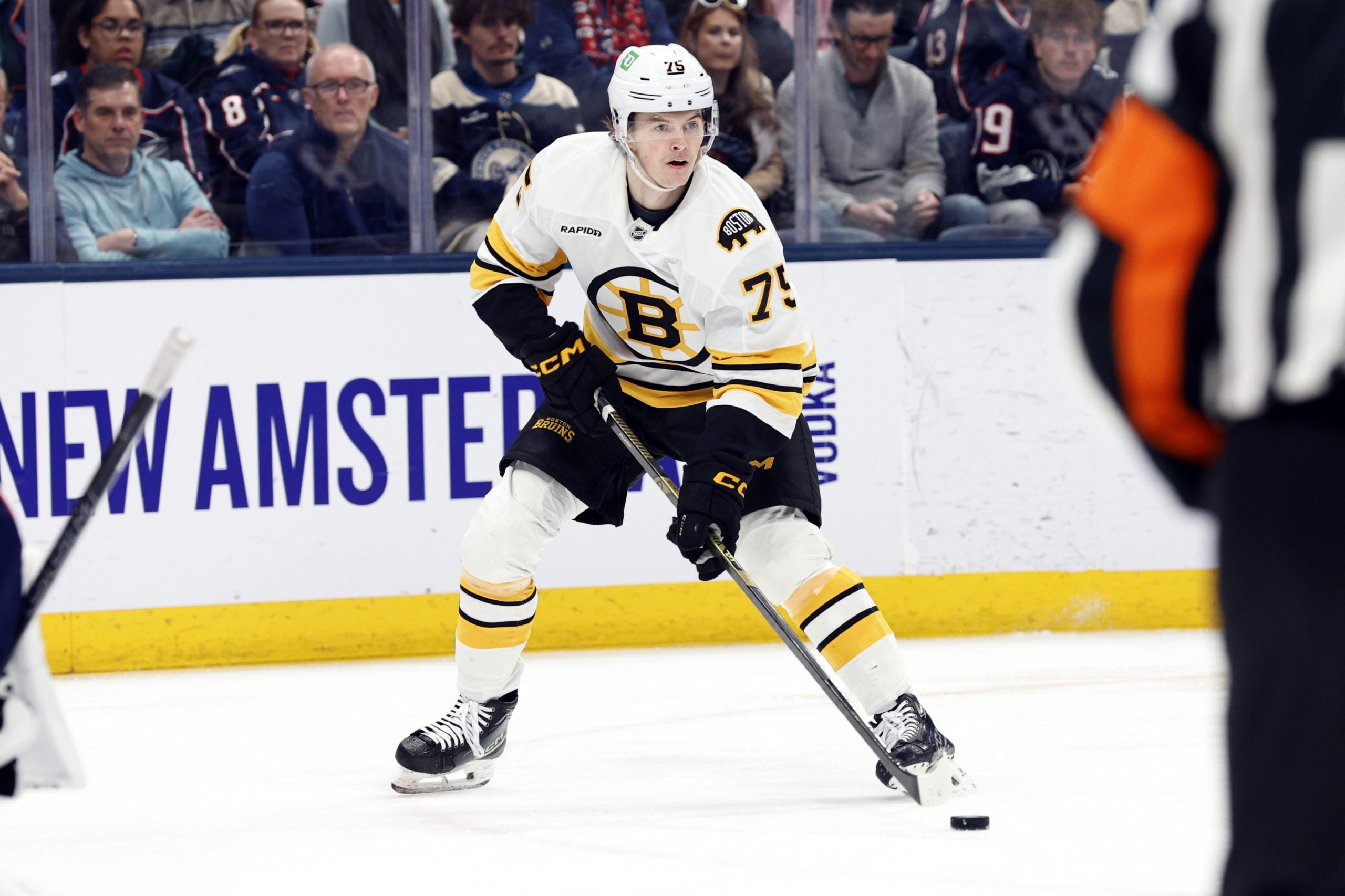
The Boston Bruins signed Lukas Reichel to a one-year, $950,000 extension on Thursday—a low-cost depth move that costs them virtually nothing on the cap but signals little about their actual lineup construction heading into 2026-27. Reichel, acquired at the trade deadline from Vancouver for a sixth-round pick, logged one goal and three points in 10 games as a Bruin and was invisible in the playoffs. He's a 24-year-old former first-round pick (2020) who has produced just 23 goals and 62 points across 198 career NHL games, a throughline of offensive underperformance that explains why both Chicago and Vancouver moved on from him in a single season.
The mechanics of why Reichel remains in Boston's orbit are clear: he posted six points in four AHL games with Providence, suggesting he can serve as a rotational depth piece without financial or asset risk. A $950K cap hit on a one-year deal is essentially free real estate for a team exploring its offseason options. But roster flexibility is not the same as roster impact. Reichel's path to meaningful ice time depends entirely on Boston's free-agent acquisitions and internal competition—variables that won't be settled until training camp. This uncertainty is the crux of why he's a fade for individual prop bettors.
The Bruins' offseason priorities are loud and clear: they're hunting a first-line center, right-side defensive help, and forward speed. Reichel fits none of those buckets. He's a contingency option if injuries or underperformance force lineup changes mid-season. That means his playing time profile is volatile and his scoring touch—already unreliable at the NHL level—is unlikely to stabilize in a reserve role. Any prop line on Reichel for the 2026-27 season prices him as a consistent contributor, which contradicts Boston's own evaluation of him as a low-leverage depth gamble.
For team total bettors tracking Boston's depth offensive capacity, Reichel's extension is background noise. The Bruins' ceiling on shots and goals is determined by their marquee names and first-line deployment, neither of which Reichel impacts. If Boston lands a legitimate top-six scoring forward in free agency, Reichel's role shrinks further. If injuries force him into the lineup, he's likely to deliver sub-replacement-level production—he's a 0.31 points-per-game player over his last 198 games. The market will correctly price Boston's team totals based on their acquisitions, not on the presence of a low-confidence depth fill.
The Bruins are being rational: they've preserved roster optionality at minimal cost. But that rationality for management is a warning flag for prop bettors. Avoid individual player props on Reichel unless his ice time gets locked in post-training camp, and treat Boston's team totals as dependent on the quality of their new signings, not the retention of marginal depth. The extension buys the Bruins flexibility; it doesn't buy Reichel a reliable role.