NHL · injury
Viktor Arvidsson Played Through Broken Rib and Punctured Lung — What It Means for Bruins' Offseason Outlook
When a playoff elimination feels bad enough, learning your winger was absorbing hits with a punctured lung makes it worse — and smarter bettors will want to know this heading into next season.
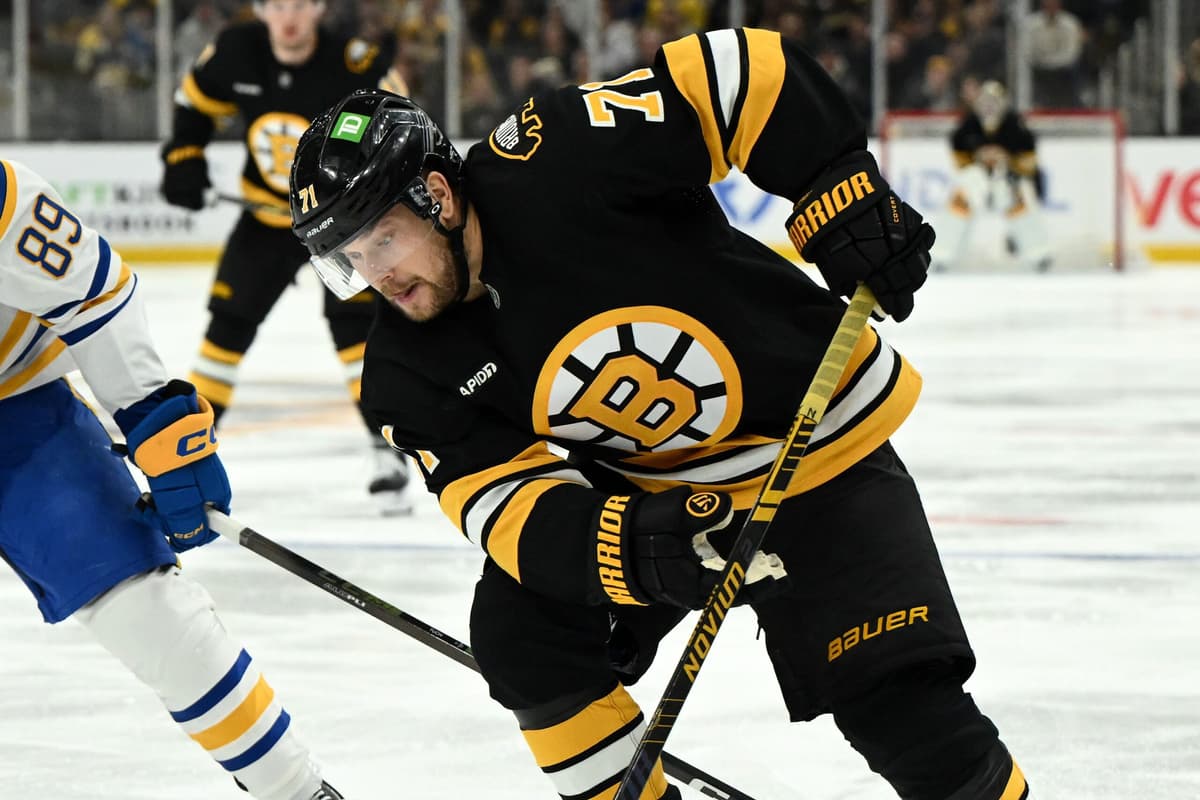
Viktor Arvidsson's absence from the final two games of Boston's Atlantic Division Semifinal against Buffalo was more serious than anyone let on in real time. At the Bruins' end-of-season media availability Sunday, Arvidsson confirmed he suffered a broken rib and a punctured lung after taking contact in Game 4 — injuries that made breathing and basic movement painful enough to sideline him, though he said he was targeting a return had the series reached a Game 7 in Buffalo.
The detail that Arvidsson was even considering suiting up with a punctured lung tells you something about the culture Jim Montgomery has built in Boston, but it also tells you something about the depth question the Bruins face heading into the offseason. Arvidsson, 32, has quietly been one of the more productive secondary forwards in the lineup when healthy — a 15-to-20 goal threat who gets power-play time and generates meaningful shot volume. Losing him mid-series essentially stripped Boston of a reliable offensive option in the two games that ended their run.
For context, the Bruins were already navigating injury attrition deep into that Buffalo series. Arvidsson's absence compressed the forward group, forced lineup reshuffling, and reduced the team's ability to sustain offensive zone time — particularly at five-on-five. Buffalo's defensive structure exploited exactly the kind of forward-depth disadvantage Boston was managing without him.
From a betting-market perspective, Arvidsson's injury history is now a documented concern entering next season. He's dealt with significant physical setbacks in back-to-back postseasons, and the offseason recovery timeline for a punctured lung — while typically measured in weeks rather than months — still creates legitimate uncertainty around his availability for training camp and his conditioning at the start of 2026-27. Markets will likely open him at depressed season-long totals (points, goals, shots), and early-season prop lines on his shots-on-goal and points per game could undervalue him if he's fully recovered, or correctly price caution if he opens the year on a minutes restriction. Watch how Boston handles his deployment in the first 10 to 15 games — if he's on the second power-play unit and logging 14-plus minutes, the value may be on the over on his shots and points props. If he's eased back, fade accordingly.
The broader Bruins roster picture — goaltending decisions, the David Pastrnak contract situation, and blueline depth — will dominate the offseason conversation. But Arvidsson is a roster piece worth tracking closely. A healthy version of him changes Boston's offensive ceiling on secondary lines. A compromised version changes the math on team totals and individual props in ways the market won't fully price until we see him skate in October.
NHL Intelligence — Hockey intelligence beyond the scoreboard. Open NHL Intelligence →