NHL · transaction
Blankenburg's Toronto Deal: Depth Value on a Veteran Floor
A seven-day PTO audition vaults the 28-year-old defenseman into the Leafs' roster mix at $1.4M, with playoff leverage baked into his floor.
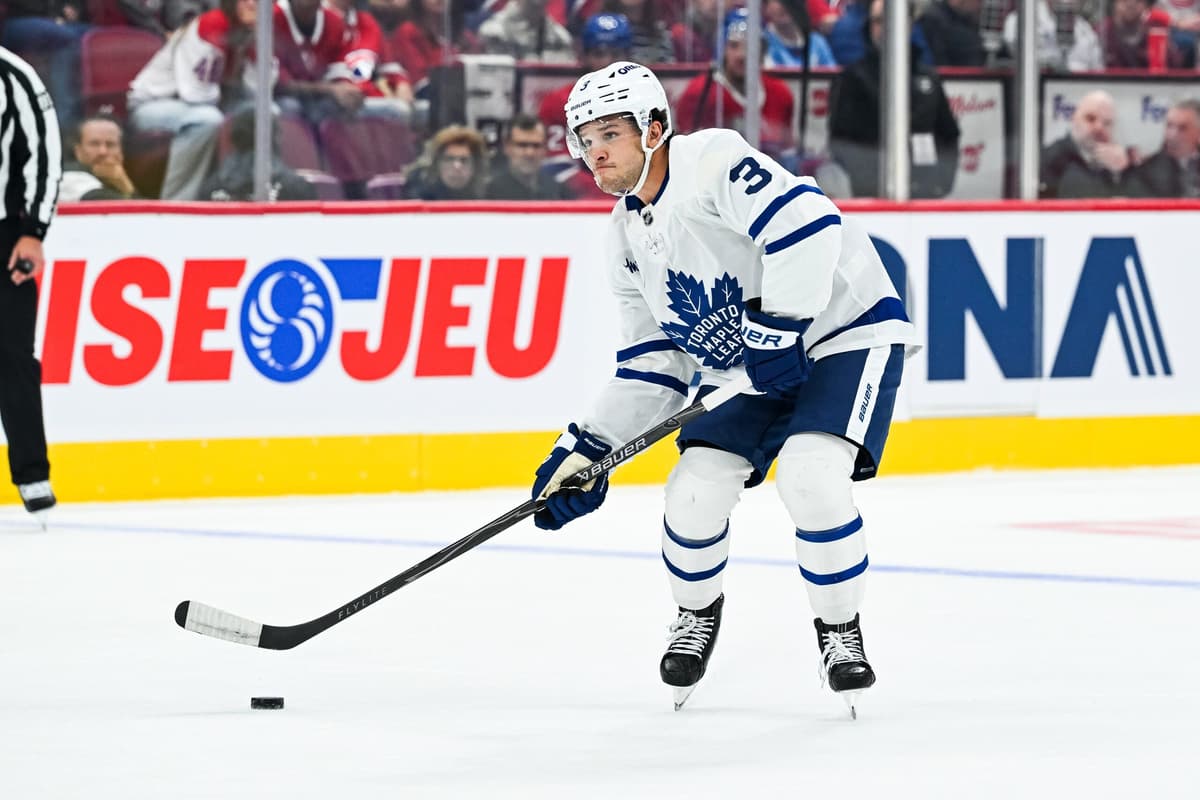
Nick Blankenburg signed a one-year contract with the Toronto Maple Leafs on Sunday after impressing during a professional tryout at the team's training camp. The defenseman will earn $1.4 million against the salary cap for the 2026-27 season, a $625,000 raise from his previous league-minimum deal with Nashville. He enters a crowded back-end rotation behind an established top-four anchored by Morgan Rielly, Darren Raddysh, Jake McCabe, and Chris Tanev, positioning him as a swing defender who rotates with Troy Stecher on the third pair.
Blankenburg's path to the contract reveals something worth noting about organizational priorities. He finished the 2025-26 season with career highs across the board—eight goals, 16 assists, and 24 points in 54 games—after a mid-season trade from Nashville to Colorado. The Avalanche won the Presidents' Trophy. Yet despite that career year and playoff experience, he hit unrestricted free agency unsigned through late September. The market had moved past him. Toronto's preseason evaluation—two games, 19 minutes per night, plus an assist—was enough to reset his floor at a $1.4M contract on the eve of the 2026-27 season opener against Montreal on September 29.
The signing carries minimal downside risk for Toronto and limited upside variance for prop construction. Blankenburg will not carry consistent volume. A seventh or rotational third-pair defenseman operates in usage limbo: deployed when health demands it, benched when depth stays intact. His 2025-26 frame—54 games with two teams—illustrates the ceiling; he averaged 19.4 minutes per game across both stops. In Toronto's healthy lineup, he'll clock fewer minutes and fewer touches. His two preseason contests offer no reliable sample of what to expect in regular-season deployment.
For bettors, Blankenburg exists as a fade rather than a play. Any prop listing his season totals (goals, assists, or points) will price him as a rotational player, which is correct. The volatility stems not from individual performance but from binary availability: active or scratched. His season line will hinge on injury elsewhere on the blue line, not on skill regression or sudden offensive bursts. That makes him a name to avoid in player props during the first 10-15 games of the season, when the Leafs' top-four depth will likely remain intact and he cycles through the lineup in relief. Once weather, travel, or injury begins to chip away at the primary six defensemen, Blankenburg's touch will increase—but predicting that window requires forecasting injuries, not analyzing film or splits.
NHL Intelligence — Hockey intelligence beyond the scoreboard. Open NHL Intelligence →