NHL
Binnington's Composure Masks Defensive Collapse as Blues Regroup After 6-1 Loss
St. Louis's goaltender kept a blowout from spiraling further, but the Blues' penalty kill and rebound control offer sharper clues about which direction this roster is actually headed.
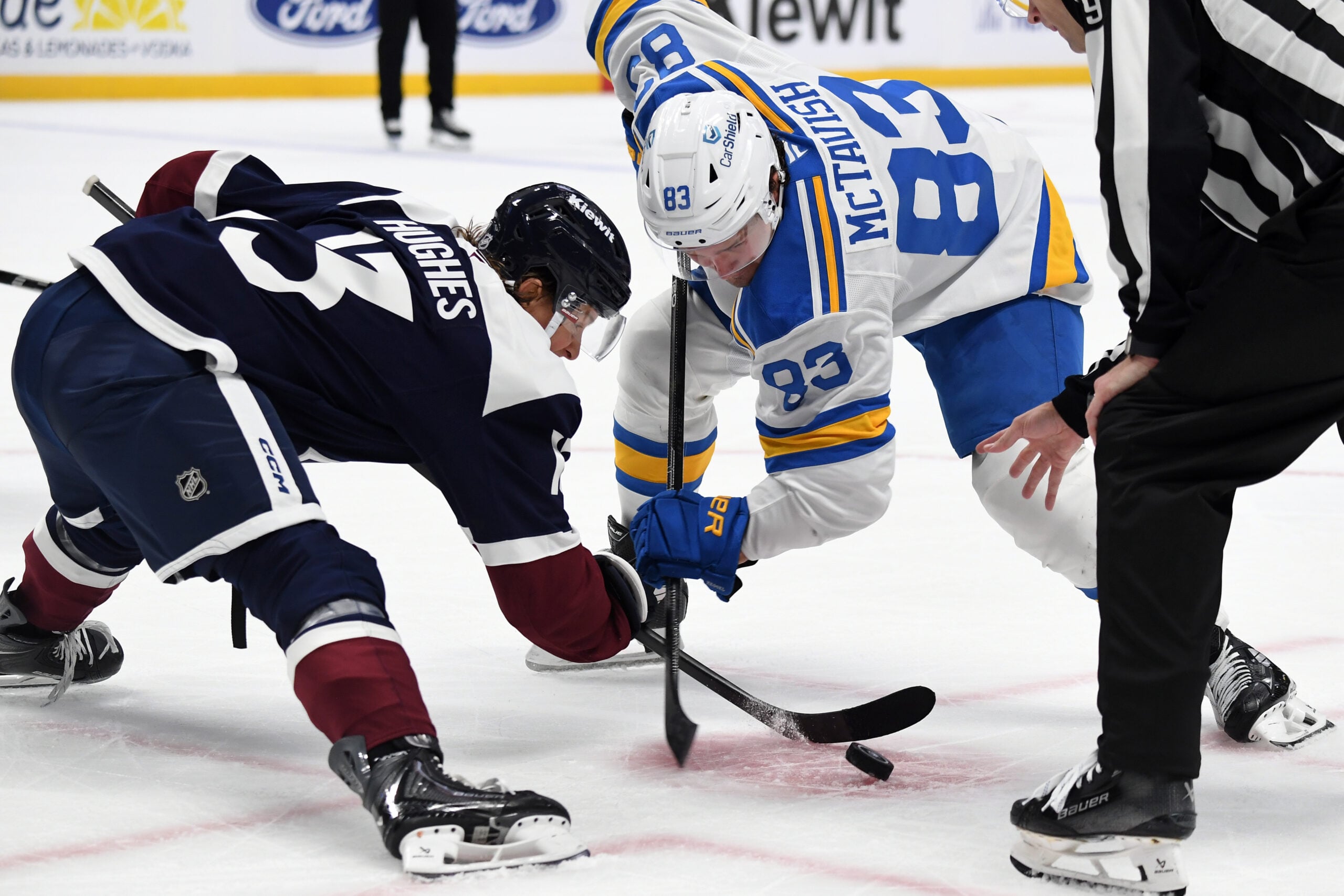
The St. Louis Blues opened their 2026-27 season with a convincing 4-0 win over Dallas on Friday, then walked into a 6-1 ambush at Colorado on Saturday—a gut-check reversal that exposed the gaps between a talented roster and one capable of competing through a full season. Cale Makar's backdoor goal in the first period set the tone for an Avalanche team that had rested since Wednesday while the Blues dragged themselves in on the back end of a back-to-back. By the second period, the game had already slipped away.
Jordan Binnington's stat line—six goals against in his first start of the season—reads like a disaster. The reality is more nuanced. The 2019 Stanley Cup champion was soundly outworked in the neutral zone and caught in a schematic mismatch early, but he held firm through a first-period onslaught that could have been worse. Two second-period giveaways led directly to goals; neither was a structural save-and-rebound failure. Binnington's technical positioning and composure under sustained pressure kept the damage contained in a game where the Blues simply had no legs. That he stayed in the crease for all 60 minutes, even as the scoreboard turned into a rout, earned him credit for resilience—but resilience alone doesn't move playoff odds.
The sharper diagnostic emerges in two contrasting details. Colorado's Mackenzie Blackwood, facing a Blues team that had generated second-chance opportunities en route to Friday's shutout, smothered every rebound and held every loose puck for a whistle. The Blues' penalty kill, meanwhile, went 0-for-4 against Colorado's power play despite the Avalanche's overall dominance—a remarkable flex of unit discipline. Through two games, St. Louis is now 8-for-8 on the kill, a dramatic improvement from last season's 25th-ranked penalty kill. That kind of structural discipline rarely emerges by accident; it suggests the coaching staff has implemented a measurable scheme change that's already yielding results.
For prop bettors, the penalty kill efficiency matters because it compresses the variance in special-teams-driven losses. Colorado scored six goals at even strength and zero on the power play—the opposite of what the scoreline might suggest. If the Blues' penalty kill remains genuinely in the 95%+ tier, that reduces Colorado's expected power-play contribution in future matchups and raises the baseline for team totals in games where St. Louis is the underdog. The Avalanche, accustomed to using the man advantage as a scoring offset, may have had their most dangerous weapon neutralized despite outshooting and outplaying the visitors. Over the next 10 games, monitor whether this kill unit holds near 90%+ efficiency; if it does, unders on Colorado totals gain credibility in rematches, and Blues underdogs become more attractive because the penalty-kill floor is higher than the market currently prices.
Binnington's night, conversely, is a single-game outlier. One rough outing after a long injury recovery does not reprrice his season projections. But the penalty kill's second consecutive flawless performance is a pattern worth isolating. The Blues have a structural edge in that phase that wasn't there a season ago, and it's already compressing the score-differential risk when they play from behind.
NHL Intelligence — Hockey intelligence beyond the scoreboard. Open NHL Intelligence →