Coleman's Pass-Protection Edge Could Fast-Track His Role in Denver's Backfield
By Justin Erickson ·
The Broncos' fourth-round pick solved the rookie back's traditional weak point—and that's what makes him dangerous early in the rotation.
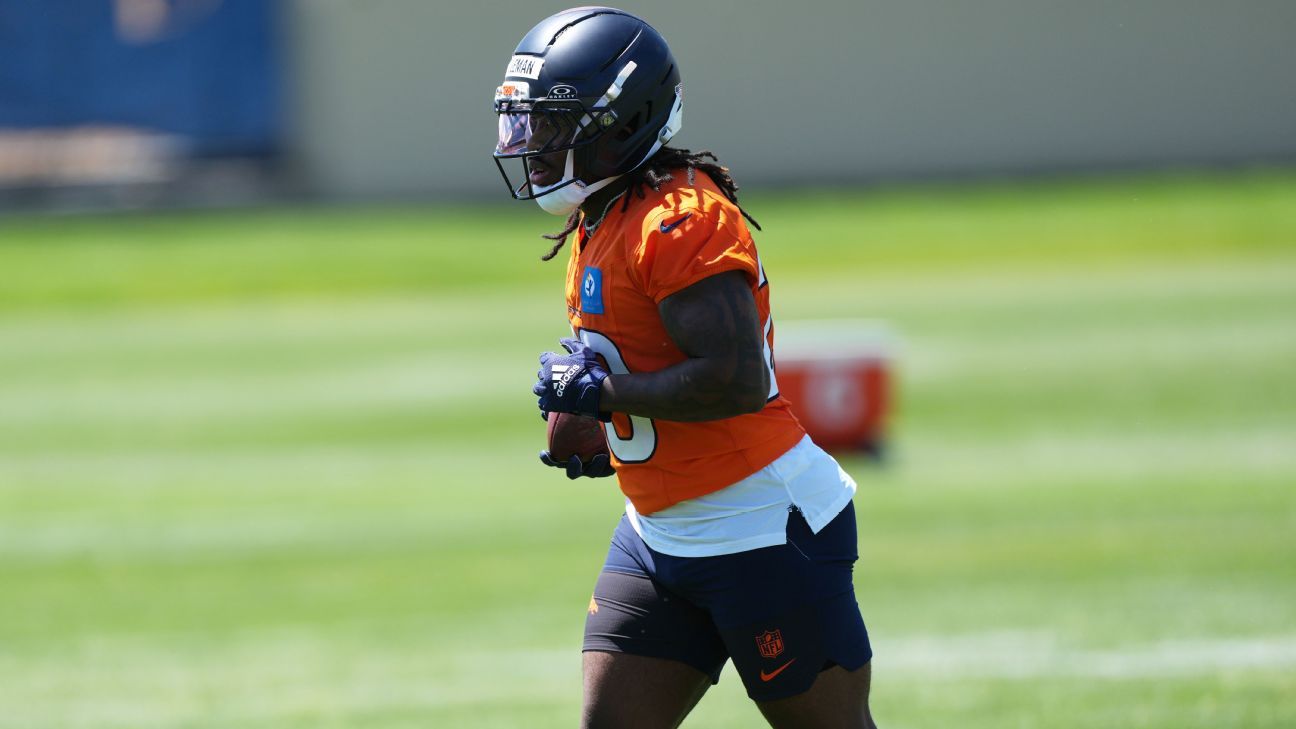
Sean Payton brought Jonah Coleman into Denver's backfield with a specific job: break the mold that typically sidelines rookie running backs. Coleman, the 5-foot-8, 220-pound South Carolina transplant, averaged 5.5 yards per carry over four college seasons and scored 25 rushing touchdowns in his final two years at Washington. But those surface numbers aren't what moved the Broncos to draft him in the fourth round. The franchise identified him as the most advanced pass protector in his draft class—a skill that directly unlocks playing time in Payton's system.
The logic is structural, not sentimental. A rookie running back who can't pick up blitzers sits, period. When J.K. Dobbins went down with a season-ending foot injury during Week 10 last season, Denver's run game collapsed: from ninth in rushing yards per game pre-injury to 23rd afterward. The Broncos finished the season at 31st in yards per carry over expected in the seven games without him. That decline forced Payton's hand in the offseason—re-sign Dobbins, but also build redundancy. Coleman gives the Broncos a back who can contribute in third-and-long situations immediately, rather than requiring weeks of protection drills before seeing the field.
Coleman's blocking prowess registered on every scout's tape. Payton noted at minicamp that while most college backs need time to absorb NFL protection concepts, Coleman arrived pre-loaded. "When you're looking at his tape, [pass protection was] a strong suit," Payton said, comparing Coleman's physicality and third-down versatility to Dobbins himself. That comparison matters: Dobbins, in his healthy stretches, is a two-phase back who operates in all situations. If Coleman can replicate even 70% of that role early, he removes a major constraint on Denver's offensive flexibility.
For prop bettors, this shapes backfield usage early. Coleman will see meaningful snaps—especially on third down and in two-minute situations—from Week 1 forward, not Week 5. RJ Harvey, the Broncos' second-round pick last year, may lose some situational work simply because Coleman can protect. Dobbins remains the primary between-the-tackles threat, but Coleman's niche is carved out. Watch Coleman's snap count and red-zone carries to climb as the season progresses; early-season unders on Dobbins' rushing yards and carries are vulnerable if Coleman eats into a higher share of third-down volume than the market priced at the open.