NFL · milestone
Achane's Historic Workload: Why the Dolphins' RB Volume Play Starts Now
Miami's structural roster overhaul makes De'Von Achane the offense's only reliable weapon, and coach Jeff Hafley isn't hiding his intent to feed him 40-plus touches in games.
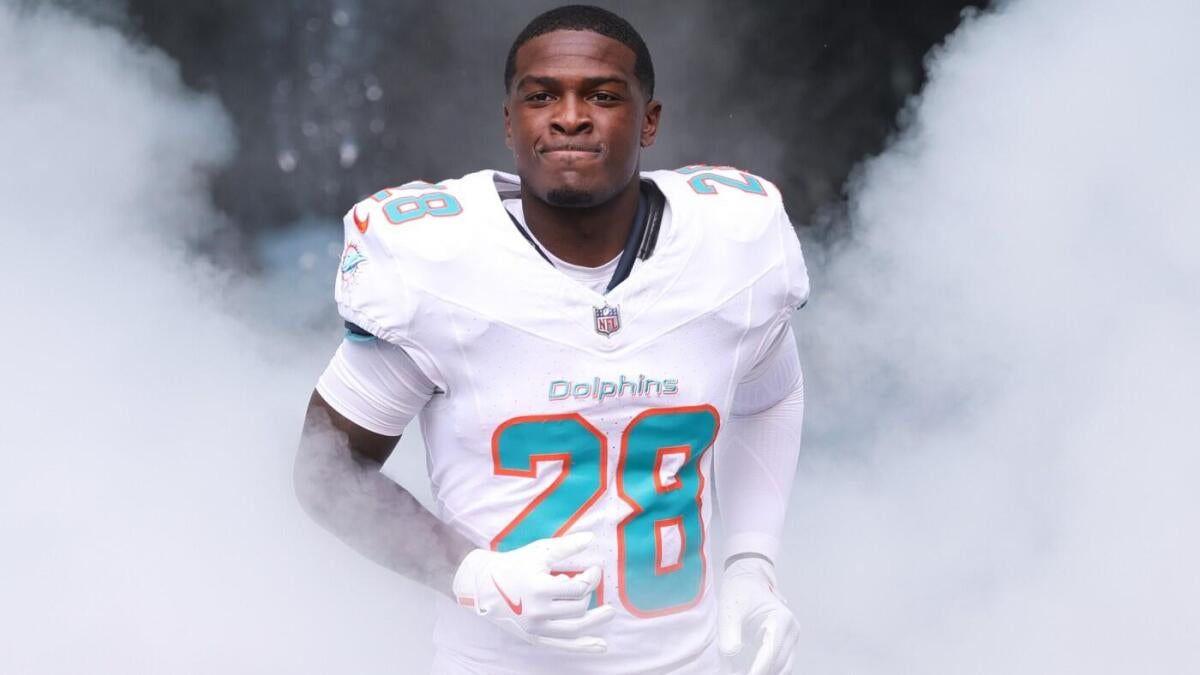
The Miami Dolphins have demolished their passing attack. Tyreek Hill and Tua Tagovailoa are gone. Jaylen Waddle was traded to Denver. In their place: a rookie QB in Malik Willis, two inexperienced rookie wide receivers, and two untested rookie tight ends. The result is predictable and intentional—Achane, the only pass-catcher with 350+ receiving yards returning from 2025, becomes the de facto offense by default.
Dolphins coach Jeff Hafley laid out the blueprint during a Monday appearance with Rich Eisen. When asked about Achane's workload, Hafley didn't equivocate. He told Achane he might have to "carry him back to the locker room" after 40-45 touches and explicitly stated he doesn't want to see the RB tap out for a breather all season. That's not coaching hyperbole—that's an organizational commitment to concentration. Achane finished 2025 with 1,350 rushing yards and ranked fifth in the league; he also notched eight games with 20+ touches. Under a system designed to isolate him as the primary offensive weapon against a defense that will stack the box to stop the run, those volume markers will spike.
Historically, 40-touch games are rare. In the past decade, only four instances exist: Le'Veon Bell (42 touches, 2016), David Johnson (41 touches, 2016), Ezekiel Elliott (40 touches, 2018), and Derrick Henry (41 touches, 2021). The single-game record stands at 48 touches, shared by James Wilder (1983) and LaDainian Tomlinson (2002). Hafley's comment suggests Achane could threaten that mark—and over a 17-game season with this much offensive concentration, he has multiple opportunities to hit 40 touches in at least one game.
For prop bettors, the mechanism here is structural, not circumstantial. Willis's inexperience and the receiver room's youth guarantee negative game script variance. When the Dolphins fall behind, they can't rely on vertical passing to catch up. Instead, they'll lean on Achane in space—quick hitters, checkdowns, dump-offs. When they lead or stay competitive, Hafley's stated philosophy says Achane eats carries. This isn't a single-game spike prediction; it's a season-long design choice. Any game where Miami stays within 14 points or trails by less than 10 into the fourth quarter becomes a Achane ceiling game. His receiving yards line and anytime TD prop both benefit from this volume floor.
The market will price Achane's season-long rushing and receiving totals on the assumption of a standard bell-curve workload distribution. Early-season lines on rushing yards and receptions likely don't account for the structural reality that this Dolphins offense has nowhere else to go. By mid-September, once Willis's limitations are exposed and the rookie receivers show processing speed issues in live action, sharps will already have moved those lines. The earliest games—the next two weeks—offer the most misalignment between public perception (RB receives 20-25 touches in a balanced scheme) and coaching intent (40-plus in blow-ups).
NFL Intelligence — Football intelligence beyond the final score. Open NFL Intelligence →