Miami's Roster Gutting Opens a Rare Angle on the Dolphins' Win Total
By Justin Erickson ·
Jeff Hafley inherits a defense ranked 27th in pass yards allowed and an offense stripped of its best weapons—yet the market may be overpricing the collapse.
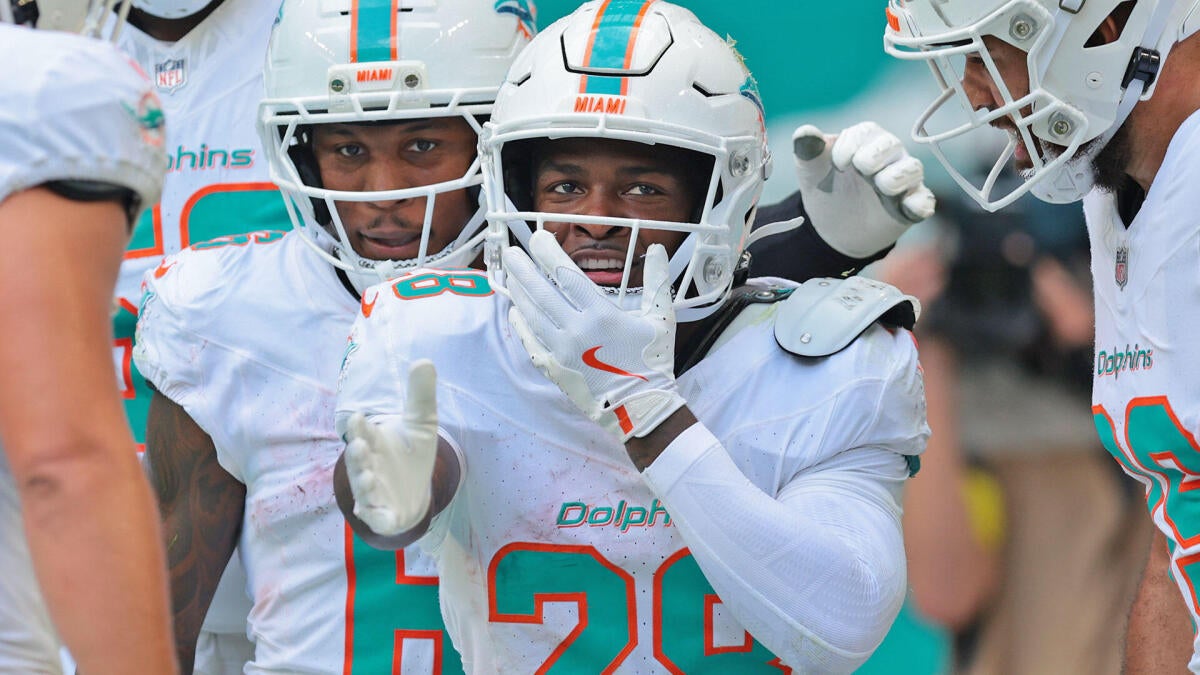
The Dolphins are not rebuilding in the conventional sense. They are dismantling. Head coach Mike McDaniel, quarterback Tua Tagovailoa, and the tandem of Tyreek Hill and Jaylen Waddle are gone. In their place: new head coach Jeff Hafley, free-agent quarterback Malik Willis, and a receiving corps assembled from spare parts. The market has responded by installing Miami as the second-likeliest team in the NFL to finish with the fewest wins, with the win total set at 4.5 and the over carrying -146 juice as of August 1. That setup—a sharp line with heavy under action—invites scrutiny.
The historical record pushes back on the catastrophe narrative. Since the 2007 expansion malfunction (1-15 under Cam Cameron), Miami has not finished below five wins. In the 19-year span since, the Dolphins have cleared five victories in every season except one: 2004, when they went 4-12. That's two instances in 53 years of common-era football. The team's defense, admittedly a liability ranked 27th in pass yards per play and 28th in rush yards per play last season, is the critical variable. But wholesale turnover on that side—out with Bradley Chubb and Quinton Bell, in with a draft class and veterans like Josh Uche and David Ojabo—can move the needle. Hafley's defensive pedigree as a former cornerback coach and linebackers coach also signals an organizational pivot toward scheme and player development rather than talent hoarding.
The offensive floor is lower than in previous years. De'Von Achane, who averaged 5.4 yards per carry, is the engine, and the receiving landscape now relies on second-tier options like Tutu Atwell, Jalen Tolbert, and Jalen Reagor—none of whom approach the production tier of Hill or Waddle. Willis, a former third-round pick with limited starting tape, cannot be expected to produce at Tua's level. Yet this also means the Dolphins' expectations are now divorced from the ceiling-chasing failures of the McDaniel era. A 5-12 finish, or even 6-11, would represent organizational realignment rather than disaster. The margin between four and five wins is razor-thin in a 17-game season—a single competitive loss flipped, a fourth-quarter drive converted, a defensive stand held.
Bettors have steamed the under hard since July 1, when the line sat at 4.5 with +100 juice on the over. By August 1, that had compressed to -146, a 46-basis-point compression that reflects sharp money's conviction. However, the market's collective positioning on the under assumes a worst-case scenario that has occurred only twice in the franchise's modern era. The Dolphins' schedule, while not kind, includes home contests against the Jets and other winnable matchups that suggest more than two or three realistic victories. The under at 4.5 prices in a historical anomaly as baseline expectation—a dangerous assumption when the team has demonstrated resilience at the margin for nearly two decades.
The tension between Miami's raw talent drain and the statistical improbability of falling to four wins creates an edge worth exploring. The over at 4.5 is overpriced if Hafley's scheme adjustments yield even marginal defensive improvement, or if Achane's rushing load translates to game-control situations the defense can stay in late. This is not a bet on Miami's ceiling—it is a bet on the floor. At 5.5 wins, the conversation would be different. At 4.5, the market has leaned too hard on narrative momentum and not hard enough on franchise history.