NFL
Loveland's Target Drought Isn't About Talent—It's About Scheme Collusion and Execution Lapses
The Bears' star tight end has one catch through two games despite leading the team in routes run, exposing a coordination breakdown between quarterback and playcaller that won't persist.
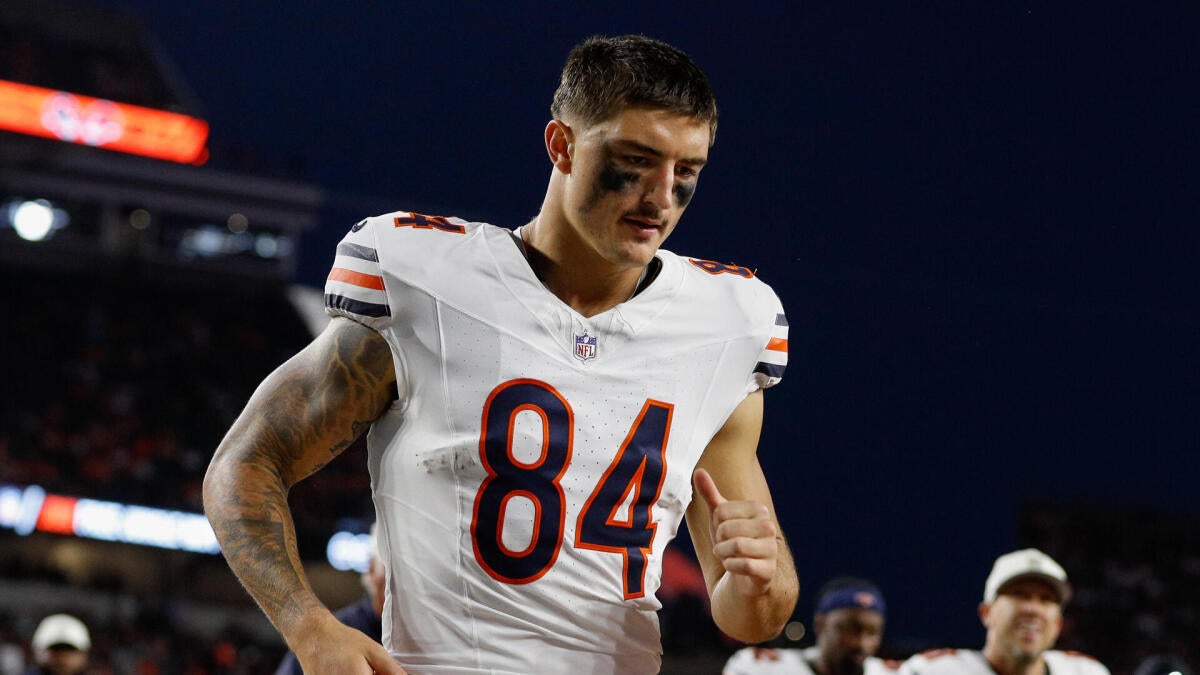
Colston Loveland has run more routes than any pass-catcher on the Bears' offense through two weeks of 2026, yet he has one catch for three yards to show for it. That disconnect—high volume of work, minimal production—ordinarily signals a deeper problem. Here it signals something far more fixable: defenses have adjusted to his elite 2025 film (3.7 yards of separation as a rookie), opposing coverage is tighter, and Caleb Williams hasn't been willing or able to fit the ball to him when he does break free. This is not a talent issue. This is a coordination lag that resolves itself.
The separation collapse from 3.7 yards last season to 2.1 yards in Weeks 1-2 is the real starting point. NFL defensive staffs had the entire offseason to construct coverage schemes built specifically around limiting Loveland's impact. They're executing those plans. That's not surprising. What IS notable is that even when Loveland beats his coverage, Williams isn't pulling the trigger—he's locked onto other reads, scrambling away from pressure, or has already taken a hit. Against Carolina and Minnesota, there were clean windows where Loveland was open and the ball went elsewhere. For a second-year quarterback still calibrating his processing, that's a common early-season artifact, not a referendum on Loveland's usage.
The Week 2 pivot toward pass-blocking duty muddies the picture slightly. Minnesota blitzed on 75.3% of its first two possessions—nearly 30 percentage points higher than the next-most aggressive team. Chicago responded by deploying Loveland in protection at higher rates than he saw during the second half of 2025. That made tactical sense against Brian Flores' scheme, except on the final play: down 12 yards, needing a touchdown, the Bears kept Loveland in to block when they should have sent him to the end zone. Dallas Turner's game-sealing sack followed. One indefensible sequence shouldn't reset expectations, though. Loveland's 2025 closing run—28 catches, 378 yards, two scores across his final four games—happened against defenses that had also prepared for him. The difference was volume and execution. He's getting volume again (5 targets still underperforms his route share, but it's growing). Execution, both from the quarterback and from the receiver finding soft coverage, will normalize as the season progresses and defenses can't sustain the heightened coverage intensity week to week.
For betting purposes, Loveland's receiving yards and receptions lines are mispriced if they're still calibrated to his two-game output. The market has likely overcorrected downward based on the Week 1-2 drought. A tight end who generated 3.7 yards of separation and who finished 2025 in the top tier of his position doesn't stay at 2.1 separation indefinitely. As Minnesota's scheme-specific adjustments wear off and Williams gains tape and rhythm with his top weapon, Loveland's target share will tick upward. The route volume is already there. Entering Week 3, he's a contrarian buy at receiving props that factored in the quiet opening, particularly if the line moved down after his quiet outing against Minnesota.