NFL · transaction
Watson's Week 2 Win Buys Him Stability; Browns Lock In On Jeudy, Reject Trade Market
After a strong performance against Tampa Bay, Deshaun Watson has earned a longer organizational leash—and Cleveland is signaling durability by declining to sell off depth pieces despite a quarterback injury epidemic around the league.
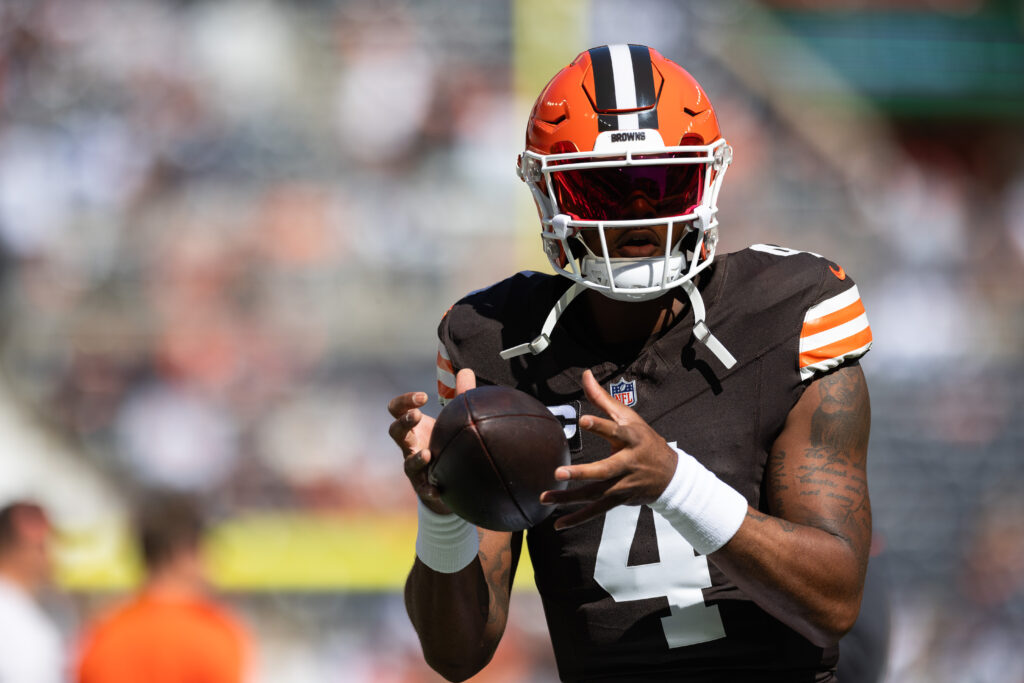
Deshaun Watson's poor outing in Jacksonville last week had the Browns on alert, ready to reassess their starting quarterback before Week 3. Then he went to work against Tampa Bay. Watson's performance in that Week 2 win was decisive enough to reset the internal conversation: instead of week-to-week evaluation, Cleveland has moved to a stance of sustained commitment, per NFL Network reporting. An excellent week of practice this week reinforced the organizational messaging. Watson may have earned the right to keep starting through at least the first home game of his season against Carolina, a contest carrying additional weight given his last regular-season appearance at home occurred in October 2024—nearly two years ago.
The timing of Watson's stabilization matters because the quarterback injury market around the NFL is active. The Giants, Commanders, and Bears have all dealt with starter injuries this month, creating immediate demand for signal-caller depth. Shedeur Sanders and Dillon Gabriel were both connected to trade interest over the summer, with Sanders drawing particular attention from New York—a natural pairing given John Harbaugh's prior familiarity with the prospect during his time with Baltimore. Cleveland is rejecting those overtures. The Browns view Sanders as a long-term asset at the backup spot and may want to evaluate him during the season before turning attention to the 2027 draft class. Gabriel, currently on injured reserve after an underwhelming rookie season in 2025, showed well in the preseason and profiles as the third-string option when available.
Jerry Jeudy, meanwhile, is not being offered up despite underwhelming production through two games. Jeudy's five targets over Cleveland's first two contests reflect a notable shift in Watson's distribution: tight end Harold Fannin, plus rookies KC Concepcion and Denzel Boston, have captured the bulk of passing volume. Yet the Browns are committed to three-receiver deployments and intend to keep Jeudy in the mix rather than capitalize on any trade market. That decision tells you something about organizational confidence in the receiving corps' depth and Watson's eventual comfort with his full arsenal.
For prop-betting purposes, Watson's stabilization and the Browns' refusal to trade Jeudy create a mechanical shift in outcome expectations. The Week 1 Jacksonville loss sparked speculation about quarterback turnover and roster dissolution—a psychological state that historically suppresses team total efficiency and inflates spreads. Now that narrative has flipped. Watson's Week 2 execution and this week's practice work suggest he has the coaching staff's trust for at least the next 3-4 games, which means play-calling complexity can increase and receivers can work deeper routes. Jeudy staying put does not guarantee increased targets—Boston and Concepcion are the priority outlets—but it signals that Cleveland is not in panic-selling mode. Teams that avoid firesale trades tend to maintain more stable offensive schemes. Watson's passing volume and efficiency going forward depend less on scheme abandonment and more on his own command, which the past week of performance has validated.
NFL Intelligence — Football intelligence beyond the final score. Open NFL Intelligence →