Ward's Execution Gap Defines Titans' Year-Two Ceiling—and Vegas Exposure
By Justin Erickson ·
Tennessee's season-opening loss exposed the gap between Cam Ward's decision-making and his arm talent, creating a dangerous mismatch between optimistic coaching rhetoric and the quarterback's actual on-field product.
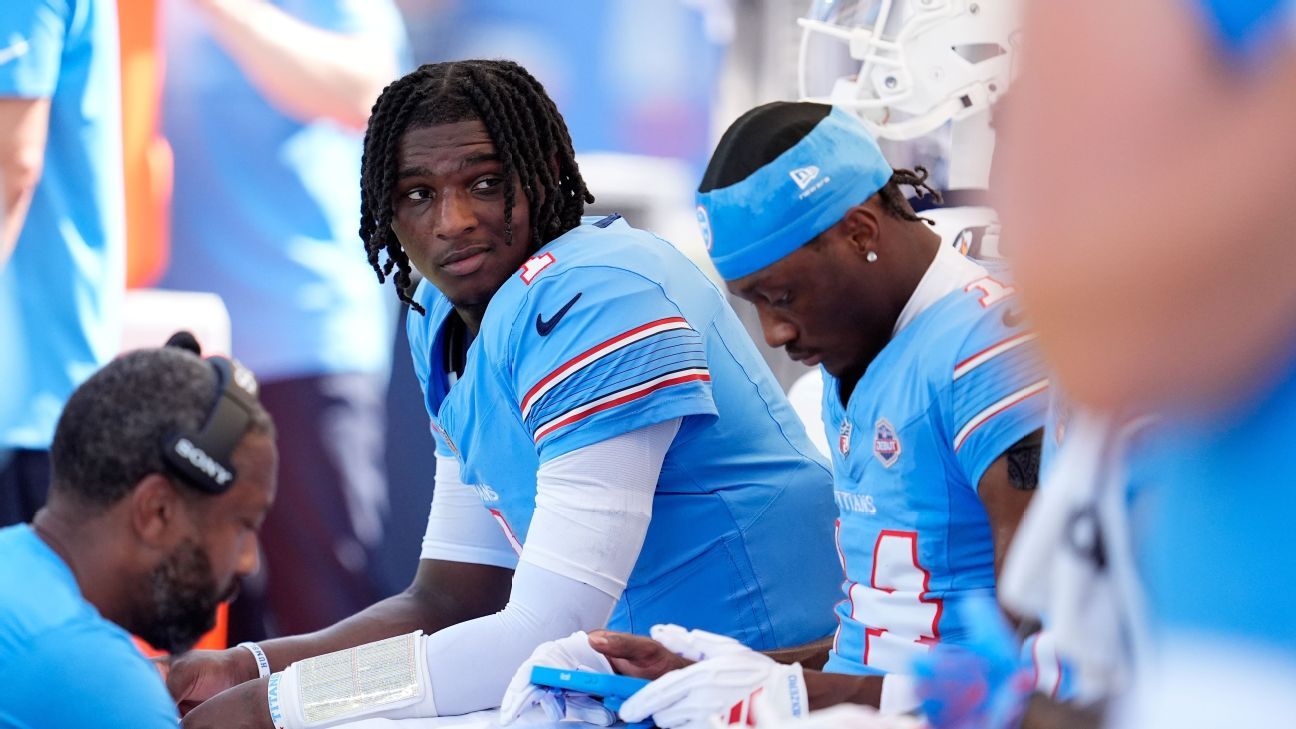
Robert Saleh's debut as Tennessee's head coach ended with a 23-10 loss to the Jets on Sunday, but the scoreline understates the dysfunction. Ward completed 19 of 32 passes for 140 yards—a 59.4% completion rate that masks a deeper problem: he didn't just miss throws, he couldn't locate open receivers at all. Wan'Dale Robinson beat his coverage on a screen route. Tyjae Spears sat alone in the flat. Rookie Carnell Tate ran a crossing route with ten yards of green grass around him. Ward saw none of it. This wasn't game-planning failure or receiver separation issues. This was fundamental processing—the thing Saleh and offensive coordinator Brian Daboll pledged to fix in the offseason.
Ward's rookie-year finish looked promising: ten touchdown passes over his final six games with just one interception. That's the number both the coaching staff and ownership latched onto, the evidence that patience would be rewarded. But a six-game sample in a lost season plays differently than Week 1 execution when the entire offense is supposed to be clicking. The Titans' offensive line—newly reinforced—gave him time on Sunday. He still got sacked three times. More telling: he left plays on the field because he either bailed early or couldn't diagnose coverage fast enough to execute the called concept. This is a processing problem, not a protection problem.
What makes this dangerous for the organization is the external pressure. Tyler Shough won Offensive Rookie of the Year with New Orleans last season. Jaxson Dart threw three touchdown passes in the Giants' win over Dallas. Both were drafted after Ward. The narrative—that Tennessee whiffed on evaluation while better organizations nailed their year-two quarterbacks—is already forming. Saleh and ownership will face a credibility test over the next three weeks. If Ward's numbers don't improve measurably, the "patience" framing collapses into inertia, and the betting market will price in the risk that the Titans pivot faster than advertised.
From a prop standpoint, Ward's Week 1 film creates a directional problem that no coaching adjustment solves immediately. His passing-yards total opened in the 240–250 range for the season and will likely compress downward given the efficiency floor he just demonstrated. More importantly, his completion percentage is underpriced if the market assumes Week 1 was an outlier. The data suggest it wasn't: he missed layups, not contested throws. Expect overs on his passing yards to carry elevated heat for the next 2–3 weeks as defenses tighten coverage against a quarterback who's already struggling with basic read progression. The Titans' offensive line is solid enough that sacks won't dominate the narrative—incompletions on plays he had time to execute will. That's a persistent problem, not a scheme mismatch, and it won't fade until Ward proves otherwise on tape.