NFL · transaction
Diggs to Washington: A Veteran Depth Upgrade With Limited Ceiling for McLaurin's Volume
Stefon Diggs signs with the Commanders as a secondary receiver, not a savior—and that distinction matters for how the passing game reshapes.
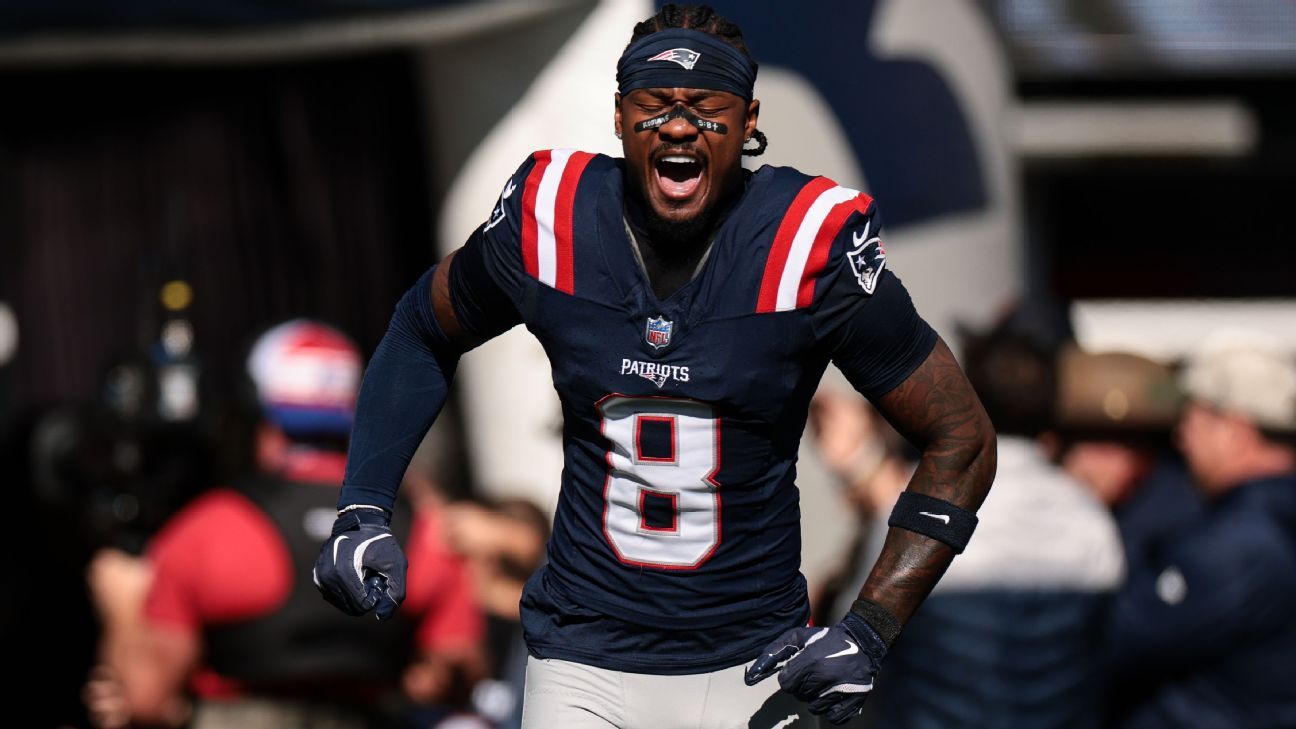
Stefon Diggs will sign a one-year, up-to-$12 million deal with the Washington Commanders, per NFL Network and ESPN. The move reunites a 32-year-old receiver with his home state—Diggs was born in suburban Washington and played at Maryland—and adds proven depth to a room that hemorrhaged snaps to replacement bodies for much of last season. But the framing matters: Diggs is the second fiddle here, not a co-star. Terry McLaurin remains the alpha, and that pecking order will constrain Diggs's volume more than his own talent ceiling might suggest.
Context clarifies the actual problem Diggs solves. Last season, McLaurin sat out seven games with a quad injury while Noah Brown missed 13 with knee and groin ailments. In their absence, five players the Commanders hadn't carried on their 2025 opening roster caught passes for them—a casualty rate that indicates vacancy, not opportunity. The team did draft Antonio Williams (third round, 2025) and cycle through Treylon Burks, Van Jefferson, and Dyami Brown, but that trio combined for 59 receptions, 707 yards, and three touchdowns across the full season. Diggs last year caught 85 passes for 1,013 yards and four touchdowns with New England—a respectable floor for a veteran, though his workload appears terminal: he turns 33 next month and was released by the Patriots at the start of the league year after he'd already declined a restructure offer. The NFL also closed an investigation into off-field allegations without recommending suspension, clearing a path for employment but not erasing the timing of the Patriots' jettison.
Where Diggs lands in Washington's snap distribution will determine his prop ceiling. If McLaurin stays healthy, he will command the alpha target share. Diggs slots in as the clear second option, which in a Jay Daniels system—a second-year QB who distributes across multiple receivers and tight end Zach Ertz—means approximately 6–8 targets per game, not the 8–10 he might see in a McLaurin-absence scenario. The Commanders' passing game is built for balance, not concentrated downfield volume. Diggs's 1,000-yard pace last season (85 catches in 16 games) translates to roughly 60 yards per game—achievable as a secondary target but not explosive. The market will likely overprice Diggs's receiving yards early, anchored to his 2025 New England baseline and hometown appeal.
Bettors should fade aggressive Diggs receiving-yard lines above 55–58 per game for the first two weeks while the market prices him as a comeback candidate rather than a depth cog. His target floor should land near 5.5–6.5 per game, which implies a ceiling of 70–75 receiving yards on positive game scripts. Conversely, his anytime touchdown odds will trade at fair value or slight plus-juice because the market correctly assumes secondary-target TD volatility; Diggs scored four last year on 85 catches (4.7% TD rate), which is sustainable but not elite. The real signal: if McLaurin logs full health over the next four weeks, Diggs's receiving yardage will settle into the 50–60 band, and any line above 65 becomes a fade. Watch McLaurin's practice reps and snap count—they're the true veto on Diggs upside.
Washington's offense gains optionality and loses nothing in cap constraint; Diggs accepts a one-year audition at 33 in his home market after the Patriots moved on. Neither party is betting on a multi-year marriage. For prop purposes, that's the critical detail: Diggs is insurance, not an investment in volume inflation. Treat him as a safe-floor play (over on low receiving-yard lines, fade over on high ones) and avoid his season-long yardage projections as if they were anchored to a hot-hand spike. The health and workload of McLaurin is the real lever.
NFL Intelligence — Football intelligence beyond the final score. Open NFL Intelligence →