Giants Sign DJ Reader to Anchor Rebuilt D-Line After Dexter Lawrence Trade
By Justin Erickson ·
New York just made the most consequential run-defense move of the offseason — and the prop market hasn't caught up yet.
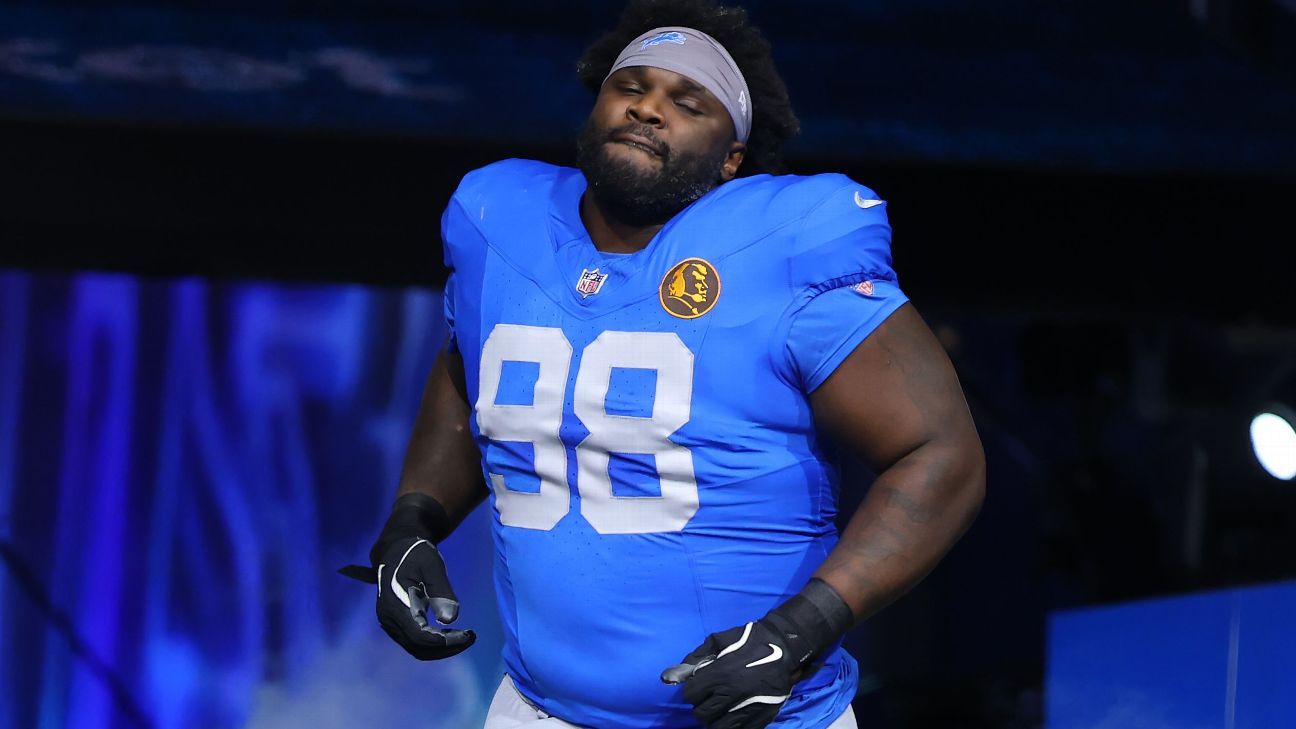
The New York Giants have agreed to a two-year, $12.5 million deal with veteran defensive tackle DJ Reader, as ESPN's Jeremy Fowler reported Tuesday, capping a deliberate effort to rebuild an interior defensive line that surrendered a league-worst 5.3 yards per carry last season. Reader, 31, arrives from Detroit and can earn up to $15.5 million through incentives. He joins Shelby Harris and Leki Fotu — both signed last week on one-year deals — as New York works to fill the void left by Dexter Lawrence II, who was traded to Cincinnati in exchange for the 10th overall pick.
The Lawrence trade was always going to create a structural problem up front, and the Giants are now solving it by committee rather than one-for-one replacement. Reader is a different player than Lawrence — at 6-3, 330 pounds with a 71.7% double-team rate that led the entire NFL last season, he commands attention at the point of attack even when he isn't winning the rep himself. His run stop win rate (26.0%) trailed Lawrence's (31.5%), and his pressure numbers — nine total last year — are modest. But under new head coach John Harbaugh and defensive coordinator Dennard Wilson, who are installing a Baltimore-style system, the nose tackle's job is to eat blocks and keep linebackers clean, not rack up sacks. Reader is purpose-built for that role.
Harbaugh's Ravens defenses were perennially elite against the run precisely because they kept their front-seven infrastructure intact. Wilson's scheme demands a stout, immovable nose tackle who forces offenses to double-team, freeing up second-level defenders. Reader's league-leading double-team rate means he already fulfills that assignment on a per-snap basis. Pair him with a healthier Darius Alexander in his second season, Harris as a rotational piece, and the Giants' run defense has a credible path from league-worst to merely mediocre — which, in a division with Saquon Barkley in Philadelphia and a retooled Dallas offense, matters enormously.
For prop bettors, this has direct implications for opposing running back rushing totals when facing New York in 2026. Last year's Giants run defense was a free square — backs consistently hit their over on rushing yards and rushing attempts against a front that couldn't hold its ground. That market inefficiency is closing. Running backs scheduled to face the Giants early in the season, before the line cohesion is fully established, carry more value than those drawing this matchup in October or November when the unit has had time to gel. Treat Week 1 and Week 2 Giants opponents differently than you'll treat Week 10 opponents. Fade the over on rushing yards and rushing attempts against NYG as the season progresses — this is a defense being deliberately rebuilt to stop the run first.
On the other side of the ball, a functional Giants run defense also stabilizes their defensive scheme enough to generate cleaner pass-rush situations — which matters for sack props on Reader himself and the players around him. Reader's career track record (12.5 sacks in 10 seasons) doesn't make him a sack-prop target, but the defensive infrastructure he anchors could make edge rushers like Kayvon Thibodeaux more productive in obvious passing downs. Watch how the sack market prices Thibodeaux heading into the season — an improved run defense that forces more third-and-longs is a rising tide for the entire Giants pass rush.